
Could borrowed money create a tax bill even when you’re expected to repay it? Usually, short-term loan proceeds aren’t taxable income. But the tax implications of short-term loans can change if a balance is forgiven or you claim a deduction for interest or fees. How you use the funds matters more than what the loan is called.
It’s understandable to be unsure which rules apply. Personal and business borrowing can receive different tax treatment, and forgiven debt may raise reporting questions. A lender’s repayment terms don’t determine whether an amount is taxable or deductible.
This guide covers the general federal tax treatment of loan proceeds, interest, and fees, along with situations that may change the result. You’ll learn what to review if a lender cancels a balance, which records can support your tax return, and when to seek professional guidance before filing.
Key Takeaways
- The tax implications of short-term loans depend on how you use the funds and whether the balance is repaid or forgiven.
- Keep principal, interest, and fees separate when reviewing payments. Personal-use interest is generally not deductible.
- Business-use borrowing may follow different rules. Document how you used the funds, especially if expenses were mixed personal and business.
- Before filing, review your loan agreement, lender statements, repayment records, and any cancellation notices.
- Consider repayment timing, total obligations, and lender terms alongside possible tax effects when deciding whether borrowing fits your needs.
Are Short-Term Loan Proceeds Taxable Income?
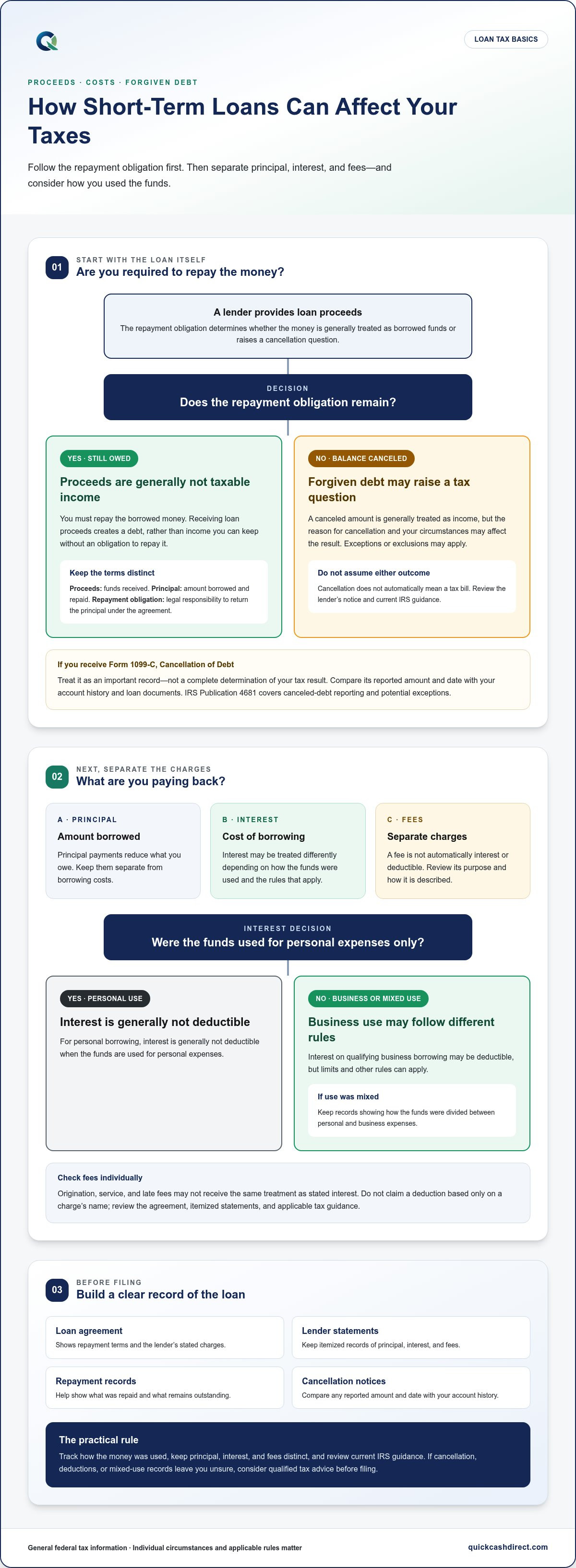
Generally, no. Short-term loan proceeds aren’t taxable income because you’re required to repay the money. Borrowed funds are different from income you receive and keep. This general rule applies to personal and business borrowing, though interest and other costs may be treated differently.
Keep three terms distinct. Proceeds are the funds you receive. Principal is the amount borrowed that you repay under the agreement. Your repayment obligation is your legal responsibility to return the principal under the lender’s stated terms. Receiving loan proceeds creates a debt, not income you can keep without an obligation to repay it.
This distinction is central to the tax implications of short-term loans. A basic explanation of Taxable Income can clarify the concept, but it doesn’t replace IRS rules or advice tailored to your situation. For federal tax treatment, consult current IRS guidance and consider the details of the transaction.
Why borrowed money is generally different from income
A loan deposit may look like money received, but the obligation to repay it changes its character. If you borrow to cover a personal expense, for example, you can use the funds now, but you still owe the lender under the agreement. That differs from wages paid for work or business income earned by selling goods or services. Those receipts generally don’t come with an obligation to return the same amount.
Don’t assume every deposit or transfer has the same tax treatment. A customer payment, gift, refund, and loan proceeds can each raise different questions. Keep the loan agreement and account records showing where the funds came from and the repayment terms. These records can help explain why a deposit was borrowed money rather than earnings.
When a loan balance may become a tax question
The general rule may change if a lender cancels or forgives some or all of a debt. Once you’re no longer required to repay the canceled amount, it may raise a federal tax question. Canceled debt is generally treated as income, but the reason for cancellation and your circumstances can affect the result. Don’t assume cancellation automatically means a tax bill, or that the original loan’s tax treatment settles the issue.
For example, a lender may cancel a balance in circumstances that qualify for an exclusion, while other canceled debt may be taxable. The details matter. Review any lender notice and current IRS guidance before filing. The treatment of canceled balances, potential exclusions, and related forms is covered below. Because individual circumstances differ, seek qualified tax advice if you’re unsure how the rules apply.
How Interest, Fees, and Loan Forgiveness Can Affect Taxes
Keep the costs of borrowing separate from the amount you repay. Principal payments reduce what you owe. Interest is the cost charged for borrowing, while fees are separate charges described in the loan agreement. These categories aren’t interchangeable and may not receive the same tax treatment.
The tax implications of short-term loans depend on the loan’s purpose, how you use the funds, and the rules that apply to your circumstances. Don’t assume a charge labeled “fee” qualifies as interest or that every borrowing cost is deductible. Check current IRS guidance and seek professional tax advice if the classification affects your return.
Are short-term loan interest and fees deductible?
For personal borrowing, interest is generally not deductible when the funds are used for personal expenses. Business use may lead to different treatment: interest on qualifying business borrowing may be deductible, but limits and other rules can apply. If you use one loan for both personal and business expenses, keep records showing how the funds were divided. The actual use of the money matters.
Review each charge separately. An origination charge, service fee, or late fee may not receive the same treatment as stated interest. The charge’s purpose, the loan’s use, and applicable tax law can affect the answer. Keep the lender’s itemized statements and agreement, then verify the treatment with current IRS guidance or a tax professional. Don’t claim a deduction based only on a charge’s name.
What happens if a lender cancels part of a debt?
If a lender cancels or forgives a balance, the amount you no longer have to repay may be taxable income. Exceptions or exclusions may apply, and the reason for cancellation matters. In some cases, a borrower receives Form 1099-C, Cancellation of Debt. Treat it as an important record to review, not as a complete determination of your tax result.
Compare a cancellation notice with your account history and loan documents. Check that the reported amount and date match your records. Then review IRS Publication 4681 on Canceled Debts, which explains canceled-debt reporting and potential exceptions. If you’re unsure whether an exclusion applies, get advice from a qualified tax professional before filing. Don’t ignore the form, but don’t assume it answers every question about your circumstances.
Keep the tax question separate from the borrowing decision. QuickCashDirect connects borrowers with a network of lenders for short-term funding options. Lender terms and eligibility vary, so review the repayment obligations and agreement before proceeding. Evaluate any tax consequences separately.
Personal vs. Business Borrowing: Which Tax Rules May Differ?
The tax implications of short-term loans can depend on what you do with the funds, not just what the agreement calls the loan. Money used for household bills is generally personal borrowing. Funds used for a genuine business purpose may be treated differently, particularly when determining whether interest can be deducted. Keep the purpose clear and support it with records.
This distinction isn’t a tax shortcut. Calling a loan “business financing” doesn’t make personal expenses deductible, and a financial emergency doesn’t automatically create a deduction. The actual use of the borrowed funds and the rules that apply to you matter.
Personal loans used for household expenses
For personal borrowing, interest is generally nondeductible when you use the funds for rent, household repairs, or personal bills. The same general treatment applies when you use an emergency loan for personal needs. The urgency of an expense doesn’t change its purpose for tax purposes.
For a plain-language overview of how personal borrowing may be treated, see Taxability of Personal Loans. Apply current IRS guidance to your own facts, since tax rules can depend on more than the type of loan or why you needed it.
Business borrowing and mixed-use funds
When borrowed funds serve a legitimate business purpose, interest may generally qualify as a business expense, subject to applicable tax-law limits. The business purpose must be real, and records should support it. If you use part of a loan for business and part for personal spending, only the interest attributable to business use may be deductible. Don’t treat the full charge as a business expense by default.
Build a paper trail as you use the funds. Save the loan agreement and statements, then retain receipts, invoices, or payment records connecting spending to the business. For mixed use, track which transactions served the business and which were personal. This helps explain how you calculated any business portion.
Business-interest rules can include limits, and eligibility may depend on your tax situation and type of business. Before claiming a deduction, verify current IRS guidance or ask a qualified tax professional to review your records. A general comparison can identify the issue, but it can’t determine your tax result. Keep the loan agreement, records of actual spending, and supporting documents together so the tax treatment follows the facts.
What to Check Before Filing Taxes After Taking a Short-Term Loan
Make your records easy to follow before filing. The tax implications of short-term loans depend on more than the amount deposited. How you used the funds, whether you repaid the balance, and whether any amount was canceled may all matter. Work through this review and keep the supporting documents together.
- Identify how you used the funds. Separate personal spending from business expenses. If the loan served both purposes, note which transactions were business-related and keep records supporting the split.
- Review lender records. Compare the loan agreement, disbursement record, statements, and payment history. Check that the balance and payments match your records.
- Check for cancellation notices. Look for lender correspondence or tax forms reporting canceled debt. Compare the reported information with your account history and any debt-cancellation agreement.
- Verify the current rules. Review applicable IRS instructions and guidance for your situation. If the funds had mixed uses or a lender canceled debt, consider speaking with a qualified tax professional.
Gather records that explain the loan
Keep the loan agreement, record of the funds received, lender statements, and repayment records in one place. Together, these documents show the loan’s terms and what happened to the balance. If any funds went toward business expenses, retain the related receipts, invoices, or payment records. A clear connection between the borrowing and the business expense can support how you report the activity.
Compare any tax document from the lender with your own records. A form, including a cancellation-of-debt notice, is important evidence, but receiving it doesn’t by itself determine the correct tax treatment. Check for differences in dates or amounts, and address any mismatch before filing. Review the applicable IRS instructions as part of that process.
Use a simple filing-time review
Confirm whether the loan was repaid, remains outstanding, or was canceled in whole or in part. Then check current IRS guidance for relevant forms, reporting instructions, and exceptions. Don’t rely on a prior-year explanation without verifying that it applies to the tax year you’re filing.
Get tailored advice if cancellation involved insolvency, bankruptcy, or a disputed amount. These circumstances can affect how debt is reported, and the details matter. Bring your agreement, lender notices, account statements, payment history, and records showing how you used the money to a qualified tax professional. Organized documentation can make it easier to explain the facts and identify questions that need review.
QuickCashDirect connects borrowers with a network of lenders offering short-term funding options. Its online referral service is separate from tax filing and tax advice. Lender terms and eligibility vary, so review repayment timing and the full agreement as part of any borrowing decision.
Choose Your Next Step With the Tax Questions in View
Tax treatment is one part of a borrowing decision, not a reason on its own to take out a loan. A possible deduction doesn’t erase repayment responsibilities, and borrowing doesn’t automatically create a tax benefit. Consider whether the funds address a need and whether the repayment schedule fits your budget. Keep the tax question separate from the decision to apply.
Before proceeding, review the lender’s terms carefully. Focus on when payments are due, how long repayment lasts, and the total amount you’ll be required to repay under the agreement. Make sure you understand what happens if a payment is late or you can’t meet the schedule. These details affect your obligations regardless of how the loan is treated on your tax return.
Separate tax questions from borrowing decisions
Use two distinct checks. For the borrowing decision, consider your need, expected cash flow, payment timing, and full obligations. For the tax question, consider how you’ll use the funds and whether interest, fees, or canceled debt may affect your return. A loan isn’t automatically a deduction or a tax strategy. Ask a qualified tax professional about tax treatment, and use the lender’s agreement to understand the offer’s terms.
This separation helps prevent a tax assumption from driving a financial commitment. Don’t count on a deduction before confirming that it applies to your situation. A loan’s label doesn’t determine the tax result, either. Review the actual terms and your planned use of the funds, then make each decision based on its own facts.
Explore funding options without assuming tax outcomes
QuickCashDirect is a referral service that connects applicants with a network of lenders. It isn’t a direct lender. Terms and eligibility depend on the lender and the information in your application, so review any offer and repayment obligations carefully before deciding how to proceed.
Keep your records organized, and seek tax guidance if your circumstances involve mixed personal and business use or a canceled balance. This gives you a clearer basis for filing without treating the tax outcome as guaranteed. The tax implications of short-term loans depend on the facts and applicable rules, while lender eligibility and offer terms are separate considerations.
Short-term funding options through QuickCashDirect are available to explore separately from your tax questions. Take time to understand the terms before making a decision.
Make Your Next Move With Clarity
Use what you’ve learned to make a deliberate next move, not a rushed one. Set a borrowing limit that fits your budget, consider how repayment will affect upcoming expenses, and base tax decisions on your actual circumstances. The tax implications of short-term loans shouldn’t be the only factor in deciding whether funding is right for you.
QuickCashDirect connects applicants with a network of lenders. It’s a referral service, not a direct lender, and lender terms and eligibility vary. Review any offer carefully and decide whether its obligations fit your needs. For tax questions specific to your situation, seek qualified professional guidance.
Explore short-term funding options through QuickCashDirect when you’re ready. Review the terms and make an informed choice.
Frequently Asked Questions
Can I deduct interest on a short-term personal loan?
Usually not if you used the loan for personal expenses. If you borrowed to cover a household bill, for example, the interest is generally personal interest and isn’t deductible on your federal return. The purpose and use of the funds matter, and tax rules can vary with individual facts. Don’t claim a deduction based only on the lender’s description of the loan. Verify current IRS guidance before filing.
What happens if a lender forgives or cancels my loan?
Canceled debt may count as taxable income, but exceptions or exclusions can apply based on the circumstances. If you receive Form 1099-C, compare the cancellation details with your lender statements and payment history. The form is a reporting document, not a complete decision about whether the amount is taxable for you. Review current IRS guidance or get professional help, especially if insolvency or bankruptcy is involved.
Do I have to report a loan on my tax return?
Generally, you don’t report loan proceeds as income simply because you received them and still owe repayment. Keep records showing the deposit came from borrowing, especially if your account also receives wages, business receipts, or transfers. A separate tax issue can arise if a lender cancels debt or you claim a deduction related to qualifying business use. Review any tax forms you receive before filing.
Are payday loan fees tax deductible?
Not usually for personal borrowing. A charge on a payday loan used for household expenses doesn’t automatically qualify as a deduction, and fees shouldn’t automatically be treated as interest. Check the lender’s itemized agreement to see how each charge is described. If funds supported a business activity, the tax treatment may differ based on the charge, use of proceeds, and applicable rules.
Can a short-term loan affect my taxes if I use it for my business?
Yes. Interest on borrowing genuinely used for business may be deductible, subject to applicable limitations and your circumstances. For example, document which loan-funded payments went toward business supplies and which covered personal expenses. Don’t claim the entire interest amount if the loan had mixed uses. Keep transaction records and ask a tax professional to verify allocation and current deduction rules before filing.
Should I keep loan documents after paying off a short-term loan?
Yes. Save the agreement, payment history, statements, and final payoff confirmation with your tax records. They can help resolve questions about the loan’s source, repayment, fees, or any business-related deduction. Keep documents for the period relevant to your tax and recordkeeping obligations; there isn’t one retention period that fits every situation. Store digital copies securely and ask a tax professional if you’re unsure how long to retain them.