
A lower monthly payment can mean a longer repayment period, not a lower total borrowing cost. With loans you can pay back over time, an installment loan is generally repaid in regular payments until the balance is paid. The payment amount, schedule, interest rate, and any fees depend on the loan terms.
Compare the payment with the full repayment period. A payment that fits your budget matters, but so does understanding how long you’ll be paying and how the schedule affects the total amount owed.
Learn how online installment loans structure payments, what to check in the terms, and how they compare with payday loans, credit cards, and other borrowing options. Use repayment length, payment predictability, and potential trade-offs to assess what may fit your needs.
Key Takeaways
- Compare installment loans, lines of credit, and cash advances by how you access funds and repay what you borrow.
- Use the loan contract to map due dates and understand how each payment is applied to principal and interest.
- Weigh repayment length, interest rate, fees, and early-payoff terms before choosing a borrowing option.
- See when QuickCashDirect’s payday loans, online payday loans, cash advances, or loans for bad credit may fit a short-term cash need.
What Are Online Installment Loans?
An online installment loan provides funds upfront and sets repayment terms in advance. Compare how each borrowing option provides access to money and how repayment works.
Comparing Loan Types
An installment loan provides a set amount upfront, which you repay through scheduled payments. A line of credit lets you draw funds as needed, up to the available limit. As you repay, some of that credit may become available again. Credit cards use a similar revolving structure.
A cash advance may mean funds drawn from a credit card or a short-term advance. Compare the amount available, repayment schedule, interest rate, fees, and whether repaid funds become available again. If you’re considering loans you can pay back over time, decide whether you need one lump sum or ongoing access to credit.
Review the full repayment terms, not just the first payment. A lower scheduled payment may reflect a longer repayment period. Before choosing, decide whether you need a one-time amount or repeat access to credit.
Credit Checks and Score Effects
A lender may review your credit history when assessing eligibility and terms. A full application may trigger a hard inquiry, which could temporarily lower your credit score. By contrast, a preliminary rate check using a soft inquiry does not affect your score. Know which type of check applies before proceeding.
Florida database checks are separate from credit-bureau inquiries. A lender may use a state database to assess application information or eligibility, but that review is not itself a hard inquiry on your credit report. It also does not mean you’re approved. Understand what each review evaluates and whether it affects your credit file.
Before applying for loans you can pay back over time, find out whether a rate result is preliminary or based on a completed application. Consider the inquiry type, repayment schedule, and final offer as separate parts of your decision.
How installment loan payments work
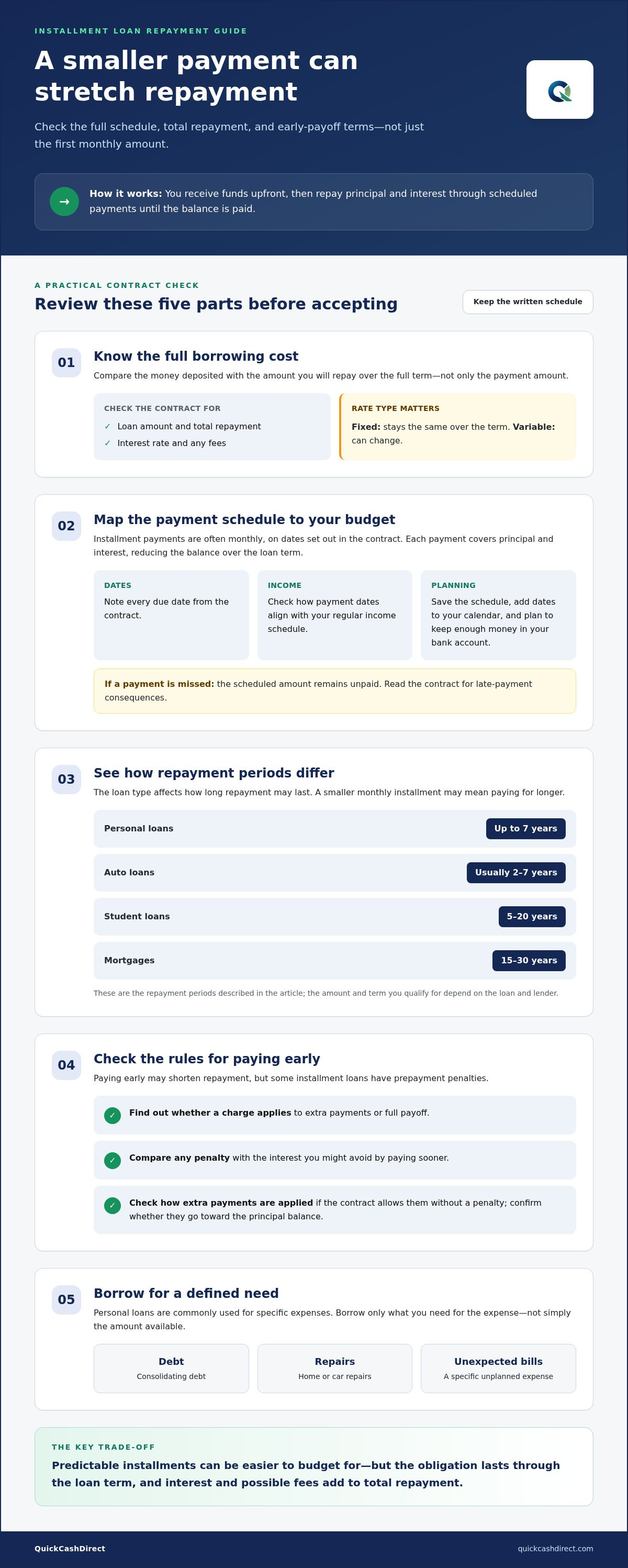
Your loan contract states the amount borrowed, interest rate, payment schedule, and due dates. Installment payments are often monthly, on the dates set out in the contract. Each payment covers principal and interest, reducing the balance over the loan term. For loans you can pay back over time, use the contract schedule to plan your budget.
Before accepting an offer, review the loan amount, total repayment, due dates, and whether the interest rate is fixed or variable. Check how the payment aligns with your regular income schedule. Personal loans can have repayment terms of up to seven years, so a smaller monthly installment may mean paying for longer.
A missed payment leaves the scheduled amount unpaid. The contract explains the consequences of late payment, so read those terms before signing. Add each due date to your calendar and plan to keep enough money in your bank account for the payment.
An online application typically involves submitting requested details, then reviewing the lender’s decision and proposed contract. If approved, the lender provides funds according to its process; timing and deposit method depend on the arrangement. Read the final terms before accepting, and save the payment schedule so you can track each due date.
Use funds for a specific need, such as consolidating debt, making home or car repairs, or covering unexpected bills. These are common personal-loan uses. Borrow only what you need for the expense rather than treating the available loan amount as a spending target.
Predictable installments can make a fixed payment schedule easier to budget for. The trade-off is an obligation that lasts through the loan term, with interest and possible fees adding to the total repayment. When comparing loans you can pay back over time with a short-term option, consider which schedule fits your cash flow.
If a shorter borrowing period better fits the expense, explore online payday loans as a separate option. Compare the repayment date and terms with your next payday before deciding.
Installment loan definition and repayment structure
An installment loan provides the borrowed amount upfront and sets a repayment schedule. Before applying, compare the amount, interest rate, and full repayment period.
Loan Amounts and Repayment Terms
The amount you qualify to borrow and the repayment term depend on the loan and lender. Compare the amount deposited with the total repayment and scheduled payment, not just the funds you receive. Personal loan terms can extend up to seven years. Auto loans usually run about 2-7 years, student loans five to 20 years, and mortgages 15-30 years. These different timeframes show why the loan type matters.
Fixed Payments and Schedules
Installment loans usually require equal monthly payments on predetermined dates until the debt is repaid. Each payment includes principal and interest. A fixed interest rate stays the same over the term; a variable rate can change. Read the contract for the rate type, due dates, payment amount, and how each payment is applied. Then compare the schedule with your expected income dates.
Early Repayment and Prepayment Penalties
Paying early may shorten repayment, but some installment loans have prepayment penalties. Find the early-payoff terms before signing and check whether a charge applies to extra payments or full payoff. Compare any penalty with the interest you might avoid by paying sooner. If the contract allows additional payments without a penalty, check how they’re applied to the principal balance.
On-time repayment could help build credit, but it does not automatically lower the contracted interest rate. Treat a rate reduction as part of the offer only if the written terms explain its conditions. Check whether it depends on payment history, when it takes effect, and whether the lender changes the rate or another loan term. Keep the signed agreement with your payment schedule.
How does an installment loan compare to other options?
An installment loan provides funds upfront and uses scheduled payments to repay principal and interest. Banks, credit unions, and online lenders in the United States offer installment loans. Before borrowing, compare the payment structure, collateral requirements, and repayment schedule with your ability to pay.
Installment loans may be secured or unsecured. A secured loan requires collateral, an asset the lender may claim if you don’t repay. For example, an auto loan uses the vehicle being purchased as collateral. An unsecured personal loan does not use an asset as security. Either way, missed payments can affect your credit, so check that the payment fits your budget and the timing of money in your bank account.
Payday loans differ in repayment length and cost. They typically have terms of two to four weeks, while installment loans spread repayment across scheduled payments. Payday loans may have APRs of up to 400% or higher, subject to state laws and regulations. Some states ban payday loans because of their high interest. Compare the due date and full repayment obligation, not just the speed of access.
Common installment loan types include personal, auto, student, and mortgage loans. They may cover expenses such as unexpected bills, repairs, education, or home purchases. The purpose affects the structure: an auto loan is secured by the vehicle, while a personal loan may be unsecured. Terms vary, so compare scheduled payments and total repayment before deciding.
To compare offers, write down the amount borrowed, repayment schedule, interest rate, and any collateral. Then check whether each monthly payment leaves enough room for essentials and existing bills. This makes the trade-offs clearer than choosing by approval speed alone. If you’re considering a short-term borrowing option, explore online loan options and compare the repayment terms with your budget.
QuickCashDirect: Payday Loans
QuickCashDirect connects borrowers with payday loans, cash advances, online payday loans, and loans for bad credit. These options may suit a short-term cash need when an installment loan’s repayment schedule doesn’t match the expense. Compare the repayment date and terms with your income and upcoming bills before choosing.
A payday loan typically has a two- to four-week term, unlike an installment loan repaid through scheduled payments over a longer period. A shorter timeline may make repayment difficult if the money won’t be available by the due date. Review the full terms and make sure the repayment fits your budget before proceeding.
For a short-term borrowing option, contact QuickCashDirect to explore its payday loan and cash advance offerings.
Choose a Next Step That Fits Your Budget
Before choosing loans you can pay back over time, set a borrowing limit based on what remains after essential bills and existing debt payments. If another payment would strain your budget, pause and consider whether you can wait to borrow. A loan should address a defined need, not create pressure to borrow again.
For a short-term cash need, compare the repayment schedule with your expected income and upcoming expenses. QuickCashDirect connects borrowers with lenders offering payday loans, cash advances, and online payday loans. Review the terms and decide whether the repayment date fits your situation.
Take the next step with the details in hand. Explore options with QuickCashDirect and choose a path that supports your financial priorities. A careful decision now can help you move forward with greater confidence.
Frequently Asked Questions
How does an installment loan affect your credit?
An installment loan can influence your credit through payment history and credit mix. Paying on time may help build credit, while a hard inquiry from an application may temporarily lower your score. Bankrate says credit mix makes up 10 percent of a credit score. Focus on making each payment by its due date, since missed payments can harm your credit history.
What are the fees and APR?
Fees and APR depend on the lender, loan type, and contract terms. APR expresses the yearly borrowing cost, including interest and certain fees, so compare it alongside the repayment schedule. Payday loan APRs may reach 400% or higher, subject to state laws and regulations. Review the agreement for any origination, late-payment, or other charges before accepting an offer.
Can I apply if I’m self-employed?
Self-employed borrowers can apply for an installment loan. Lenders assess income and ability to repay, so be prepared to explain how your earnings support the scheduled payments. Income records can help show your financial picture, especially if your earnings vary from month to month. Consider whether a slower business period could affect your ability to make payments on time.
How much money can I qualify for with an installment loan?
The amount you may qualify for depends on the lender’s criteria and your financial circumstances. Income, existing debt, credit history, and the payment you can manage may all factor into the offer. Start with the expense you need to cover, then compare it with the proposed repayment schedule. Borrowing only what addresses the need can help keep payments manageable.
How soon will I get my money?
Funding time depends on the lender’s approval process, any required verification, and your bank’s deposit processing. Submitting an application does not mean funds have been sent. Review the lender’s stated funding timeline and make sure your bank account details are accurate. If timing matters, compare the expected deposit date with the bill or expense you need to cover.
Is there a fee for paying off the loan early?
Some installment loans have prepayment penalties, while others allow early payoff without one. With QuickCashDirect, early payoff is generally allowed without penalty, but borrowers must review their specific agreement. Check how the lender calculates the payoff balance and whether extra payments reduce principal. Confirm the final amount needed to close the account before making an early payment.