
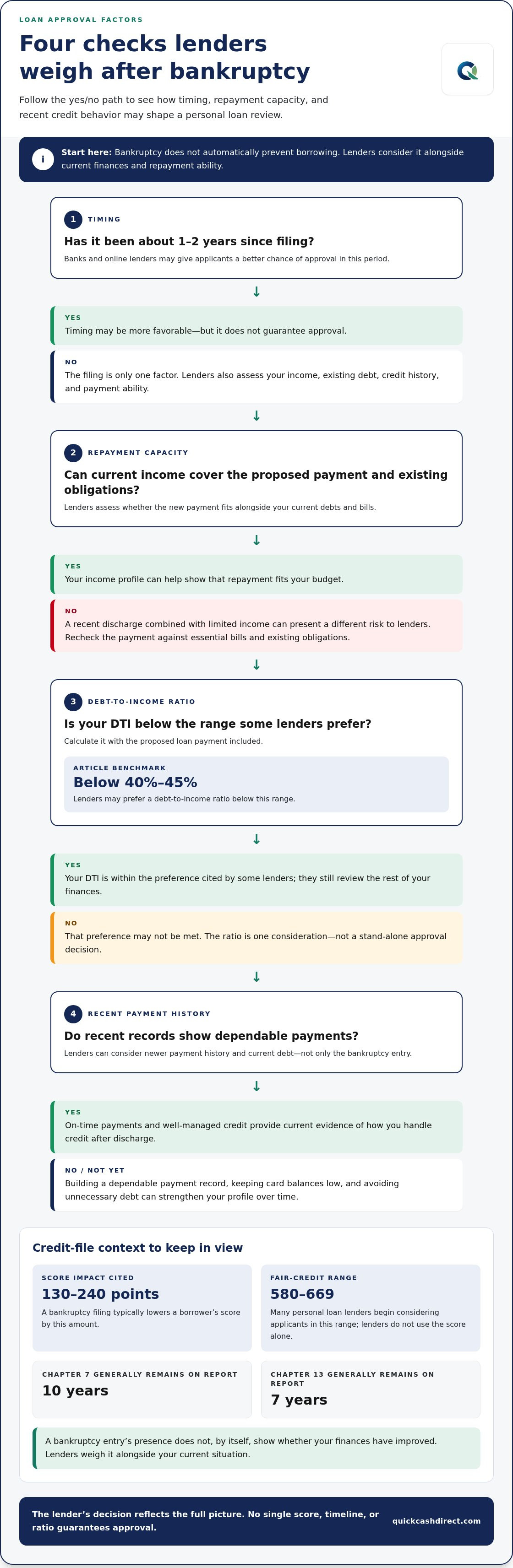
Bankruptcy doesn’t automatically shut you out of borrowing. You may have a better chance of approval for loans after bankruptcy from a bank or online lender 1-2 years after filing, though lenders also weigh your income, existing debts, credit history, and ability to make payments. A past filing matters, but it isn’t the only factor.
It’s reasonable to expect lenders to review your finances carefully while you rebuild credit after bankruptcy. This guide explains what personal loan providers may consider, how rates and fees can vary, and which warning signs to watch for. You’ll also learn how your credit profile, debt-to-income ratio, and time since discharge may affect an offer, helping you assess the repayment commitment.
Key Takeaways
- Compare your income, existing debts, and payment history before applying. Lenders weigh these factors alongside the time since bankruptcy.
- Post-bankruptcy personal loan offers commonly carry APRs of 18% to 36%. Look at fees and the full repayment obligation, not just the monthly payment.
- Watch for no-credit-check offers with exceptionally high APRs. Understand every charge and repayment term before accepting.
- A larger down payment can reduce a car lender’s risk. During a Chapter 13 repayment plan, taking on new debt may require court approval.
- A Chapter 13 bankruptcy repayment plan can last 3 to 5 years, according to United States Courts. The plan’s timeline can affect when new borrowing fits your budget.
Lender approval factors
Approval depends on more than your bankruptcy filing. Lenders may weigh your credit score, income, existing debt, and time since discharge.
Bankruptcy-Related Loan Denials
Lenders can decline an application because bankruptcy signals past difficulty repaying debt. That decision matters, but it doesn’t make borrowing impossible: banks and online lenders may give applicants a better chance 1-2 years after bankruptcy. They also assess whether current income can cover the proposed payment alongside existing obligations. A recent discharge and limited income can present a different risk from an older filing and stable earnings.
Bankruptcy on Credit Reports
Bankruptcy can remain on your credit report after the court discharges debts, affecting how lenders assess your application. In the United States, Chapter 7 generally remains for 10 years, while Chapter 13 generally remains for 7 years. The filing’s presence doesn’t itself show whether your finances have improved since then. Lenders can also consider newer payment history and current debt when weighing a loan request.
Credit Scores and Loan Approval
Bankruptcy can lower a credit score and make loan approval harder, but lenders don’t use the score alone. Filing typically lowers a borrower’s score by 130-240 points, and many personal loan lenders begin considering applicants in the fair-credit range of 580-669. They may also prefer a debt-to-income ratio below 40% to 45%, counting the proposed payment. A stronger income profile can help show that repayment fits your budget.
Timing matters, too. A Chapter 13 bankruptcy repayment plan can last 3 to 5 years, according to United States Courts. If you’re still repaying debts under a plan, include that obligation when assessing how much new debt your budget can support. For a mortgage, lenders may weigh income security and the down payment alongside past credit history.
Improving Loan Eligibility
To strengthen your application, build a recent record of dependable payments and avoid taking on unnecessary debt. Keep any revolving account, such as a credit card, in good standing. Pay bills on time, keep card balances low relative to their limits, and use a budget to avoid missed due dates. These steps give lenders current evidence of how you manage credit after discharge.
Before applying, calculate your debt-to-income ratio with the new payment included. If a mortgage is your goal, making on-time payments for 24 months before applying can strengthen your financial picture. A secured credit card can also support rebuilding: make payments consistently and avoid carrying a high balance. Focus on a payment you can manage, not simply obtaining approval quickly.
Personal loans after bankruptcy
A personal loan can add installment-payment history after bankruptcy, but lenders still assess repayment ability. The Chapter 7 or Chapter 13 process affects when debts are discharged and what obligations remain.
Chapter 7 Discharge and Loan Access
A Chapter 7 discharge eliminates qualifying debts, while liquidation proceeds from assets are distributed to creditors. For a borrower, discharge marks a change in the debts shown on the credit report, not an automatic approval for new credit. The case ordinarily takes four to six months from filing to discharge and closure.
Chapter 7 discharge is typically entered three to four months after filing. Once discharged debts are correctly reflected on the report, lenders can assess current income, payment history, and outstanding obligations. Check that discharged accounts appear accurately. A secured personal loan can add installment history, though it may require a cash deposit held in a savings account or certificate of deposit until repayment.
Chapter 13 Discharge and Loan Access
A Chapter 13 discharge follows a repayment process, so the plan’s obligations matter when assessing a personal loan. The plan can last 3 to 5 years, and new monthly payments could compete with required plan payments. A lender may consider both commitments when deciding whether the requested loan fits your budget.
That difference affects timing. Chapter 7 usually moves from filing to discharge within months, while Chapter 13 includes a longer repayment period. Chapter 13 generally remains on a credit report for 7 years; Chapter 7 generally remains for 10 years. Neither reporting period alone tells lenders whether your current finances support another payment.
Before applying, review the payment schedule and total repayment, not just the monthly amount. Fixed installment payments can make budgeting more predictable, but the rate and term determine the total cost. Compare the proposed payment with rent, utilities, bankruptcy plan obligations, and other bills. If little remains for essentials, borrowing could add financial pressure instead of easing it.
Credit-builder loans commonly use fixed payments over 6 months to 2 years. A secured loan may help add installment history, but tying up savings as collateral reduces access to that money. Keep payment records and check reports for discharged debts. These steps help you see what lenders will review and whether a new repayment obligation fits your current finances.
Post-bankruptcy interest rates and fees
Personal loan offers after bankruptcy commonly carry APRs of 18% to 36%. That range can make the repayment cost substantially different from a lower-rate offer, so compare the full terms before borrowing. Your credit history, income, requested amount, and repayment period can affect the offer and its total interest.
APR helps compare borrowing costs because it reflects interest and certain loan charges. Don’t judge an offer by its monthly payment alone. A longer term may lower each payment while keeping the balance outstanding for longer, potentially increasing total interest. Compare the APR, payment schedule, and total repayment together.
Read the fee disclosures carefully. Check whether the agreement lists an origination charge, late-payment fee, or early-payment charge. These costs can affect what you receive or repay. For example, if an origination charge is deducted from the proceeds, you may receive less than the stated loan principal.
Compare offers for the same loan amount and repayment period. Check the payment, total repayment, APR, and each disclosed fee. A personal loan with a lower monthly payment may cost more overall if it has a longer term. A vehicle loan is secured by the vehicle, so missed payments can put it at risk.
- APR: Compare the annual rate across offers, not just the advertised interest rate.
- Fees: Identify charges taken from proceeds and fees triggered by late or early payment.
- Repayment term: Check how the term changes both monthly payments and total interest.
- Net proceeds: Confirm how much cash reaches you after any deducted charges.
Credit card offers after bankruptcy discharge may come from finance companies and can have high rates and fees. Read the annual fee, interest terms, and penalty charges before using a card for an expense. Keeping balances low and paying on time can support a healthier credit history, while carrying a balance can add interest.
A secured credit card is another way to rebuild credit. Its deposit ties up funds, so weigh that cost against your immediate budget. A secured personal loan works differently: the lender may hold savings or a certificate of deposit as collateral until you repay the loan.
Before signing, check whether the scheduled payment fits your budget after rent, utilities, and existing obligations. Compare the total repayment with the amount you will actually receive. If a fee or payment rule is unclear, get an explanation before accepting. Clear figures help you choose a loan structure you can manage.
Predatory lending warning signs
A fast offer can still come with a costly repayment burden. Check the APR, fees, due dates, and consequences before borrowing, especially while rebuilding after bankruptcy.
Start with the annual percentage rate, or APR. Some no-credit-check loans carry APRs of 100% to 300%. That rate can make repayment expensive, even when the amount borrowed seems manageable. Compare the total repayment obligation with your income and regular bills. A loan that leaves too little for rent or utilities can deepen financial strain.
Look for terms that make the real cost hard to understand. Before signing, find the APR, every fee, the payment schedule, and the total amount due in the agreement. Be cautious if an advertisement emphasizes quick access but makes repayment terms difficult to find. A lender should assess your ability to repay, not rely solely on your need for funds.
- Very high APR: Compare the stated rate with the full repayment amount.
- Unclear charges: Identify fees deducted from funds or added to payments.
- Pressure to act: Take time to review the written terms before accepting.
- Collateral at risk: Understand what a secured loan puts at stake if payments stop.
Financial experts advise consumers with credit difficulties to seek professional credit counseling before taking out a title loan or high-interest loan. This guidance matters because a title loan uses a vehicle as collateral. If repayment becomes difficult, you could risk losing an essential way to get to work or manage daily needs.
Check whether a new payment fits alongside existing obligations. During Chapter 13, a repayment plan can already claim part of your monthly income. Add the proposed loan payment to housing, utilities, and plan payments before deciding whether the amount is workable. A lender’s approval does not determine whether that payment fits your budget.
A “no credit check” promise doesn’t prove that an offer is safe or affordable. Review the contract and understand how the lender evaluates your income and ability to repay. Check your credit report, too, for discharged debts reported inaccurately. A secured credit card may help you rebuild credit through manageable payments, but review its deposit and charges carefully.
Pause before accepting any offer. Make sure you can explain its APR, fees, payment dates, and total repayment in your own words. If the loan requires vehicle collateral, include the transportation risk in your decision. Compare the amount you’ll receive with what you must repay, then check whether the payment fits your monthly budget.
Can you get a car loan after bankruptcy, and what credit score and interest rates are typical?
Yes, a car loan may be possible after bankruptcy. Approval, interest, and terms depend on your credit profile, income, down payment, and bankruptcy type. A lender may approve a borrower within a few months, but financing can cost more than it did before bankruptcy.
After Chapter 7 debts are discharged, a borrower may qualify for a car loan, often at a higher interest rate. Lenders may treat the bankruptcy as added risk and respond with a larger down payment, shorter repayment term, or additional collateral. Each condition affects the total cost or the assets at risk, so review the complete agreement before accepting.
During a Chapter 13 repayment plan, taking on new debt, including a car loan, may require court approval. Include the proposed payment alongside plan obligations and regular expenses before considering an application. A lender also weighs income and current debt. If the payment leaves little room for essential bills, the car may be unaffordable even with approval.
There isn’t one credit score that guarantees an auto loan. The fair-credit range of 580-669 is where many personal loan lenders begin considering applicants, but car lenders also review income, payment history, and the vehicle’s value. A score in that range does not set a standard car-loan rate. The interest rate depends on the lender’s assessment of risk and the application details.
A trusted friend or family member with good credit may co-sign and potentially improve your chances of approval. A co-signer is also responsible for the debt, and missed payments can affect both borrowers. Discuss the repayment plan clearly before applying together. Choose a payment that fits the primary borrower’s own budget.
Compare car loan offers for the same vehicle price, down payment, and repayment period. Focus on APR, total repayment, payment schedule, and collateral requirements. A larger down payment can reduce the amount financed and the lender’s risk. A shorter term may mean higher monthly payments, so balance total cost against what your budget can reliably handle.
If you need short-term help with an expense rather than vehicle financing, explore loans for bad credit and review their repayment terms carefully. They are not car loans, so assess whether the product fits the expense and your budget.
QuickCashDirect: Payday Loans
QuickCashDirect offers access to payday loans, cash advances, online payday loans, and loans for bad credit. These options may suit an urgent short-term cash need, but they aren’t car loans or a substitute for rebuilding credit. Review the repayment terms and consider whether the payment fits your budget before borrowing. A new payment can add pressure if you’re already managing bankruptcy-related obligations, especially during a Chapter 13 repayment plan. Focus on the amount you need and the repayment commitment you can manage. If a short-term option fits your situation, visit QuickCashDirect to explore the available information.
Choose a Next Step That Fits Your Budget
Base your next borrowing decision on the expense, not only the urgency. Write down what the money must cover, when your next income arrives, and how much existing payments already claim. Then decide what repayment amount would leave room for essential bills. This sets a practical limit before you review an offer.
Loans after bankruptcy can be one possible route, but the right choice depends on whether a new payment supports your immediate need without disrupting your recovery. QuickCashDirect offers access to payday loans, cash advances, and payday loans online. Review the terms carefully and match the option to the expense and your repayment capacity.
Keep your decision focused: understand the obligation, protect your budget, and avoid borrowing more than the need requires. If you’d like to discuss your options, contact QuickCashDirect. Take the next step with a clear view of what you need and what you can repay.
Frequently Asked Questions
Is there Credit after Bankruptcy?
Yes, credit may be available after bankruptcy, though options and terms depend on your current finances. Separate essential needs from optional purchases, then consider whether a new payment fits your budget. For loans after bankruptcy, recent on-time payments can help show how you manage credit now. Avoid taking on several new obligations at once, since each payment draws on the same income.
How do I restart after bankruptcy?
Start with a clear monthly budget and a review of your current credit accounts. Confirm that debts discharged through bankruptcy show the correct status on your credit report. Pay active bills on time, keep revolving balances low, and avoid applying for several accounts at once. For example, tracking rent, utilities, and card payments in one calendar can help prevent missed dates as you rebuild a consistent payment record.
How long after Chapter 7 Can I get a personal loan?
There’s no single waiting period that applies to every personal loan application. Borrowers may have a better chance with a bank or online lender 1-2 years after bankruptcy. Lenders also consider the discharge status, income, current debt, and recent payment history. A borrower with a stable budget and fewer outstanding obligations presents a different application from someone still struggling to cover monthly bills.
What Do Lenders Look For When Getting a Loan After Bankruptcy?
Lenders assess whether your current finances support the payment, not just your bankruptcy history. They may review income, debt obligations, credit score, and recent account activity. Make a simple monthly snapshot of take-home income, recurring bills, minimum debt payments, and the proposed loan payment. This helps you see whether repayment fits without relying on overtime, uncertain income, or skipped essentials.
What Interest Rates Apply to Personal Loans After Bankruptcy?
Post-bankruptcy personal loan offers commonly have APRs of 18% to 36%. The actual offer depends on factors such as credit history, income, requested amount, and repayment term. Compare APR and total repayment, not just the monthly installment. For example, a longer term can reduce each scheduled payment while extending the period interest accrues. Include every disclosed charge in your comparison.
Can you get a personal loan or credit card after bankruptcy?
Yes, a personal loan or credit card may be available after bankruptcy, depending on your finances and the lender’s criteria. One possible credit-building approach is becoming an authorized user on a trusted person’s card. The primary cardholder’s history may appear on your credit report, so their on-time payments and low balance matter. Agree on clear spending limits and avoid using the card to take on unaffordable debt.
What risks should you watch for when borrowing after bankruptcy, including predatory lenders?
Watch for unclear APRs, charges buried in the agreement, pressure to accept quickly, or repayment terms that exceed your budget. Some no-credit-check loans carry APRs of 100% to 300%. A title loan also puts the vehicle securing the debt at risk if you can’t repay. Before signing, identify the total repayment, payment dates, fees, and collateral consequences in writing.