
A bounced loan payment can leave your account overdue, trigger fees under your loan agreement, and affect your credit if the missed payment is reported. If you’re asking what happens if a loan payment bounces, most lenders report missed payments once they’re at least 30 days late, and a late-payment record can remain for seven years.
It’s easy to focus on the failed transaction, but what happens next matters most. The lender may treat the payment as missed even if you intended to pay, so contact it promptly to understand the impact and discuss your options.
Here’s what to know about lender and bank records, possible fees, credit reporting, and collections. You’ll also learn what steps to take now and what hardship options to discuss with your lender.
Key Takeaways
- A returned payment can leave a loan installment unpaid, so act quickly to limit possible fees and further account problems.
- For federal student loans, servicers can report delinquency if payment remains unpaid 90 days after its due date, according to the U.S. Department of Education.
- Collection may follow continued nonpayment. For a defaulted federal student loan, the federal government may garnish up to 15% of the borrower’s wages, according to the U.S. Department of Education.
- Contact your lender or servicer to discuss hardship options, and review your loan terms for any grace period and late-payment rules.
Effects on credit reports and banking records
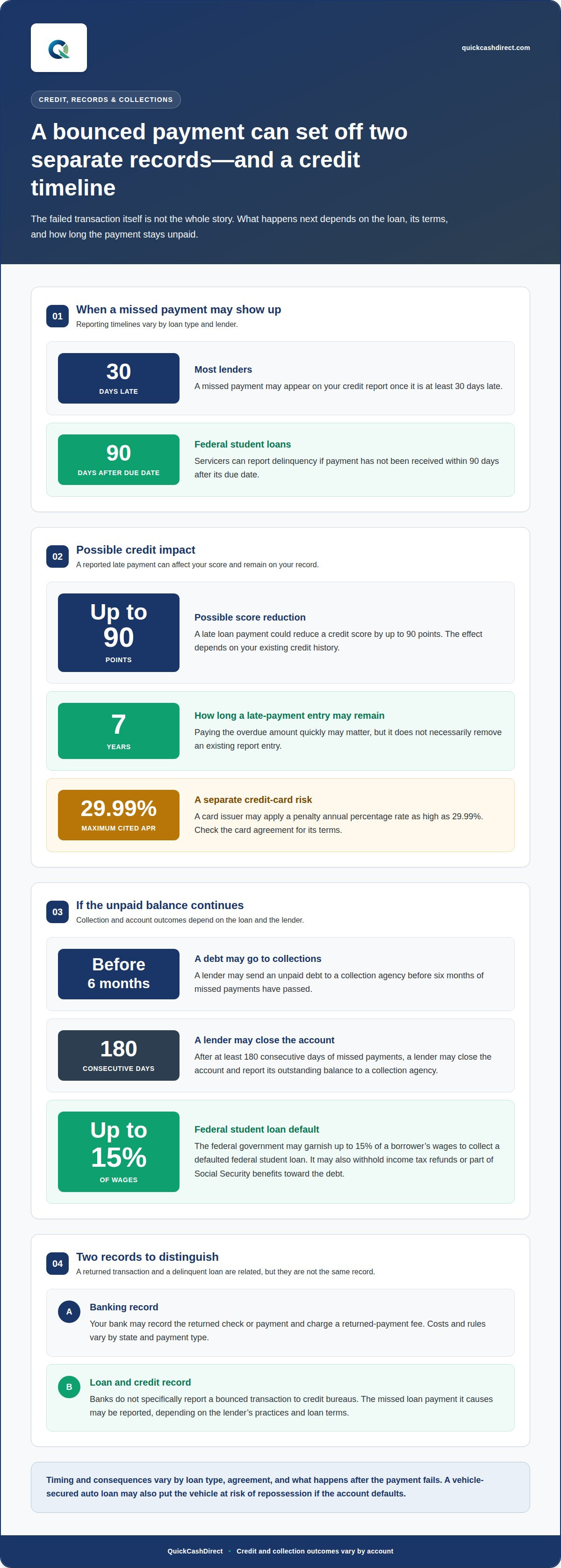
A bounced payment can cause two separate issues: your loan may become delinquent, and your bank may record a returned transaction. The timing and consequences depend on the loan type, your agreement, and what happens after the payment fails.
Loan Delinquency and Credit Reporting
Delinquency means a required payment remains unpaid after its due date. For most lenders, a missed payment may appear on your credit report after it is at least 30 days late. Federal student loan servicers can report delinquency if payment is not received within 90 days after its due date, according to the U.S. Department of Education.
Banks don’t specifically report a bounced transaction to credit bureaus, but the missed loan payment it causes may be reported. Personal, auto, and mortgage lenders follow their own reporting practices and loan terms; student loans have separate timelines. Contact the lender promptly and ask whether it received the payment or recorded your account as delinquent.
Potential Credit-Score Effects
A reported late payment can lower your credit score, with the effect depending on your existing credit history. A late loan payment could reduce a score by up to 90 points. The entry may remain on your record for seven years, so paying the overdue amount quickly can matter even if it doesn’t remove an existing report entry.
Credit cards work differently from installment loans. A card issuer may apply a penalty annual percentage rate as high as 29.99%. Check the card agreement for the terms and contact the issuer if a bounced bank payment also caused a missed card bill.
Banking Records and Returned-Payment Fees
Your bank may record the returned check or payment and charge a returned-payment fee. Returned-check costs and rules vary by state and payment type; some states base fees on the check amount rather than charging a flat rate.
Ask the lender which charges apply to your loan and whether it received a replacement payment. Keep the account record and payment confirmation, especially if you believe the transaction was processed incorrectly.
Collection and wage garnishment
A bounced payment can leave an unpaid balance that becomes harder to resolve if you miss further installments. Collection activity and legal consequences depend on the loan, its terms, and whether the lender pursues the debt.
Collections and Legal Action
A lender may send an unpaid debt to a collection agency before six months of missed payments have passed. Collection can therefore begin sooner than some borrowers expect. The agency may pursue repayment, and the unpaid balance can remain a financial concern after the original payment failure.
For missed payments that continue, a lender may close the account after at least 180 consecutive days and report its outstanding balance to a collection agency. A lender may also sue over unpaid debt. If it wins legal action, the borrower may face wage garnishment until the balance is repaid. Respond to collection notices promptly and keep records of payments, letters, and any court documents. For a federal student loan, default can also lead to a lawsuit for the loan amount, interest, court costs, and other penalties.
Wage Garnishment
Wage garnishment means money is withheld from a borrower’s paycheck to repay a debt. For a defaulted federal student loan, the federal government may garnish up to 15% of the borrower’s wages to collect the debt, according to the U.S. Department of Education. This can reduce take-home pay while the balance remains unpaid.
Other collection outcomes may apply to federal student loans in default. The federal government may withhold income tax refunds or part of Social Security benefits toward the debt. If you receive a notice, identify the loan and amount claimed, then contact the servicer or collection office listed. Ask how to submit payment information or discuss available resolution options.
Auto loans carry an additional risk because the vehicle may secure the debt. If payments remain unpaid and the account defaults, repossession may put your transportation at risk. Check the loan agreement and respond promptly to lender notices. A personal loan typically has no vehicle tied to its balance, but continued nonpayment can still lead to collections or legal action.
Contacting a lender about hardship options
After a payment bounces, contact the lender or loan servicer promptly. Explain that the payment failed, say whether replacement funds are available, and ask how the account is classified. For student loans, contact the servicer directly. If a payment is still pending at your bank, share the transaction date. Knowing what happens if a loan payment bounces can help you focus the call on your account status and immediate options.
Explain the difficulty clearly and say what you can afford. For example, describe whether reduced income or an unexpected bill prevents you from making the full payment. Ask which hardship arrangements your loan terms allow and how each could affect your balance, payment schedule, interest, and account status. Don’t assume that discussing your situation pauses collections or credit reporting.
- Give the lender your account details, missed due date, and reason the payment failed.
- State what amount you can pay now and when you expect your next funds.
- Ask which hardship options apply, what payments they require, and when an arrangement begins.
- Request written terms covering fees, interest, delinquency status, and future installments.
Record the call, the representative’s name, and any follow-up messages. If you reach an agreement, follow its payment instructions and save each confirmation. If a collection agency now handles the account, ask for its details and the balance it is handling. Keep payment evidence and correspondence with your loan records.
Understanding what happens if a loan payment bounces also means recognizing that a hardship request doesn’t erase a missed payment or guarantee a particular outcome. Give the lender clear information, respond to document requests, and don’t promise payments you can’t make. For federal student loans, contact the servicer about payment difficulties instead of leaving the issue unanswered.
Grace periods and late payments
A grace period gives you extra time after a due date before certain penalties apply. Check your loan agreement for the terms, dates, and conditions before assuming a bounced payment still qualifies.
Loan grace periods are typically 10-15 days after the due date. A typical period lasts 15 days, but your agreement controls the actual deadline. Some lenders may continue charging interest during this time, even if they delay a late fee. A payment made before the grace period ends may avoid a penalty, but the loan balance can still accrue interest.
A failed transaction may not count as a completed payment. Contact the lender to find out whether it received the funds, which date it recorded, and whether the grace period still applies. If you can pay, use an accepted payment method and save the confirmation. A partial payment may help, but ask how it will be applied to your balance.
Some lenders may waive a late fee when a borrower explains a first missed payment. Ask directly and get any fee adjustment confirmed in writing. Late fees added to a balance may accrue interest if they remain unpaid.
One missed payment may also affect future terms. A lender may remove the grace period on later payments, making a subsequent late payment more costly. Continued nonpayment can bring more serious consequences after 60-90 days. Pay promptly if you can, and contact the lender before the next due date if the same budget problem may continue.
Payment timing can matter for credit reporting, too. Making a payment within 30 days of becoming late might avert a negative credit report entry, though it isn’t guaranteed. Don’t treat that window as extra time: credit bureaus may receive reports once a payment is at least 30 days late. If an urgent expense has disrupted your budget, review short-term loan options carefully before taking on another payment.
QuickCashDirect
QuickCashDirect offers payday loans, cash advances, online payday loans, and loans for bad credit. These short-term options may be worth considering if an unexpected expense has disrupted your budget and you need to assess another source of funds.
A new loan won’t reverse a bounced payment or change your current lender’s records. Keep working with that lender to address the missed amount, and compare any new loan’s repayment terms with your income and upcoming bills. Borrow only if the payments fit your budget.
For help exploring available loan options, contact QuickCashDirect.
Choose a manageable next step
Knowing what happens if a loan payment bounces can help you make a more deliberate choice. Before taking on another financial commitment, compare its payment with your regular income and essential bills. Consider whether the new obligation could make it harder to keep your existing loan current. A clear budget can help you decide whether borrowing suits your situation or another arrangement is more practical.
QuickCashDirect offers Payday Loans, Cash Advance, and Payday Loans Online for people exploring short-term borrowing. Review the terms carefully and consider how repayment fits your finances before moving forward. If you’re ready to discuss available options, contact QuickCashDirect. Take the next step with a clear plan and choose an option that works for your budget.
Frequently Asked Questions
What happens when a loan payment is returned or bounces in the US?
The payment may not reach the lender, leaving the installment unpaid. Your bank may record the returned transaction, and your lender may add charges under your agreement. For example, if an automatic withdrawal fails because funds aren’t available, contact the lender and ask how to make a replacement payment. Keep the bank notice and payment confirmation with your loan records.
Can a late or returned loan payment hurt your credit score?
Yes. A returned transaction by itself isn’t specifically reported by banks to credit bureaus, but the missed loan payment it causes may affect your credit. Most lenders report missed payments once they’re at least 30 days late. Check your account status with the lender, then review your credit reports for an entry that doesn’t match your payment records.
How long is the grace period for a missed loan payment?
Loan grace periods are typically 10-15 days after the due date, but the loan agreement sets the applicable period. Some lenders may charge interest during that time, even if a late fee hasn’t been added. Find the grace-period terms in your agreement and ask the lender which date it uses for a returned payment, so you know the deadline for resolving it.
Can a lender retry a bounced loan payment automatically?
A lender may retry a payment under the payment authorization and loan terms, but don’t assume a retry is scheduled. Check your agreement or payment notices for the lender’s process. Contact the lender if the debit is pending or your account balance has changed. Confirm whether it will retry or expects you to submit a replacement payment, and avoid paying twice.
What happens if you miss multiple loan payments or default?
Repeated missed payments can lead to collection activity, account closure, or legal action, depending on the loan and lender. Default on a federal student loan can bring additional consequences: the government may require the full balance immediately, and you may lose access to federal student aid until you resolve the default. Contact the servicer to discuss your account and available steps.