
Same-day funding starts after approval, not simply when you apply. Some emergency-loan borrowers may receive funds on the day they’re approved, so an instant cash loan today does not necessarily mean money arrives immediately.
When an urgent bill is due, timing matters, as does understanding the cost of borrowing. A credit line may charge interest on the amount you borrow, while a personal loan may use a different repayment structure.
Learn what can affect emergency-loan timing, how credit-line interest works, and how same-day lenders compared through QuickCashDirect stack up against traditional banks. You’ll also see what to review before choosing a short-term loan, including the repayment schedule and how the funds are delivered. Use these details to understand the trade-offs, set realistic timing expectations, and decide which option fits your immediate need.
Key Takeaways
- Separate application, approval, and funding timing so you can plan around when money may actually arrive.
- Understand how a line of credit applies interest to borrowed amounts before comparing repayment costs.
- Compare payday loan repayment structures with other short-term borrowing options to see which better fits your cash-flow needs.
- Weigh same-day lender timelines against traditional bank processing, then explore QuickCashDirect’s short-term loan options if they suit your needs.
How Fast Can I Get an Emergency Loan?
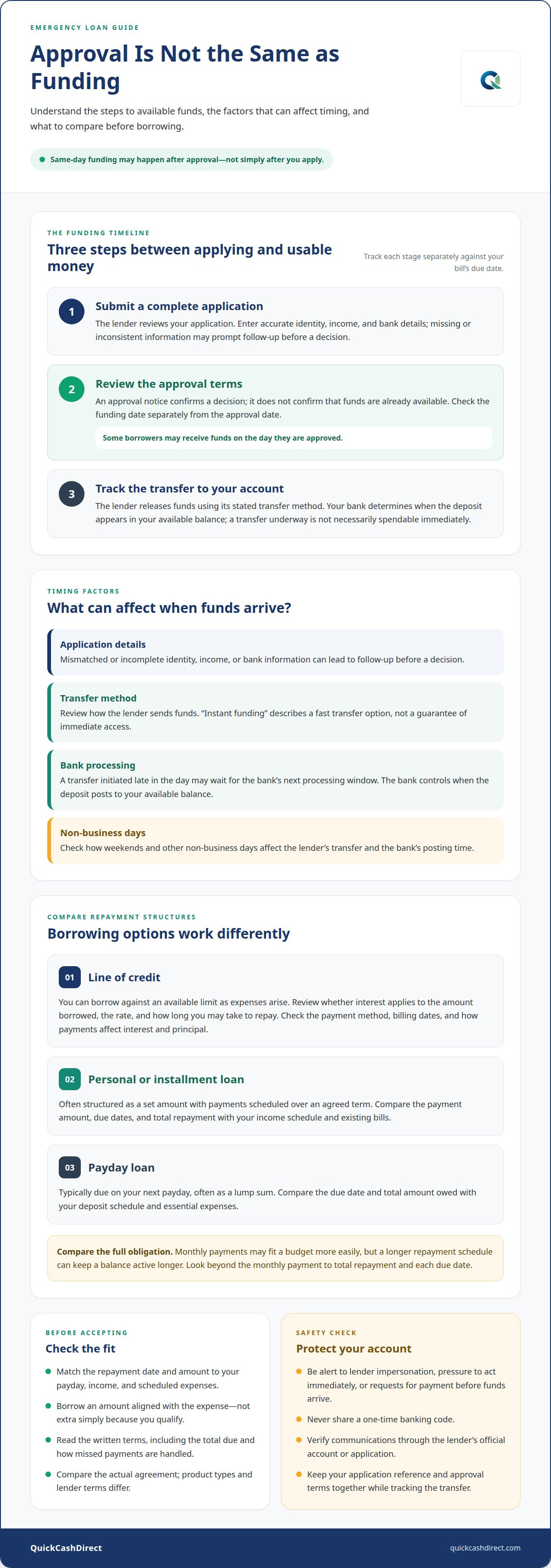
Some emergency-loan borrowers receive funds on the day they’re approved. Separate the application, approval, and funding steps to understand when money may reach your account.
Watch for lender impersonation, pressure to act immediately, or requests for payment before funds arrive. Don’t share a one-time banking code. Verify communications through the lender’s official account or application.
Approval and Funding Timelines
Approval begins when the lender reviews a completed application. Missing or inconsistent details may prompt follow-up before a decision. Some borrowers receive emergency-loan funds on the day they’re approved. Check the funding date separately from the approval date, then compare it with your deadline for rent, utilities, or another urgent expense. An approval notice confirms a decision; a deposit notice indicates that a transfer is underway.
Bank Transfer Timing
After approval, the lender releases funds using its stated transfer method. Your bank determines when the deposit appears in your available balance. “Instant funding” describes a fast transfer option, not necessarily immediate access to spendable funds. A transfer initiated late in the day, for example, may wait for the bank’s next processing window. Review the transfer method and how non-business days affect posting.
Application and Funding Process
Follow three steps: submit the application, read the approval terms, and track the funding. Enter accurate identity, income, and bank details, since mismatches can trigger follow-up. Before accepting, compare the repayment date and amount with your payday and scheduled expenses. If a deposit is delayed, review the lender’s transfer details and your bank account activity. Keep the application reference and approval terms together while tracking the transfer.
Lines of credit and interest on borrowed amounts
A line of credit lets you borrow against an available limit as expenses arise. Compare how interest applies to the balance with the scheduled payments and total repayment.
Interest on Borrowed Amounts
With a credit line, check whether interest applies to the amount borrowed or is calculated another way. The amount used, interest rate, and time before repayment affect what you owe. Borrowing part of an available limit, for example, differs from using the full amount. Read the agreement’s rate, payment method, and billing dates before drawing funds.
Check how payments affect the outstanding balance, too. Depending on the agreement, a payment may cover interest and reduce principal. Track each withdrawal and payment through your bank account to make the remaining balance easier to compare with your budget.
Repayment Terms
Personal and installment loans generally provide a set amount with payments scheduled over an agreed term. Before accepting, review the payment amount, due dates, and total repayment. Choose an amount that matches the expense instead of borrowing extra simply because you qualify. A smaller balance can be easier to plan for.
Online installment loan amounts depend on the lender’s assessment and the approved terms. Compare the offered amount with your actual need, and confirm that payments fit your income schedule and existing bills. A calendar reminder can help you track due dates and stay on top of the repayment plan.
For a California payday loan comparison, review the amount offered, repayment date, and total due together. Don’t assume its terms match a Memphis credit line or personal loan. Product type and lender terms shape how borrowing works. Compare the agreement’s actual figures before deciding, and keep the amount borrowed aligned with the expense you need to cover.
Questions About Payday Loans?
A payday loan is typically a short-term loan due on your next payday. That timing may suit an expense that comes before payday, but repayment could fall when your income is already committed to rent, utilities, or other bills. Before accepting, compare the due date and total amount owed with your deposit schedule.
Safer alternatives can include asking a biller about a payment arrangement or comparing a personal installment loan with scheduled payments. Choose an option whose repayment fits your income, and avoid borrowing more than the unexpected expense requires.
Cash advances and payday loans can differ in how you access and repay funds. A payday loan is generally due as a lump sum, while an installment loan divides repayment into scheduled payments. Review the written terms, including payment dates and how missed payments are handled. Check the lender’s license information and make sure the agreement states how much you’ll receive and owe.
Monthly payments may make an installment loan easier to fit into a budget, but a longer repayment schedule can keep the balance active longer. Compare the full repayment obligation, not just the monthly payment. Before choosing a term, map each due date against expected income and essential expenses.
Personal loans and title loans work differently. A personal loan is based on the lender’s review of your application, while a title loan uses a vehicle title as security. If you fail to repay, you could put the vehicle at risk. Compare the repayment structure and potential consequences before using a title loan to cover an urgent bill.
Use a simple comparison before deciding:
- Payday loan: Check the next-payday due date and whether repayment comes in a lump sum.
- Installment loan: Review scheduled payments, monthly budget fit, and total repayment.
- Cash advance: Confirm how the advance is accessed and when repayment is due.
Same-day personal loan lender comparisons
Compare lenders by more than how quickly they make a decision. A personal loan’s funding timeline, interest, term, and repayment charges all affect whether it fits an urgent expense. Distinguish the approval estimate from the time it takes for funds to reach your bank account.
Traditional banks typically disburse personal loan funds within seven business days of approval, which may not suit a bill due sooner. Online applications may offer a faster decision, but an answer in minutes does not mean the deposit will arrive then. Compare the stated funding method and timing, not just the speed of the application.
Review each offer using the same checkpoints. This makes differences easier to spot before accepting:
- Decision: Identify whether the stated time covers application review or approved funding.
- Transfer: Check the delivery method and when funds are expected to reach your account.
- Cost: Compare interest and any charge shown in the agreement.
- Repayment: Match the loan term and due dates against your income schedule.
If a utility bill is due before a bank’s stated disbursement window, for example, timing may outweigh convenience. If the bill can wait, compare the full repayment obligation instead of choosing based only on speed. A shorter loan term can mean payments start sooner, while a longer term extends repayment. Use the written terms as your comparison record.
Distinguish a preliminary decision from final approval, too. The lender may need complete application details to finish its review. Before accepting, read the offer and confirm the amount, interest, term, transfer method, and any charges. These details show what the lender is offering and whether the funding timeline matches your deadline.
Choose an option with a funding schedule that meets your need and repayment terms that fit your budget. A fast decision alone answers neither question.
QuickCashDirect: Payday Loans
QuickCashDirect helps people seeking urgent funds explore short-term borrowing options. Consider its payday loans or cash advances when an unexpected expense needs attention and you’re comparing repayment timing with your next income. Online payday loans provide an application route, while loans for bad credit may suit borrowers concerned about credit history.
Before choosing, compare the offered amount, repayment date, and total obligation with your budget. A payday loan may require repayment as a lump sum, so check whether that timing fits your upcoming bills. Review the terms carefully and proceed only if the repayment plan works for you.
Visit QuickCashDirect to explore its options.
Choose a Next Step That Fits Your Budget
Before moving forward, work out what the emergency expense requires and what repayment can fit alongside essential bills. Keep both figures in view as you consider an instant cash loan today. Setting a clear borrowing limit can help prevent an urgent expense from creating a longer budget strain.
QuickCashDirect offers payday loans, cash advances, and payday loans online. Compare the available option with your repayment schedule, then review its terms before making a decision. Focus on the obligation you can manage, not only on how quickly you want funds.
Take the next step with a clear view of your need and repayment plan. Contact QuickCashDirect to discuss your options. A deliberate choice can help you address the immediate expense and keep your finances moving forward.
Frequently Asked Questions
How much can I borrow?
The lender receiving your application assesses your request and decides whether to make an offer. Work out how much the emergency expense requires, for example, and avoid requesting extra without a clear purpose. Approval isn’t guaranteed and depends on the lender’s criteria.
What are emergency loans?
Emergency loans are borrowing options for urgent, unexpected expenses, such as a necessary repair or overdue bill. They can include payday loans, cash advances, or installment loans, each with its own repayment structure. QuickCashDirect is a loan-introduction service that connects applicants with lenders. Review the agreement from any lender making an offer to understand the actual borrowing terms.
Can I be charged any other fees?
QuickCashDirect’s loan-introduction service is free to use. A lender may include fees in an offer, and its loan agreement will disclose them. Before accepting, read the agreement and note each charge, when it applies, and how it affects total repayment. A preliminary offer does not replace the final written terms.
How do I qualify for an emergency loan, and what do I need to apply?
All credit scores are welcome through QuickCashDirect, but lenders focus on income and ability to repay, and approval isn’t guaranteed. Complete the online application accurately, including the requested financial and bank account information. Checking rates through QuickCashDirect does not affect your credit score. Whether a lender checks your credit and when depends on its process, so review the application terms before proceeding.
Is there a fee for paying off the loan early?
Early payoff is generally allowed without penalty, but borrowers must review their specific agreement. Check the lender’s instructions for requesting a payoff amount and submitting the final payment. Confirm that the payment covers the remaining balance through the payoff date, then keep the confirmation for your records. The signed agreement governs your loan terms.
What happens if I can't make a payment on time?
Your loan agreement explains what happens if a payment is late, including any charges and the lender’s process. If you expect a shortfall, contact the lender before the due date. Ask which options the agreement allows and keep a record of the response. Review your upcoming bills and income before committing to a revised payment plan.