
A hardship letter should do more than explain a missed payment. To understand how to write a hardship letter for a loan, state what changed, when the hardship began, how long you expect it to last, and what payment plan you can afford. Clearly ask for the assistance you need.
Keep your explanation honest and focused. Describe the steps you’ve taken to address the problem, then support your request with relevant financial details. A specific, workable proposal gives the lender a clear basis for considering your situation.
This guide explains what to include, how to structure your request, and how to use a simple creditor letter template. You’ll also learn how to send your letter and keep a copy of what you submitted. Follow these steps to explain your circumstances clearly and make your proposed plan easy to assess.
Key Takeaways
- Explain what caused the payment difficulty, when it began, and how long you expect it to last.
- Propose a payment amount and start date that fit your current budget, and state the specific assistance you’re requesting.
- Include relevant account details and supporting financial documents so the creditor can assess your situation.
- Keep a copy of your letter and delivery record, then save written confirmation of any payment plan you agree to.
Describing the change that makes payments affordable
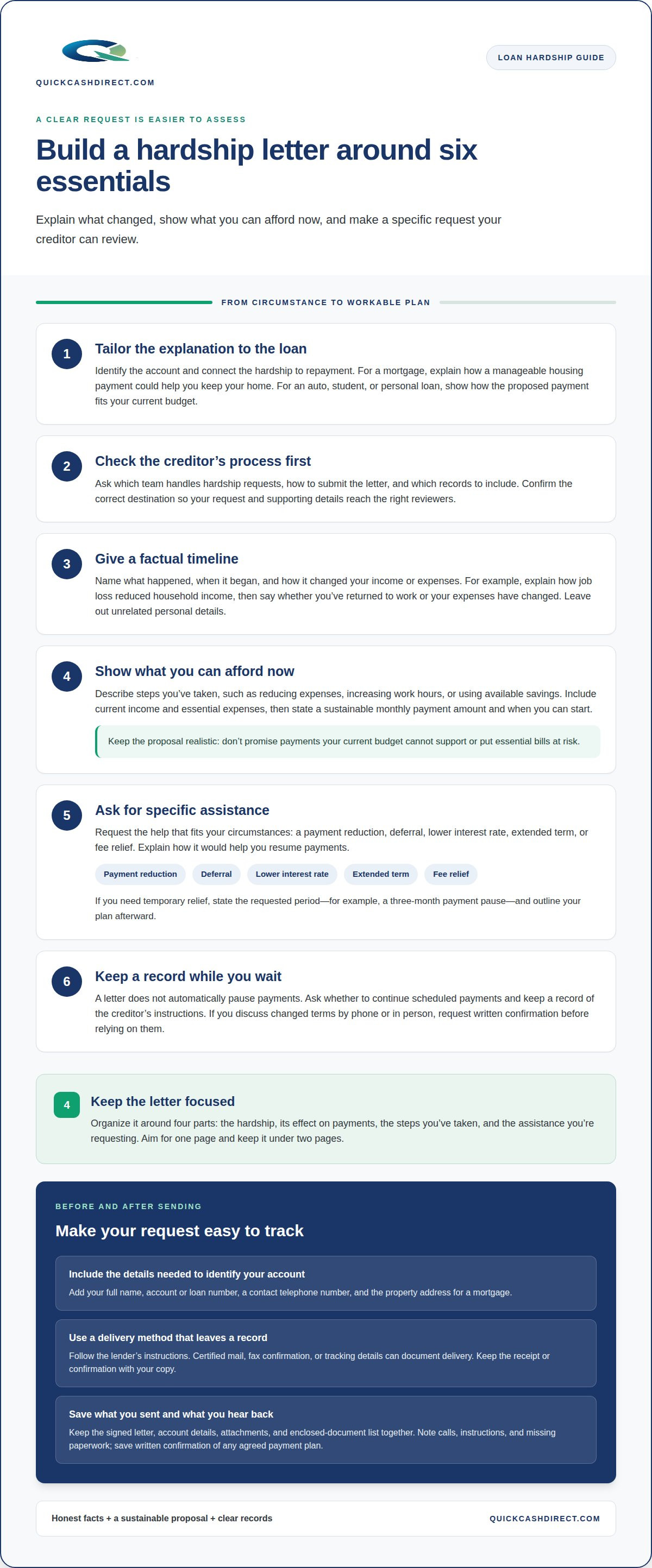
- Tailor the explanation to the loan. A mortgage letter can connect the hardship to keeping your home and propose a manageable housing payment. For an auto, student, or personal loan, identify the account, explain what changed, and show how the proposed payments fit your current budget.
- Contact the creditor before writing to ask how to submit your request and which records to include. The lender reviews your explanation, financial details, and proposed plan before responding. Organize your information and reply promptly if the lender requests more details.
- Explain why payments fell behind with a clear timeline. Name the event, when it began, and how it affected your income or expenses. For example, describe a job loss that reduced household income, then say whether you’ve returned to work or your expenses have changed. Keep the explanation factual and concise.
- Show what has changed and why you can now afford payments. List steps you’ve taken, such as reducing expenses, increasing work hours, or using available savings. Include your current income and essential expenses, then state the monthly amount you can sustain and when you can start paying it.
- Make a specific request. Ask for a payment reduction, deferral, lower interest rate, extended term, or fee relief, and explain how it would help you resume payments. If you need temporary relief, state the requested period, such as a three-month payment pause, and outline your plan afterward.
- Don’t assume that writing a letter pauses payments. While you wait for a decision, ask the creditor whether you should continue scheduled payments and keep a record of the instructions. If you agree to a plan by phone or in person, request written confirmation before relying on changed payment terms.
What is a Hardship Letter?
- Explain the hardship in terms of its effect on your loan payments. A financial hardship is a change that makes it difficult to meet an existing obligation. For example, reduced work hours can lower your income while your mortgage payment stays the same. Connect the change to your account rather than describing only general financial stress.
- Explain the situation clearly without sharing private details that don’t affect repayment. State what happened, when it began, and how it changed your income or expenses. For example: “My hours were reduced, lowering my monthly income, and I fell behind on my mortgage.” Leave out unrelated family history or personal details.
- Name the cause accurately. Common hardships include unemployment, reduced wages, declining self-employment earnings, disability, serious illness, divorce, medical expenses, a natural disaster, urgent home repairs, increased child care costs, or a mortgage payment change. Choose the reason that matches your situation and describe its direct effect on your ability to pay.
- Show how you plan to pay down debt after the hardship. First, list essential expenses, current income, and required payments. Then calculate what remains for overdue balances without putting housing, utilities, or other essential bills at risk. If your income has improved, explain what changed and how it supports a realistic repayment proposal.
- Focus on facts the creditor can use to assess your request. State how long you expect the hardship to last and what steps you’ve taken, such as seeking additional work or reducing discretionary expenses. Supporting records can connect your explanation to your finances. Avoid exaggeration, blame, or promises your current budget cannot support.
Sending and keeping copies of the letter
- Contact the lender before sending your letter. Ask which department or process handles hardship requests and whether it accepts mail, fax, or another submission method. Confirm the correct destination and which documents the lender needs. A letter without the right account details or supporting records may not reach the team reviewing your request.
- Keep the letter brief, honest, and focused on repayment. Aim for one page and organize it into four parts: the hardship, its effect on payments, steps you’ve taken, and the assistance you’re requesting. Keep it under two pages. A handwritten letter is acceptable if it’s clearly legible.
- Choose a delivery method that leaves a record. You may send the letter by certified mail or fax it to the company. Priority mail can help you track delivery. Keep the receipt, fax confirmation, or tracking details with your copy. Follow the lender’s instructions if it specifies a submission method.
- Save a complete copy before sending. Keep the signed letter, account details, attachments, and a list of enclosed documents together. Store digital files in one place or keep paper copies in a folder. If the lender calls, note the date, the representative’s name, and any instructions about payments or missing paperwork.
- Avoid exaggerating, blaming the lender, omitting relevant facts, or promising payments you can’t afford. Don’t send original financial records unless the lender requests them, and don’t assume delivery means approval. If you discuss a payment plan by phone or in person, ask for written confirmation and keep it with your letter.
Creditor hardship letter template
- Gather the details the creditor needs to identify and assess your request. Include your full name, account or loan number, property address for a mortgage, and a telephone number where you can be reached. Add the date and address the letter to the creditor or department handling hardship requests. This gives your request a clear starting point.
- Use this template, replacing each highlighted placeholder field with your accurate personal details. It shows how to write a hardship letter for a loan in a direct, organized format:
“[Insert Date]
[Insert Creditor Name]
Re: Account [Insert Account Number]
I’m requesting [Insert Specific Assistance] because [Insert Hardship Description] began on [Insert Start Date]. This reduced my income or increased my expenses, making it difficult to maintain the agreed payments. I expect this situation to continue until [Insert Expected Duration].
I have [Insert Steps Taken]. My current budget supports payments of [Insert Monthly Amount] monthly, beginning [Insert Proposed Date]. Please consider [Insert Requested Payment Plan or Relief] so I can return to regular payments.
I’ve included [Insert Supporting Records]. Please contact me at [Insert Telephone Number] about this request.
Sincerely,
[Insert Borrower Signature and Printed Name]” - Make the request specific. In one sentence, name the relief you want, such as a reduced payment, loan-term extension, temporary deferral, or fee waiver. State the monthly amount you can manage and your proposed start date. This is the core of how to write a hardship letter for a loan: give the creditor a practical proposal to assess.
- Attach relevant records, such as income information, expenses, recent tax returns, savings, assets, mortgage details, or other debt payments. Refer to each attachment in your letter. Include only documents that support your explanation, and keep a copy of every page you send.
- A hardship arrangement can affect credit reporting, fees, and the loan balance, depending on its terms. Some lenders, similar to policies you might discuss with QuickCashDirect, may agree not to report late payments to credit reporting agencies, but don’t assume this applies. Before accepting an arrangement, ask for written terms explaining any fee changes, interest, payment allocation, and how the balance may change.
QuickCashDirect
QuickCashDirect connects people seeking short-term financial options with payday loans, cash advances, online payday loans, and loans for bad credit. A hardship letter addresses your existing creditor’s payment plan; it doesn’t provide new funds or change that creditor’s decision. If you’re considering another borrowing option for an immediate expense, first review its repayment terms and consider whether payments fit your budget alongside existing debts. Keep the letter and any proposed payment plan focused on what you can realistically afford. Separate the two decisions: request workable terms from your current creditor, then assess whether additional borrowing fits your overall repayment plan. For information about available options, contact QuickCashDirect.
Choose a payment plan you can sustain
Before accepting a creditor’s proposal, compare each payment with your current budget and upcoming expenses. A lower payment may extend repayment or change the total balance. Read the written terms carefully and make sure you understand when payments begin, how the creditor applies them, and what happens if your circumstances change.
Use the letter as a clear record of your request, not as a promise to pay more than you can manage. Knowing how to write a hardship letter for a loan helps you explain your needs and propose a practical way forward. Review the agreement, save the creditor’s response, and follow the confirmed payment schedule.
If you’re considering separate borrowing for an urgent expense, weigh that decision against your existing obligations before proceeding. Explore options with QuickCashDirect. Take one informed step at a time, and build your plan around payments you can realistically maintain.
Frequently Asked Questions
What is Financial Hardship?
Financial hardship is a change in your circumstances that makes an existing loan payment difficult to manage. For example, a medical bill may reduce the money available for a personal loan, while a disaster may create urgent home-repair costs alongside a mortgage. In your letter, connect the event directly to your ability to pay so the creditor understands its practical effect.
What should a hardship letter for a loan include?
Include enough information for the creditor to understand your request and assess your ability to repay. Identify the loan, describe what changed, and explain how that change affected your payments. State what relief you’re asking the creditor to consider and why it would help. For example, if your work hours have returned, explain how that affects your proposed repayment plan.
How do you format and structure a loan hardship letter?
Use a clear business-letter layout, with your contact details and date at the top, followed by the creditor’s name and a direct subject line. Give each paragraph one purpose, and use plain language rather than legal or emotional arguments. End with your signature and a reliable way for the creditor to reach you. Proofread names and account details before sending.
What details and documents should you provide to support a hardship request?
Choose records that directly support the reason for your request. A recent pay statement can show an income change, while a medical bill can document a new expense. For self-employment income, records showing lower earnings can help explain the situation. Make sure each attachment is readable and relevant, and leave out personal documents that don’t help the creditor assess your request.
How do you request loan forbearance, deferment, modification, or a reduced payment?
Name the option you want and describe the result in straightforward terms. For example, ask whether the creditor will temporarily pause payments, change the loan terms, or accept a lower payment. State what you can manage and when that amount could start. Before agreeing, read the creditor’s written terms to understand how the arrangement affects future payments and the loan.
Where should you send a hardship letter, and who should it be addressed to?
Send the letter through the channel and to the address the creditor identifies for hardship requests. Address it to the relevant department, such as mortgage assistance or loan servicing, rather than assuming the payment address handles these requests. If the creditor gives submission instructions by phone, record them and follow them carefully. Keep proof of delivery with your copy of the letter.