
What if the intense panic you feel days before payday isn't an income shortage, but a simple calendar glitch? Watching your checking account balance drain while essential utility bills loom creates relentless financial stress. Most people run short not from careless spending, but because major expenses cluster at the wrong point in the pay cycle. When standard budgeting advice demands money you simply don't have, the fear of overdraft penalties and declined cards only escalates. Learning how to stop worrying about money between paychecks requires mastering your cash flow timing rather than forcing generic rules that fail your household.
You need predictable cash flow management that reliably protects your essentials throughout the entire pay period. This guide delivers a calm, structured action plan to conquer timing mismatches and permanently eliminate pre-payday panic. We outline clear, actionable steps to reschedule bill due dates, build a functional emergency cash buffer, and deploy rapid bridge strategies when unexpected financial emergencies strike.
Key Takeaways
- Pinpoint timing friction between bi-weekly direct deposits and rigid monthly billing cycles to eliminate cash shortages.
- Adopt paycheck-based cash mapping to assign every incoming dollar to specific bills before spending begins.
- Negotiate staggered due dates and split utility billing schedules to level out monthly payment spikes.
- Discover how to stop worrying about money between paychecks by deploying an immediate expense triage protocol during cash crunches.
- Access fast financial bridge options and build a dedicated checking buffer to shield your accounts from costly overdraft fees.
Understanding the Paycheck-to-Paycheck Cycle and Why Timing Triggers Anxiety
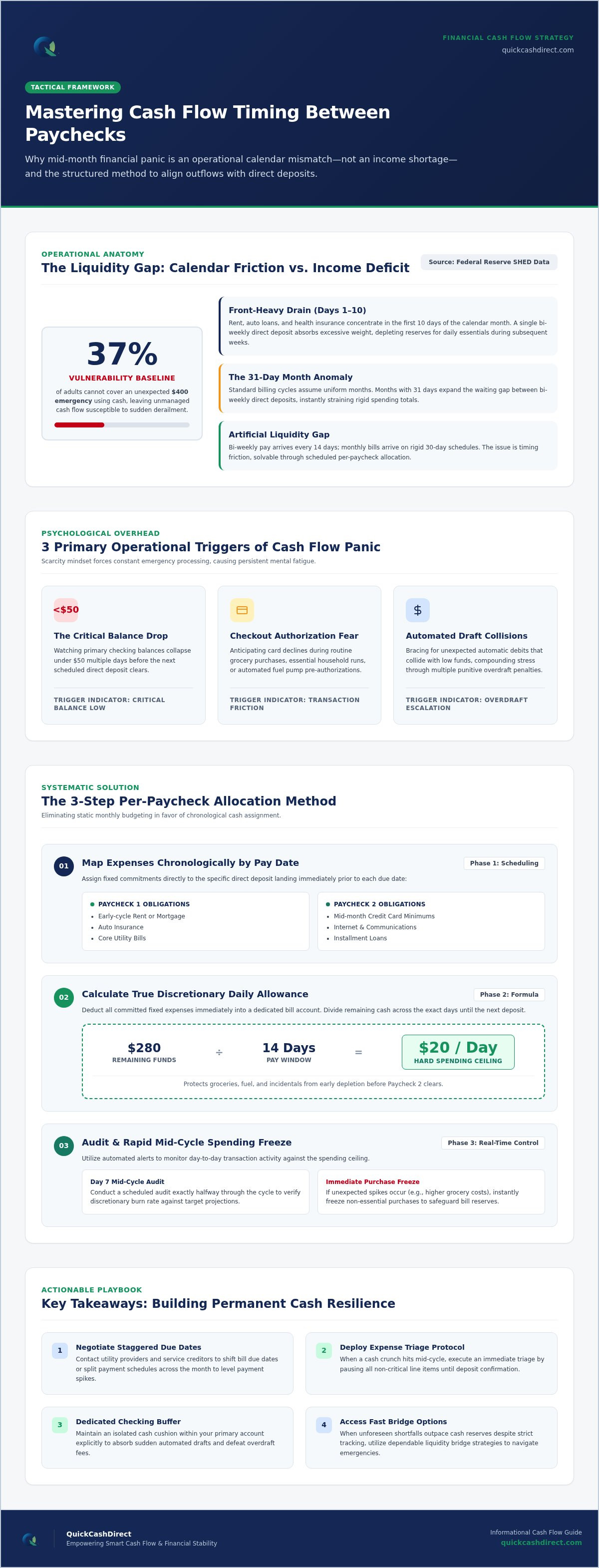
Living paycheck to paycheck is rarely a character flaw or a failure of willpower. Instead, it is an operational timing mismatch between when your money arrives and when your fixed expenses leave. When major bills fall on the first of the month, but your bi-weekly direct deposits land every fourteen days, cash reserves deplete rapidly. You face an artificial liquidity gap, not necessarily an income deficit. Understanding this calendar friction is the foundational step in learning how to stop worrying about money between paychecks.
The Mechanics of Cash Flow Mismatches
Monthly billing cycles assume a smooth, continuous flow of income that simply does not reflect reality. If your rent, auto loan, and health insurance process during the first ten days, your initial paycheck carries an excessive burden. This front-heavy drain leaves minimal disposable funds for food, fuel, or utilities during the following week.
Uneven calendar months make this problem worse. Months with thirty-one days extend the waiting window between disbursements, instantly wrecking rigid spending targets. Implementing proven personal budgeting methods helps align outflows with actual deposit dates rather than arbitrary monthly totals.
The Psychological Cost of Financial Uncertainty
Chronic financial monitoring drains mental energy fast. Scarcity mindset forces your brain into constant emergency processing, creating significant decision fatigue throughout the workday. You end up constantly tracking every small transaction to prevent disaster.
This persistent anxiety typically spikes around specific operational triggers:
- Watching your primary checking balance drop below fifty dollars days before your next scheduled direct deposit.
- Anticipating card declines during routine grocery purchases or gas pump authorizations.
- Bracing for sudden automated drafts that trigger multiple overdraft fees.
Resolve this stress by swapping emotional reactions for clinical, structured rules. When you recognize that mid-month shortages stem from timing conflicts, you can replace panic with systematic planning. Take control of your cash calendar today to discover true relief and master how to stop worrying about money between paychecks.
How to Budget by Paycheck to End Mid-Month Shortages
Static monthly budgets fail because your life moves in shorter cycles. Tracking an entire month at once hides the exact day your balance hits critical lows. Instead, adopt per-paycheck allocation. This tactical framework assigns every incoming dollar to a specific bill before you spend a cent. Data from the Federal Reserve's Survey of Household Economics and Decisionmaking shows that 37% of adults cannot cover a $400 emergency with cash, highlighting how quickly unexpected expenses derail unmanaged cash flow. Mastering this direct scheduling method is the fastest way to learn how to stop worrying about money between paychecks.
Step 1: Map Expenses Chronologically by Pay Date
Stop looking at monthly totals. Write down every fixed expense alongside its exact due date. Next, assign each obligation directly to the paycheck that lands immediately before it.
- Paycheck 1: Cover early obligations like rent, auto insurance, and essential utilities.
- Paycheck 2: Fund mid-month requirements like credit card minimums, internet, and loan installments.
Tag the vulnerable weeks where recurring bills outpace incoming funds. Identifying these pinch points early prevents last-minute scrambles.
Step 2: Calculate Your True Discretionary Daily Allowance
Deduct all committed expenses instantly the moment your direct deposit clears. Move these funds into a separate bill account so you never accidentally spend them. Take whatever cash remains and divide it by the exact number of days until your next direct deposit arrives.
This simple formula gives you your firm daily spending cap. If you have $280 left across 14 days, your daily limit is exactly $20. Stick to this hard ceiling for groceries, gas, and miscellaneous incidentals. It shields your account from premature depletion.
Step 3: Track Real-Time Transactions Against the Plan
Check your balances daily using automated banking alerts. Conduct a rapid mid-cycle audit on day seven to confirm your discretionary spending remains on pace. If unexpected grocery spikes threaten your targets, freeze non-essential purchases immediately.
When an unforeseen shortfall occurs despite strict tracking, explore a reliable cash advance to bridge urgent liquidity gaps before fees hit. Taking swift, measured action keeps your financial calendar secure and shows you precisely how to stop worrying about money between paychecks.
Proactive Strategies to Align Due Dates and Stabilize Cash Reserves
You don't have to accept the billing dates companies arbitrarily assign you. Most creditors, utility companies, and auto lenders allow you to shift payment deadlines to fit your deposit schedule. Realigning these due dates flattens payment spikes and proves how to stop worrying about money between paychecks without needing an instant raise. Practical resources like the CFPB Your Money, Your Goals toolkit offer structured bill calendars to map this realignment effectively.
Staggering Fixed Bills Across Pay Periods
Call your service providers directly to renegotiate your payment calendar. Contact customer service and use this straightforward script: "I get paid bi-weekly and am restructuring my cash flow. Please adjust my monthly payment due date from the 2nd to the 18th to match my direct deposit cycle." Most credit card issuers and insurers will process this request within one billing cycle at no cost.
Utility companies often provide levelized or budget billing plans. These programs average out your seasonal utility spikes into twelve identical monthly payments, preventing sudden summer or winter shocks. Always confirm the exact grace period and auto-draft dates after making adjustments so accounts don't debit early while changes take effect.
Implementing Micro-Buffers for Immediate Relief
Building protection doesn't require thousands of dollars immediately. Start small by automating a five- or ten-dollar transfer straight into a secondary account the second your wages land. Moving nominal amounts right away keeps you from spending them on impulse purchases.
These tiny transfers accumulate quietly in the background without straining your essential grocery or rent funds. Treat this micro-buffer as an untouchable reserve reserved strictly for late-cycle emergencies:
- Covering gas tank fill-ups during the final two days before direct deposit clears.
- Paying for urgent prescription refills without pulling from grocery allocations.
- Absorbing unexpected minor utility balance adjustments before penalties kick in.
Establishing these automated safeguards stops minor shortfalls from snowballing into bank fees, giving you an actionable system for how to stop worrying about money between paychecks.
Handling Unexpected Mid-Cycle Emergencies When Cash Runs Out
Mechanical breakdowns and medical co-pays don't wait for your direct deposit to hit. When a mid-cycle crisis strikes and your accounts are depleted, emotional distress can paralyze decision-making. You must execute a clinical triage protocol immediately to safeguard your essential lifestyle needs. Knowing exactly which obligations to fund and which to pause is central to understanding how to stop worrying about money between paychecks.
Triaging Urgent Expenses versus Deferrable Bills
Rank your outflows ruthlessly when funds dry up. Survival needs always take precedence over credit scores and administrative deadlines. Protect your household by categorizing every cost into an immediate action hierarchy:
- Tier 1: Non-Negotiables: Groceries, critical prescription medicines, transportation to maintain employment, and primary shelter costs.
- Tier 2: Negotiable Essentials: Electric and heating utilities, where state regulations often require notice periods before disconnection.
- Tier 3: Deferrable Obligations: Credit card balances, entertainment subscriptions, gym memberships, and non-essential retail accounts.
Contact your secondary creditors immediately to request written payment extensions or temporary hardship deferrals. Most lenders grant a short grace period without assessing penalties if you reach out before the due date. Turn off discretionary automated debits inside your banking app immediately to prevent multiple cascading overdraft penalties.
Evaluating Responsible Short-Term Bridge Options
When deferrals are exhausted and critical gaps remain, examine structured bridge solutions. Evaluate whether an advance from an employer program or local non-profit assistance can cover the immediate deficit. For rapid relief during severe timing mismatches, evaluate an emergency cash advance to stabilize your cash flow until the next scheduled direct deposit.
Online referral platforms simplify this bridge process by matching your scenario with established funding sources quickly. If severe mechanical repairs threaten your daily commute, reviewing tactical payday loans through verified lending networks delivers direct liquidity without extensive delay. Compare short-term connection options at QuickCashDirect to secure dependable bridge capital and discover actionable answers on how to stop worrying about money between paychecks.
Building Long-Term Financial Resilience to Break the Worry Habit for Good
Transitioning from pure survival mode to sustainable financial resilience requires tangible operational milestones. You don't need to eliminate every dollar of long-term debt before experiencing immediate relief. Real peace of mind begins when you insulate your checking account against daily volatility. Implementing a forward-looking cash strategy creates structural stability and provides the ultimate blueprint for how to stop worrying about money between paychecks.
Creating a One-Paycheck Forward Operating Buffer
Transform your spending timeline by aiming to fund next period expenses using wages earned during your previous cycle. Operating one full deposit ahead breaks the reactionary panic of waiting for electronic direct deposits to post. When your account carries an advance balance equal to one baseline pay cycle, unexpected billing dates no longer threaten your stability.
Accelerate this baseline cushion by capturing lump-sum cash events:
- Channel annual tax refunds directly into your primary checking buffer rather than discretionary purchases.
- Divert quarterly work bonuses or seasonal overtime earnings straight into reserve funds.
- Allocate side-gig receipts entirely toward funding this operational cushion until complete.
Paying fixed obligations two to three weeks before their formal due dates eliminates calendar stress. This buffer completely protects your household from transaction declines and automated overdraft fees.
Maintaining Continuous Financial Visibility Without Panic
Financial anxiety thrives on avoidance and uncertainty. Eliminate fear by institutionalizing a calm ten-minute administrative check-in every Friday morning. Review cleared charges, verify scheduled direct deposits, and match pending payments against your upcoming calendar targets. Replace stressful manual account logins by enabling precise push notifications for deposit alerts and account thresholds.
Systematic habits provide reliable daily protection, but emergency expenditures can occasionally drain your reserves before your next wage disbursement clears. When unexpected mechanical or urgent medical bills exceed your current buffer, connecting with trusted online referral lenders through QuickCashDirect delivers rapid emergency funding options to keep your plan secure. Combining automated oversight with accessible safety networks ensures you master how to stop worrying about money between paychecks permanently.
Take Control of Your Cash Flow Schedule Today
Eliminating pre-payday panic comes down to operational timing, not luck. Align your fixed bill due dates directly with your incoming direct deposits. Calculate clear daily spending allowances for each pay period, and commit to building a dedicated one-cycle buffer. Mastering this systematic cash calendar gives you the definitive plan for how to stop worrying about money between paychecks.
When sudden vehicle repairs or medical emergencies threaten your progress before payday arrives, act quickly to protect your accounts. Don't let temporary liquidity gaps turn into expensive overdraft fees. Connect with fast funding solutions today through our rapid online referral network. We match you with trusted lenders offering direct deposit options to cover urgent shortfalls efficiently. Execute your structured plan, protect your cash flow, and move forward with total confidence.
Frequently Asked Questions
Why do I always run out of money right before payday?
You run short because fixed bills cluster together unevenly on the calendar. When rent, loan payments, and utilities pull from your account during the same week, they wipe out your liquidity before the next deposit arrives. This creates an artificial timing gap rather than a true earnings deficit. Tracking spending against specific deposit windows is the first step in learning how to stop worrying about money between paychecks.
Can changing my bill due dates really stop my paycheck anxiety?
Yes, realigning due dates flattens high-expense weeks and restores steady liquidity. Calling utility providers, auto lenders, and credit card issuers allows you to shift due dates toward your second pay cycle. Spreading large recurring obligations evenly across every direct deposit eliminates cash depletion. This simple administrative adjustment balances your outflows without requiring extra income.
How do I start a budget when I am already living paycheck to paycheck?
Start by dividing your current paycheck rather than mapping out an entire calendar month. Deduct fixed bills scheduled before your next deposit, then divide whatever remains by the number of days until your next direct deposit arrives. That final calculation gives you an exact daily spending cap for food and fuel. Establishing this daily baseline provides a concrete framework for how to stop worrying about money between paychecks.
What should I do if an emergency expense hits between paydays?
Triage your obligations immediately by funding survival needs first and pausing non-essential payments. Contact secondary creditors to request temporary payment extensions before due dates pass. If you face critical vehicle repairs or essential medical needs, utilize an online referral service to connect with verified lenders offering rapid emergency loans. Securing bridge funding prevents missed work and stabilizes urgent household operations.
Is it better to pay an overdraft fee or seek short-term bridge financing?
Overdraft charges add up rapidly when multiple automatic debits hit an empty account, triggering compounding bank penalties within hours. A structured short-term bridge loan delivers upfront transparency and predictable repayment terms. Connecting with lenders through an online loan referral platform allows you to evaluate clear options. This approach prevents cascading bank charges from consuming your next paycheck before it even posts.
How much of a buffer do I need to stop worrying about money?
Begin with a starter buffer of a few hundred dollars to handle routine gas, grocery, and prescription fluctuations. Build this reserve gradually by redirecting small transfers or lump-sum tax refunds into a separate account. Your ultimate target is a one-paycheck forward operating buffer. Holding one full pay cycle in reserve ensures upcoming expenses are funded well before billing statements arrive.