
The interest rate alone doesn’t show what a loan will cost. APR includes the interest rate and certain fees, giving you a broader view of borrowing costs. Knowing how to read a loan agreement helps you connect that cost to the amount you receive, the payments you owe, and the terms that apply if you fall behind.
Loan documents can feel dense, especially when fees and legal terms appear alongside the repayment schedule. Read them in a clear order. This guide explains how to assess APR, confirm the loan amount, understand payment timing, and spot origination, late-payment, and insufficient-funds fees. It also covers default events and possible lender remedies, so you can understand the agreement before signing.
Key Takeaways
- Compare APR, not just the interest rate, to get a clearer view of a loan’s overall cost.
- Match the amount you’ll receive and the payment schedule against the agreement’s terms, including how fees affect the proceeds.
- Identify whether the loan is secured or unsecured, and understand what collateral or guarantee the agreement covers.
- Know which events count as default and what remedies the lender may use, including demanding repayment or seizing collateral.
Loan amount, interest rates, and payment schedules
To understand how to read a loan agreement, trace the principal, APR, interest rate, and repayment schedule. These loan terms show what you borrow, what borrowing costs, and when payments come due.
Principal, APR, and Loan Term
The principal is the amount borrowed, the interest rate is the cost of borrowing, and APR includes the interest rate and mandatory fees. The loan term sets how long repayment lasts. Together, these figures show how the loan amount connects to your total cost and monthly payment. Check that the principal matches the amount you requested. For example, a $15,000 vehicle loan has $15,000 in principal before interest and fees.
Check the schedule for each payment amount and due date. Payments may be monthly or quarterly. Loan amortization shows how each payment is divided between principal and interest, and those portions can change over the term. The term affects both the payment amount and total interest, so consider both when reviewing the schedule.
Mortgage costs can include other items. According to the Consumer Financial Protection Bureau, U.S. mortgage borrowers may typically be required to pay mortgage insurance when their down payment is less than 20 percent of the home price. Mortgage agreements may also show APR as one measure of cost and Total Interest Percentage to illustrate interest across the loan’s life.
Covenants, conditions, and representations define what borrowers must do and what must be true before funds are released. Conditions precedent set requirements for initial or future funding. Affirmative covenants require certain actions, while negative covenants restrict them. Representations are statements about the borrower’s circumstances, so inaccuracies can affect compliance with the agreement.
Fixed and Adjustable Interest Rates
A fixed interest rate stays the same throughout the loan term, while a variable rate can change periodically with market conditions. Many personal loans have fixed rates, keeping the rate and scheduled payments steady. Compare APRs, not just interest rates, for a broader view of costs because APR includes mandatory loan fees.
Knowing how to read a loan agreement also means checking whether a U.S. mortgage rate is locked. Some lenders lock the rate when issuing a Loan Estimate, while others do not. An adjustable mortgage rate can change after closing. Read the rate terms to understand when adjustments may occur and how they may affect payments.
Origination, late-payment, and insufficient-funds fees
Separate one-time charges from fees that can recur. An origination fee covers loan processing and may be paid upfront, deducted from proceeds, or added to the balance. Personal loan origination fees may range from 1% to 10% of the loan amount. The agreement should show how the fee is calculated and when it applies.
This difference affects the cash available when funds are disbursed, not the principal used to calculate interest. Compare the stated loan amount with the net proceeds and the amount you must repay.
Late-payment charges may apply when a scheduled payment arrives after the agreement’s deadline. Find the due date, any grace period, how the late fee is calculated, and whether a missed payment may affect your credit score. Then match each payment amount and due date to your expected cash flow.
An insufficient-funds fee may apply when a payment is returned. Check whether the agreement lists this charge separately from a late fee. A failed withdrawal can have more than one consequence under the agreement, so understand both the charges and the steps for bringing the account current.
Prepayment terms matter if you plan to repay early. Some personal loan agreements impose a prepayment penalty, while others allow extra payments or early payoff without one. Read how additional payments affect principal and total interest, and whether the lender applies them immediately.
A balloon payment creates a different repayment risk: a final lump sum much larger than the regular payments. This structure can appear in a U.S. mortgage. Identify any balloon amount, its due date, and the consequences of missing it. Treat every listed charge as part of the loan’s total obligation, not as a minor detail.
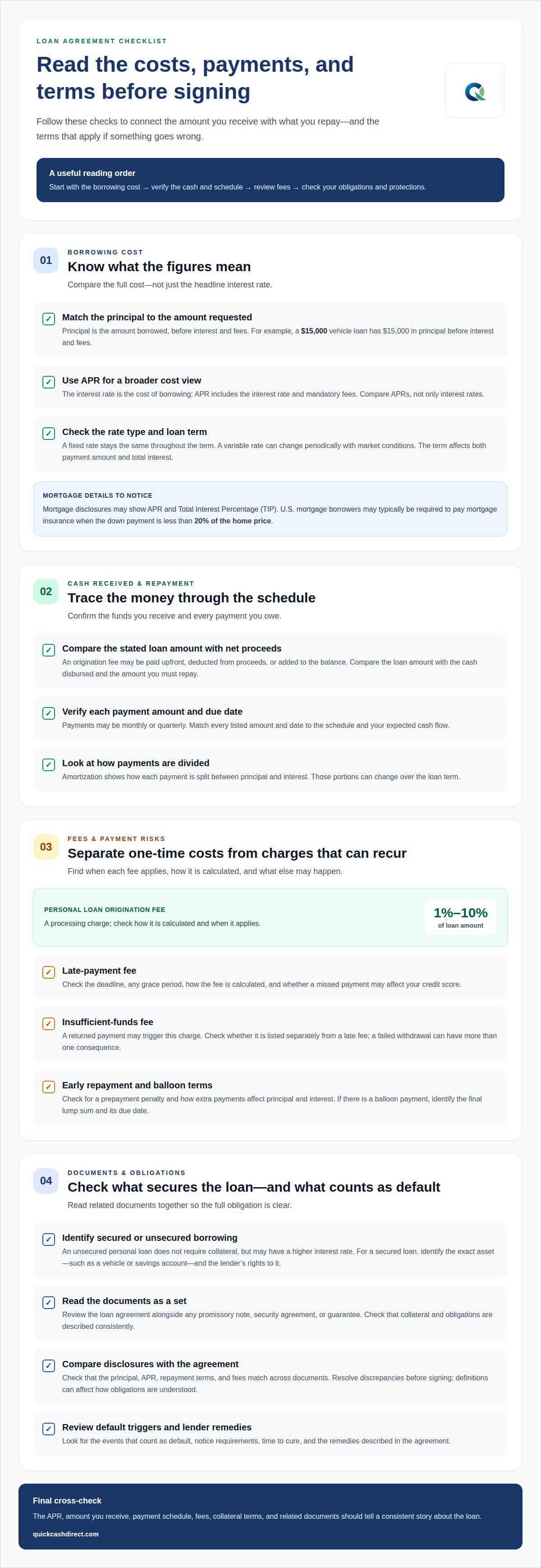
What's included in a personal loan agreement?
A personal loan can involve more than one document. Review the agreement alongside any promissory note, security agreement, or guarantee to understand the full obligation.
Collateral and Loan Security
Collateral is an asset pledged to secure repayment, giving the lender a claim to it if the borrower defaults. An unsecured personal loan doesn’t require collateral, but it may have a higher interest rate. Some secured personal loans use a vehicle or savings account as collateral, so identify the exact asset and the lender’s rights before signing.
Read the security agreement alongside the loan agreement and promissory note. Confirm how the documents describe the collateral, including any UCC categories, and whether another creditor already has a security interest in it. A guarantee creates a separate obligation for a third party if the borrower fails to meet specified terms. Compare guarantees and security agreements for conflicting descriptions or obligations.
Loan Disclosure Rules
Federal and state requirements can govern loan disclosures in the United States, with applicable rules depending on the loan and transaction. Read each disclosure alongside the agreement’s principal amount, annual percentage rate, repayment terms, and fees. Together, these details clarify the borrowing obligation and interest costs.
Disclosure documents and agreement language should present consistent terms. If the APR, loan amount, or repayment schedule differs between documents, resolve the discrepancy before signing. Definitions matter too: they establish how the agreement uses important terms and can prevent misunderstandings about your obligations.
Clauses to Negotiate or Review
Focus on clauses that affect repayment, collateral, and your options if a problem arises. Review prepayment terms, late fees, default triggers, notice requirements, time to cure, and lender remedies. For a secured loan, examine the lender’s rights over the named collateral. If a guarantee applies, understand which obligations the guarantor accepts and when they apply.
Some personal loan agreements require arbitration rather than court proceedings. Read that clause along with the governing-law, dispute, and amendment provisions. Don’t assume a verbal promise changes the signed terms. You can ask about unclear language or negotiate terms before signing. For complex documents, an attorney familiar with the loan type and size can review or negotiate the agreement.
Events of default and lender remedies
A default clause defines what counts as a breach and what the lender may do next. Read its triggers, notice rules, cure period, and remedies together.
Default Definitions and Events
Default means an event the agreement identifies as a failure to meet your loan obligations. A missed payment may trigger default, but the clause may also list other events. Find the definition and note whether the lender must send notice. If the agreement provides time to cure, identify the deadline and what action resolves the breach.
Check how the default clause connects to other terms. A late payment may first lead to a fee, while continued nonpayment may lead to default under the agreement. The timing and consequences depend on the written terms. Don’t assume every missed payment has the same result.
Consequences and Lender Remedies
Remedies are actions the lender may take after a default. An acceleration clause can let the lender demand immediate repayment of the remaining balance when its stated conditions are met. For a secured loan, remedies may include taking or foreclosing on collateral. The agreement may also allow legal action.
Read each remedy alongside its trigger, notice requirement, and cure period. A short cure window can leave less time to address a missed obligation. If a guarantor signed separate documents, review those terms too, because a guarantee creates a separate repayment obligation as described in the agreement.
Follow the agreement’s sequence to understand the potential impact: identify the event, confirm any notice, determine whether you can cure it, then review the lender’s stated remedy. This helps distinguish a late charge from acceleration or a claim against collateral. Missed payments may also affect your credit score. Keep the schedule and relevant notices together so you can compare dates with the agreement.
Default clauses affect more than the balance due. They can change when the lender may demand repayment and which assets could be at risk. Compare the remedies with the collateral description, interest rates, and origination fees elsewhere in the documents. Those terms do not replace the default rules, but they help explain the wider financial obligation if a breach occurs.
QuickCashDirect
QuickCashDirect provides access to short-term financial options for readers who understand their loan obligations and still need funds for an urgent expense. Its offerings include payday loans, cash advances, payday loans online, and loans for bad credit. Review the agreement for any option you consider, including the amount you’ll receive, repayment schedule, fees, and default terms. If the terms don’t fit your budget, pause before accepting. Clear loan terms help you make a more informed borrowing decision and understand what repayment requires.
For information about available options, contact QuickCashDirect.
Choose Your Next Step With Clarity
Before taking on a new obligation, decide what the funds need to cover and whether repayment fits your budget. Keep that purpose in view as you consider your options. Knowing how to read a loan agreement helps you decide based on the written terms, not urgency alone.
Give yourself time to consider the commitment. If a term is unclear, get an explanation before agreeing. If the payment schedule would strain your finances, pause and reconsider. A sound decision starts with understanding what you’re accepting and how it fits your priorities.
When you’re ready to explore available options, contact QuickCashDirect to discuss your options. Take the next step with care and confidence.
Frequently Asked Questions
What Is APR on a Loan?
APR expresses the yearly borrowing cost, including the interest rate and mandatory fees. Use it to compare offers with similar repayment terms, rather than treating it as the exact amount of interest you’ll pay. Total interest depends on the principal and repayment period. A longer term can mean more interest overall, even when the APR is unchanged.
Can a lender charge a prepayment penalty?
Some personal loan agreements include a prepayment penalty, so the contract determines whether early payoff costs extra. For loans introduced through QuickCashDirect, early payoff is generally allowed without penalty, but borrowers must review their specific agreement. Find the prepayment clause and distinguish a penalty from ordinary interest accrued before the payoff date.
How much will it cost if you make a late payment?
The agreement sets any late-payment charge, so there isn’t one amount that applies to every loan. Find the late-fee clause and note its trigger, calculation method, and any grace period. Look for separate insufficient-funds charges if an automatic payment is returned. A missed payment may also affect your credit score, beyond the stated fee.
What is the difference between an interest rate and APR?
The interest rate measures the cost of borrowing the principal, while APR also accounts for mandatory loan fees. This matters when two offers show similar interest rates but different charges. Compare APRs for a broader cost comparison, then read each fee clause to see what the APR includes and which charges may apply separately.
What sections are included in a typical loan agreement?
A personal loan agreement commonly identifies the parties, amount, interest terms, repayment schedule, fees, and default provisions. It may also include definitions, funding conditions, collateral or guarantee terms, lender remedies, notices, and dispute procedures. Related documents, such as a promissory note or security agreement, can add obligations, so read them with the main agreement.
How do you identify the loan amount, interest rate, and APR in a loan agreement?
Scan for labels such as “principal,” “interest rate,” and “annual percentage rate,” then compare those figures with the payment schedule and accompanying disclosures. Check whether the rate is fixed or adjustable, and find the section explaining how it may change. Confirm that the documents describe the same loan terms before relying on a figure.