
A sudden cash crisis is a tactical operational challenge, not a personal failure. When unexpected expenses strike, the anxiety usually stems from the threat of judgment rather than just the bill itself. You dread answering invasive questions from bank managers, fielding aggressive collection calls, or asking friends for awkward favors. Learning how to handle a financial emergency with dignity allows you to bypass that embarrassment and focus entirely on fast, structured resolution.
You already know that panic only delays your recovery, but intense stress makes clear decision-making tough when payment cutoffs loom. You don't have to broadcast your hardship or sacrifice your self-respect to regain control. In this guide, you will learn how to stabilize cash flow quickly, communicate professionally with creditors, and safely access discreet funding alternatives regardless of your credit score. Here is your practical 2026 roadmap to triage urgent costs, protect your privacy, and secure fast financial relief right now.
Key Takeaways
- Master how to handle a financial emergency with dignity by separating short-term cash deficits from personal self-worth and maintaining objective, operational control.
- Implement a strict 24-hour pause to triage your financial obligations, securing essential food, shelter, and utilities before addressing secondary debts.
- Use direct, unemotional communication scripts to negotiate proactively with creditors while protecting your personal privacy and self-respect.
- Access confidential bridge funds through digital referral networks that match applicants with secure network lenders regardless of traditional credit scores.
- Lock in long-term financial stability post-crisis by resetting account overdraft protections and immediately building a structured safety reserve.
What It Means to Handle a Financial Emergency with Dignity
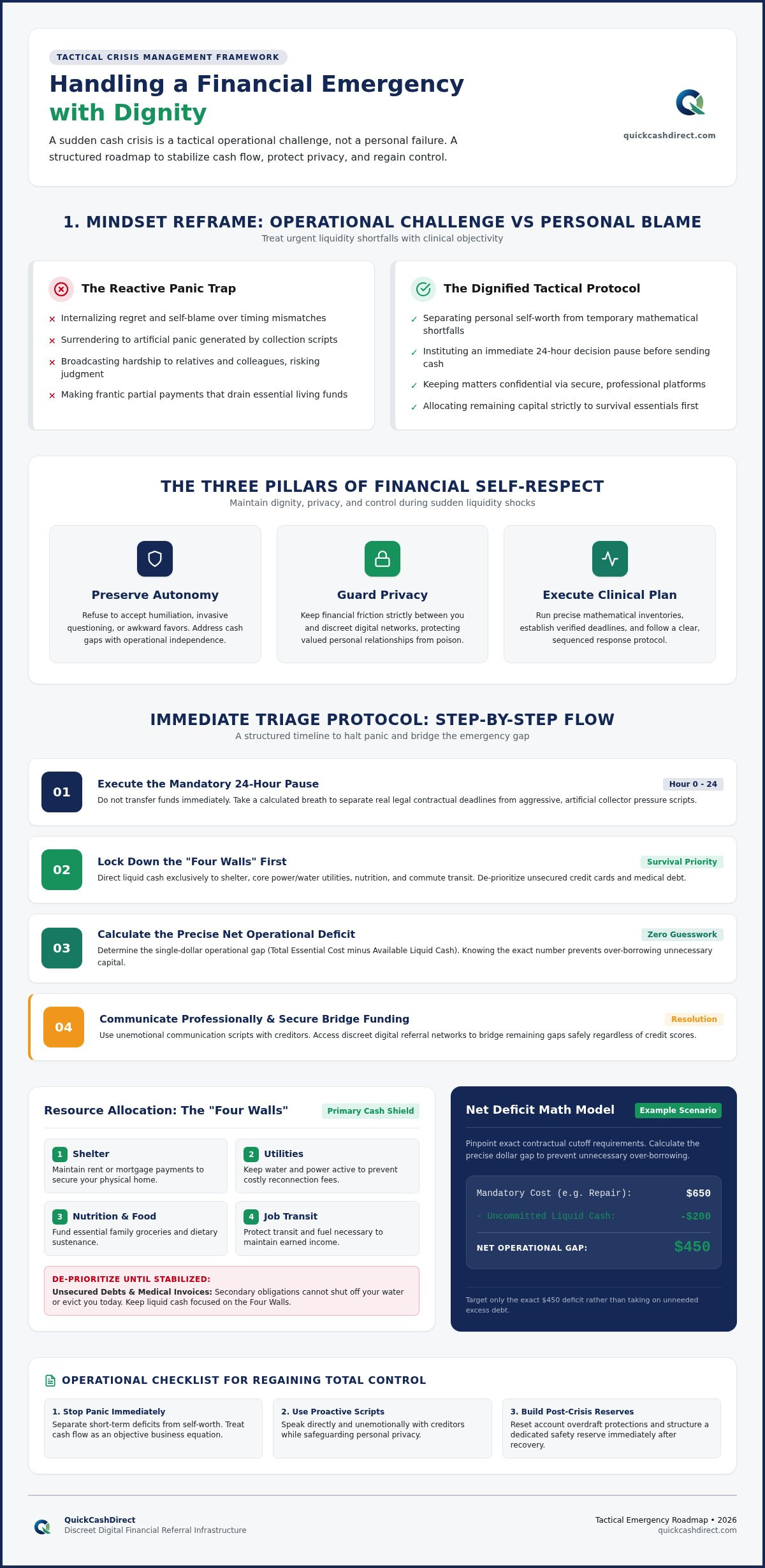
A sudden liquidity crisis tests your nervous system long before it drains your bank account. Managing a financial shortfall with true self-respect means three distinct things: preserving your personal autonomy, guarding your private financial affairs, and executing a calm tactical plan. Mainstream financial guidance often assumes everyone has months of cash sitting idle in a savings account. Understanding the basics of what is an emergency fund is useful for long-term planning, but that advice offers zero help when an immediate repair bill or medical balance lands on your desk today. True dignity is about navigating an urgent deficit without begging, cowering, or accepting public humiliation.
Unexpected expenses impact millions of American households every year. Equipment breaks. Payroll schedules shift. Medical invoices arrive without warning. Experiencing a sudden deficit does not signal poor character, laziness, or moral failure. It simply represents a temporary timing mismatch between cash inflows and mandatory expenses. Knowing how to handle a financial emergency with dignity requires separating your personal self-worth from this mathematical problem. Treat the situation with clinical objectivity, assess the numbers, and refuse to let temporary pressure erode your self-respect.
Reframing Cash Shortfalls as Tactical Challenges
Think like an operational manager. When a corporation experiences a delayed payment, leadership treats the disruption as an operational challenge, not an existential disaster. You must apply the same mental shift right now.
- Stop self-blame immediately: Regret changes nothing about today's urgent balance.
- Run an objective inventory: Write down the exact dollars owed and the mandatory cutoff deadlines.
- Focus on mechanics: Identify the fastest path to bridge the gap without emotional friction.
The Power of Confidentiality During Financial Shocks
Privacy is your best shield. Broadcasting your cash problems to relatives, colleagues, or casual acquaintances often creates lasting friction and unwanted judgment. Personal loans between friends frequently poison valuable relationships. You don't need to answer intrusive questions about your spending habits just to survive a temporary crunch. Master how to handle a financial emergency with dignity by keeping private matters strictly between you and professional funding platforms. Using secure, direct digital loan referral networks allows you to access urgent capital rapidly while maintaining complete operational discretion.
Step-by-Step Protocol to Triage an Immediate Financial Shock
When an unexpected expense hits, execute a mandatory 24-hour pause before transferring a single dollar. Debt collection representatives and billing departments rely on artificial panic to force immediate concessions. Taking a calculated breath allows you to separate real legal deadlines from aggressive collection tactics. Establishing a concrete financial emergency plan starts with operational triage, not reactive panic. You cannot solve an urgent liquidity crunch by making frantic, partial payments that leave your bank account completely bare.
Executing this tactical response is the foundation of how to handle a financial emergency with dignity. Follow this structured triage sequence to regain immediate control:
Secure the Four Walls First
Lock down your basic survival essentials before allocating capital to secondary obligations. Direct your remaining cash exclusively to shelter, core utilities, groceries, and job transportation.
- Shelter: Maintain rent or mortgage payments to secure your physical residence.
- Utilities: Keep water and power active to prevent costly reconnection procedures.
- Nutrition and Fuel: Fund basic family sustenance and the transit needed to commute to work.
- Unsecured Debt: De-prioritize credit cards and medical balances; unsecured lenders cannot shut off your lights today.
Determine the True Deadline and Net Deficit
Filter out threatening phone scripts and pinpoint the actual contractual cutoff dates. Calculate your exact net deficit down to the single dollar. If an urgent vehicle repair costs $650 and you have $200 in uncommitted liquid funds, your operational gap is exactly $450. Knowing the precise dollar figure prevents guesswork and stops you from over-borrowing unnecessary capital.
Consolidate Rapid Internal Resources
Audit every immediate internal asset before looking outward for assistance. Review pending paychecks, check available employer payroll advances, and identify unused physical assets suitable for immediate sale. If internal funds still leave an urgent shortfall, secure an objective bridge rather than pleading with personal contacts. You can review an emergency loan through digital referral networks to bridge the remaining deficit safely, privately, and swiftly.
How to Communicate with Creditors and Landlords Professionally
Proactive outreach changes the dynamic between you and your creditors. Calling a billing office before your due date positions you as a reliable account holder managing cash flow, not someone dodging obligations. When you wait until after an account falls delinquent, automated collection algorithms trigger repetitive phone calls and late penalties. Reviewing a structured financial emergency preparedness guide highlights the importance of timely creditor notifications. Taking the initiative demonstrates command over your balance, preserving your standing and keeping negotiation channels open.
Executing professional outreach is a core element of how to handle a financial emergency with dignity. Follow these straightforward communication protocols to negotiate effectively while keeping your boundaries intact.
Scripting the Hardship Call Without Sacrificing Dignity
Treat this conversation as an objective commercial negotiation. State your status directly without oversharing personal, medical, or family hardships:
- Deliver the core fact: "I am calling to report a temporary cash delay that affects my upcoming payment."
- Propose a concrete schedule: "I can commit to paying 50 percent of this invoice on the fifteenth, followed by the remaining balance on my next pay cycle."
- Cut the apologies: Never plead, make emotional excuses, or divulge private difficulties to customer support representatives.
Securing Formal Extensions and Deferrals
Request specific institutional programs designed for liquidity pinches. Ask the representative directly: "Does your company offer a formal payment extension or hardship arrangement for this billing cycle?" Inquire whether they can waive the late fee as part of your updated agreement. Once the representative agrees to an adjusted payment timeline, request written confirmation via email immediately. Document the call details in your own notes: record the date, the exact time, the representative's employee identification number, and the agreed dollar amounts.
Establishing Firm Boundaries Against Aggressive Collectors
If third-party collection agencies take over an account, maintain strict operational control over every interaction. Professional representatives must adhere to federal standards under Regulation F, including limits against excessive phone contact. If a caller becomes hostile, interrupts you, or uses threatening language, maintain composure and state clearly: "I will only discuss this account in writing." End the phone call immediately. Learning how to handle a financial emergency with dignity means enforcing your legal consumer rights and refusing to tolerate harassment from third-party agents.
Evaluating Emergency Funding Options: Speed, Privacy, and Safety
Traditional banks move slowly. When an unexpected expense hits, lengthy underwriting processes and rigid credit requirements create unnecessary hurdles. Understanding how to handle a financial emergency with dignity means choosing private, practical funding paths without facing humiliating credit rejections. Online referral platforms bridge this liquidity gap efficiently. By submitting a single digital inquiry, you connect directly with a nationwide network of independent lenders offering accessible solutions like loans for bad credit without standard institutional friction.
The Mechanics of Fast Bridge Funding
Digital referral systems match your specific requirements with verified third-party lenders in real time. Different funding structures solve distinct operational bottlenecks:
- Single-Pay Cash Advances: Short-term payday loans supply rapid cash relief designed to bridge urgent expenses until your next scheduled pay date.
- Sovereign Lending Options: Independent sovereign options like tribal loans operate under distinct tribal regulations, offering flexible solutions for urgent liquidity needs.
- Rapid Transfer Channels: Certain lenders specialize in direct deposit loans in minutes no credit checks to transfer capital into your checking account swiftly.
Vetting Lenders for Security and Transparency
Safeguarding your personal data is vital during urgent situations. Reliable connection platforms utilize industry-standard 256-bit encryption protocols to protect your personal information. Legitimate network lenders disclose complete fee agreements before requiring your digital signature. Avoid predatory operators asking for upfront payments through prepaid reload cards or gift cards. Legitimate lenders never demand advance fees before processing your request.
Borrowing Strictly for Direct Emergency Resolution
Maintain total operational discipline. Calculate the exact dollar figure required to fix the immediate problem and borrow only that specific amount. Treat alternative financing as a temporary bridge to carry you to your next regular income cycle. Mastering how to handle a financial emergency with dignity means pairing fast funding with an airtight repayment plan. If you need immediate, private capital to resolve an urgent cash deficit today, submit your fast loan request online to connect with secure network lenders nationwide.
Restoring Control: Transitioning from Immediate Relief to Long-Term Stability
Stopping an acute financial bleed is only the first half of the operation. Once you cover the urgent deficit, pivot immediately toward post-crisis stabilization. The weeks directly following a severe cash crunch represent a vulnerable transition period. Without proactive cash management, secondary liquidity shocks like bank overdrafts or missed recurring bills can quickly trigger a new cycle of stress. True operational control means resetting your financial baseline and securing your autonomy against future disruptions.
Completing this transition phase cements how to handle a financial emergency with dignity over the long haul. Take concrete, methodical steps to insulate your checking account, eliminate secondary fees, and build lasting financial resilience.
Managing the Immediate Post-Loan Cash Flow
Align all outflow schedules precisely with your incoming cash flow to prevent account imbalances:
- Synchronize repayment dates: Set bridge loan repayments or deferred utility plans to debit on the exact days your paycheck deposits.
- Freeze discretionary outflows: Pause entertainment, non-essential subscriptions, and luxury spending for two to four weeks until your checking balance stabilizes.
- Adjust bank overdraft protections: Review checking account permissions to decline transactions rather than triggering expensive non-sufficient funds penalties.
- Secure final discharge documentation: Once you complete an emergency balance payoff, obtain written confirmation from the lender confirming the zero balance.
Building an Autonomous Starter Emergency Buffer
Do not wait until you can afford a six-month emergency fund to begin saving. Waiting for ideal financial conditions leaves you defenseless against the next unexpected expense. Start with an accessible starter cushion of a few hundred dollars. Establishing this basic liquidity layer ensures you retain self-reliance without turning to stressful alternatives when small emergencies arise.
Automate this process completely. Direct your bank to route ten or fifteen dollars into an isolated savings account every payday. Keeping this reserve in a separate institution creates healthy friction, preventing impulsive transfers while ensuring rapid access during genuine crises. Successfully resolving an immediate deficit proves your operational resilience. By putting basic safeguards in place, you establish how to handle a financial emergency with dignity, shielding your peace of mind and personal independence permanently.
Take Control and Resolve Your Cash Deficit Today
Executing an urgent recovery plan preserves your peace of mind and your self-respect. You now possess the blueprint for how to handle a financial emergency with dignity: execute a disciplined triage pause, negotiate with creditors using objective facts, and rely on discreet funding avenues rather than awkward personal favors. Financial emergencies are temporary hurdles that require decisive, structured action, not guilt.
Do not let immediate cash shortfalls compromise your privacy or derail your long-term plans. If you face an urgent funding deficit right now, connect with a trusted emergency lending partner today. Access a streamlined national referral network matching applicants to verified independent lenders swiftly, with options available for bad credit profiles. Take the decisive step to secure the bridge capital you need, restore your cash flow, and move forward with absolute confidence.
Frequently Asked Questions
How can I handle a sudden financial emergency without borrowing from family?
You can resolve urgent deficits independently by using private digital loan referral networks instead of straining family ties. Online platforms match you confidentially with third-party lenders offering short-term bridge funds. This preserves your personal boundaries and financial privacy completely. Learning how to handle a financial emergency with dignity means solving cash flow bottlenecks through formal, objective agreements rather than awkward personal favors that risk damaging valuable relationships.
What are the first steps to take when hit with an unexpected expense?
Implement a strict 24-hour pause immediately before spending any liquid capital. Take inventory of your finances to calculate the exact dollar deficit down to the cent. Prioritize your vital survival expenses first: shelter, utilities, food, and necessary commute transportation. De-prioritize unsecured debts like credit cards temporarily. This rapid operational triage prevents panicked missteps, halts aggressive account draining, and clarifies the exact shortfall you must bridge.
Can I get an emergency loan if I have bad credit or no credit history?
Yes, you can access emergency funding options even with a damaged credit history. Specialized network lenders evaluate income stability and banking activity rather than relying solely on traditional credit scores. Through online loan referral platforms, applicants connect with independent providers offering loans for bad credit, tribal loans, and fast cash options. These streamlined networks ensure credit challenges don't block you from accessing vital bridge funds during acute cash crises.
How do I explain a financial hardship to my landlord or utility company?
Contact your landlord or billing office before the scheduled due date arrives. State your position with concise, commercial facts: explain that a temporary cash delay occurred and propose a specific date for partial or full settlement. Never overshare private medical or personal details. Ask for formal hardship programs or late-fee waivers, and secure the revised payment agreement in writing immediately to protect your professional standing and tenant record.
What is the difference between an emergency loan and a cash advance?
The primary difference lies in the repayment schedule and capital structure. A cash advance is typically a short-term, single-pay solution scheduled for repayment when your next regular paycheck arrives. An emergency loan or installment loan often provides structured repayment periods spread across multiple installment dates. Both options serve as immediate liquidity bridges during shortfalls, but you should choose the structure that aligns best with your incoming payroll schedule.
How fast can emergency funds be deposited into my bank account?
Digital referral networks process requests rapidly, delivering connection decisions within minutes. Once an independent network lender approves your loan agreement, capital transfers typically occur via direct deposit as fast as the same business day or the next morning. Exact transfer speeds depend on your bank's processing cycles and verification timelines. Completing your digital request early in the day helps ensure the fastest possible account transfer.
What should I do if a debt collector treats me aggressively?
You retain strict consumer protections under federal debt collection laws like Regulation F. If a collector yells, calls excessively, or uses abusive language, assert control immediately. State clearly: "I require all future correspondence regarding this account in writing," then hang up the phone. Document the date, time, and caller identification. Knowing how to handle a financial emergency with dignity means enforcing legal boundaries and refusing to tolerate unprofessional intimidation.