
A new job doesn’t automatically rule you out of a personal loan. Lenders consider your income, debt-to-income ratio, credit history, and ability to repay. Many prefer a debt-to-income ratio of about 36% or lower. The key to how to get a loan with a new job is to show how your current income supports the payments.
A recent job change can make income verification less straightforward, especially before your first paycheck arrives. An offer letter may document your new role, but approval still depends on the lender’s assessment of your finances.
Before applying, get a clear picture of what lenders may consider. This guide explains how your debt-to-income ratio and employment documents can affect approval, what an offer letter may add, and what to expect during funding. It also covers short-term loan options if you need money while settling into a new job.
Key Takeaways
- See how your debt load, income stability, and credit profile shape a lender’s review after a job change.
- Learn which application details can help present your new employment clearly and support your approval chances.
- Weigh the benefits and trade-offs of applying with an offer letter before your first paycheck arrives.
- Understand what can affect funding speed and how short-term loan options may fit an urgent expense.
How does my debt-to-income ratio affect my loan approval with a new job?
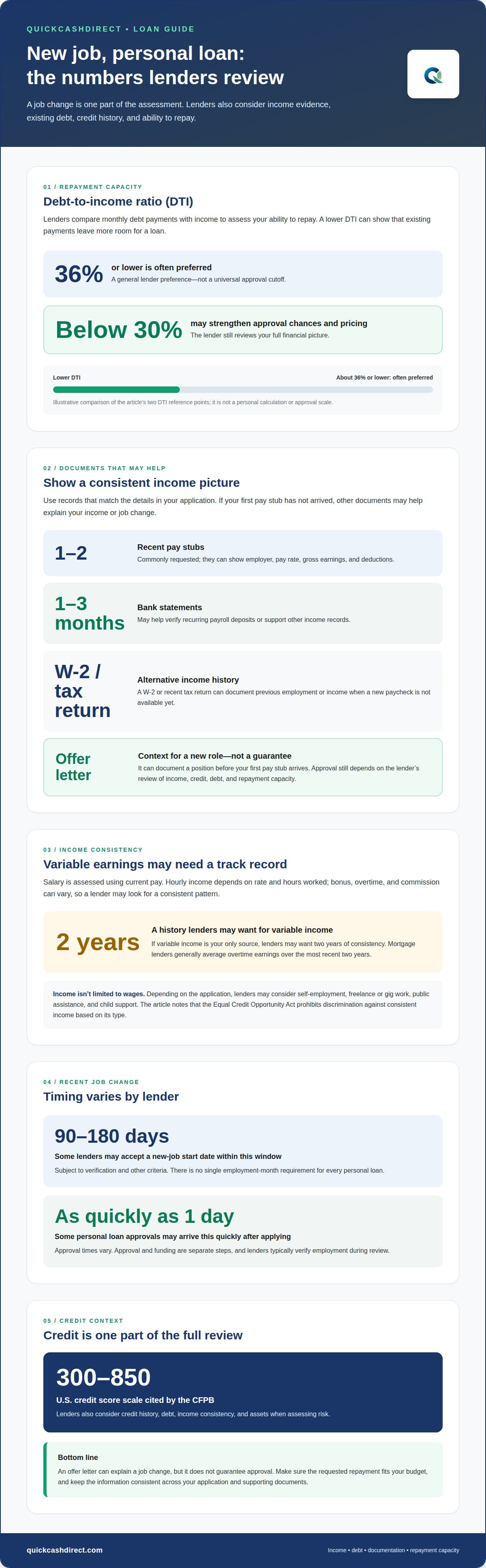
Lenders compare monthly debt payments with income to assess repayment capacity. There’s no single employment-month requirement for every personal loan; lenders weigh recent income records, credit, and other finances. A debt-to-income ratio around 36% or lower is often preferred, while below 30% may strengthen approval chances and pricing.
How Lenders Calculate Different Income Types
Start with the income shown in your records. Lenders assess salary based on your current pay, while hourly income depends on your rate and hours worked. Bonus, overtime, and commission can vary, so a lender may look for a consistent pattern before counting that income. Mortgage lenders, for example, generally average overtime earnings over the most recent two years.
Income Stability and Variable Earnings
A new role can change your income history, but lenders also consider how dependable your earnings appear. Regular salary is easier to assess than fluctuating shifts, commission, or gig work. If variable income is your only source, lenders may want two years of consistent history. A lower debt-to-income ratio can also show that your existing payments leave room for a loan.
Income Sources Lenders May Accept
Wages aren’t the only income lenders may consider. Depending on the application, income sources can include self-employment, freelance or gig work, public assistance, and child support. The Equal Credit Opportunity Act prohibits discrimination against consistent income based on its type, including public assistance or child support. If you don’t have steady wages, you may still be able to document consistent income for review.
Pay Stubs as Income Documentation
Recent pay stubs can show your employer, pay rate, gross earnings, and deductions. Lenders commonly request 1-2 recent pay stubs; bank statements covering 1-3 months may also help verify recurring payroll deposits. The Consumer Financial Protection Bureau says U.S. credit scores are usually measured on a scale from 300 to 850. Credit history, debt, income consistency, and assets also inform the lender’s risk assessment.
How can a lender help you improve your chances of loan approval after changing jobs?
Lenders assess employment, income evidence, credit history, and expenses together. To learn how to get a loan with a new job, prepare a clear application and choose a repayment amount your income can support.
How Lenders Assess Applications Without Pay Stubs
If your first pay stub hasn’t arrived, other records may help document earnings. A W-2 or recent tax return can show previous employment or income history. Bank statements may show recurring deposits. Make sure the information in your application matches your documents. A lender uses these records to assess income and repayment ability, even when your new paycheck isn’t available yet.
Lenders for Recent Job Changers
Personal loan lenders and marketplaces may consider applicants who recently changed jobs. Some may accept a new-job start date within 90-180 days, subject to verification and other criteria. Lenders typically verify employment during review. Approval times vary; some personal loan approvals may arrive as quickly as one day after applying. Your job change is one factor in the full review.
Cosigners and Collateral
A cosigner may strengthen an application by adding their credit and income to the assessment, but they also become responsible for repayment if you don’t pay. Collateral may support a secured loan, but you could lose the asset if you miss payments. Weigh these obligations carefully. A stronger application isn’t worth taking on repayments you can’t manage.
Rules and protections vary across the United States and may affect loan terms or fees. Read the required disclosures and the agreement for any loan you’re considering. A sound plan for getting a loan with a new job includes checking that the repayment schedule fits your budget before accepting an offer.
Can a job offer letter help me get approved for a loan?
An offer letter can document a new role before your first pay stub arrives. How much it helps depends on the loan type and the lender’s assessment of your income and ability to repay.
Applying for a Loan With a New Job: What Documentation a Lender May Request
For a personal loan application, lenders may ask for pay stubs, W-2 statements, or a recent tax return to verify employment income. Bank statements covering 1-3 months may show recurring payroll deposits or support other income records. If you haven’t received a pay stub, an offer letter can help explain the job change. Use documents that show a consistent source of income and match the details in your application.
How Lenders Assess Applications With a Job Offer Letter
An offer letter tells a lender about a position you’re about to start, but it doesn’t guarantee approval. Mortgage lenders may approve a borrower using an offer letter or first pay stub when the new role requires specific training or experience. For a personal loan, lenders assess the full application, including income, credit score, existing debt, and repayment capacity. The letter may add context, but the lender decides how it fits with your other documents.
Applying before your first deposit means you can document expected employment without waiting for a pay cycle. However, expected earnings may be harder to evaluate than income shown on a pay stub or bank statement. Lenders may also consider whether your new role and stated pay support the requested amount. The interest rate and approval decision depend on your full application, not the offer letter alone.
Before applying, check that your offer letter describes your current role and that your income details match across the application and supporting documents. If the lender later requests a recent pay stub, it can provide evidence of earnings after you start.
Funding timelines and methods
Approval and funding are separate steps. A lender may approve your application and then verify your identity, employment, or bank details before sending funds. This review can affect when the money arrives. Find out which funding method applies and whether additional documents could delay it. If you’ve just started a job, recent deposits may not appear in your account yet, so make sure your account information is consistent.
Personal loans may be funded by bank deposit or another method specified in the agreement. Before accepting an offer, confirm the account details and read the disbursement terms. A mismatch between your application and bank account can slow processing. Check when repayment starts, the payment schedule, and whether automatic payments apply. Make sure payments fit alongside rent and other essential expenses.
If timing is critical, distinguish the bill’s due date from the lender’s approval estimate. Approval may arrive quickly, but it doesn’t tell you when funds will be deposited. Verification, processing, and bank handling can all affect the timeline. Keep requested documents ready, respond promptly to application questions, and don’t assume funds will arrive before a specific bill is due.
Consider savings or other alternatives before borrowing. If you use savings, keep enough for essential costs rather than draining your entire reserve. If you choose a loan, compare the payment with your new paycheck, existing payments, and regular expenses. Borrow only what you need. A smaller loan means less to repay, while the APR and payment schedule determine your overall commitment.
Before funds arrive, review the final agreement for the amount disbursed, repayment dates, and any stated charges. Don’t treat an estimated timeline as a confirmed deposit date. If a short-term option suits your urgent need, review available loan options and consider the repayment obligation before proceeding.
QuickCashDirect
QuickCashDirect is a free loan-introduction service that connects applicants with lenders for personal loans, including options for people with bad credit. If you’re considering a payday loan or cash advance while building a new income history, compare the offered terms with your budget before deciding.
Read the repayment terms and check that scheduled payments fit your current income and essential expenses. Borrow only what you need, and consider whether your new paycheck can cover repayments alongside existing bills. A short-term loan may not suit every budget, particularly if the payments would leave too little for necessities.
For help exploring available options, contact QuickCashDirect.
Choose a repayment plan that fits your next step
A new job can make borrowing before your first full paycheck tempting. Pause and make sure any payment fits income you can reasonably rely on. Keep essential expenses covered, and avoid a repayment schedule that would strain your budget. This practical check matters as much as knowing how to get a loan with a new job.
QuickCashDirect offers Payday Loans, Cash Advance, and Payday Loans Online. Review the terms carefully and choose an option only if its repayment schedule fits your circumstances. A loan can address an immediate need, but it also creates a commitment that continues after the funds arrive.
Take the next step with a clear view of your needs and repayment capacity. Contact QuickCashDirect to discuss your options. A careful decision today can help you move forward with greater confidence.
Frequently Asked Questions
Can I Get a Personal Loan if I Just Started a New Job?
Yes, you can apply after starting a new job. A lender assesses your current income evidence, credit profile, debts, and ability to repay, not just how long you’ve held the job. If you haven’t received your first paycheck, include documents showing your new role and any other income. Keep the requested amount within what your budget can support.
How Does It Work?
You submit an application, and the lender reviews your financial and employment information. QuickCashDirect connects applicants with lenders; it is not a lender. Review any offer, including its repayment schedule and terms, before deciding whether to accept it. If you do, the lender arranges funding under the agreement. Approval and funding depend on the lender’s review.
What documents do lenders require to verify new employment?
Requirements vary, but lenders may ask for recent pay stubs, a W-2, or a recent tax return. If you have just started, an offer letter can document your new position, while bank statements may show payroll deposits from earlier employment. Use records with consistent employer and income details. A lender may request additional documentation if the information does not support its assessment.
Can you get a personal loan with a new job and no pay stubs yet?
Yes, some lenders review applications before a new employee receives a pay stub. An offer letter can show the role and expected pay, while bank statements or tax records may document other income history. For example, someone changing employers can submit a new offer letter alongside records from their previous job. The lender reviews the full application before making a decision.
What income and employment documents do lenders accept for a new job?
Lenders may accept pay stubs, W-2 statements, tax returns, bank statements, or a job offer letter, depending on your situation. For self-employment or gig work, tax records and account statements can help show earnings over time. Match the documents to the income source you report. Consistent records make it easier to understand what income is current and how it is earned.
Can an offer letter count as proof of income for a loan?
An offer letter can support an application by documenting a job you’re about to start, but it doesn’t guarantee approval or replace every income record. It may be especially relevant when the role requires specific training or experience. Include the letter with other financial documents if available. The lender considers it alongside your overall credit and repayment information.