
You may qualify for a loan with irregular income if your records show earnings that can support the payments. Mortgage lenders commonly look for a two-year income history, but standards vary by loan type. If you’re figuring out how to get a loan with irregular income, document your earnings and choose repayments that remain manageable during slower months.
Uneven pay can make borrowing feel uncertain. Lenders may review your income history, work situation, debts, and supporting records to assess your ability to repay.
Gather documents that explain your earnings, consider how lenders may assess income that rises and falls, and set a repayment amount using a conservative income estimate. Plan for minimum payments during lean periods so you can compare options with a clearer picture of your budget.
Key Takeaways
- Organize tax records, bank statements, and a current profit-and-loss statement to make variable earnings easier to assess.
- Show the pattern behind your income, including changes in work, bonuses, or commissions that may explain major fluctuations.
- Use a conservative income baseline to plan for essential bills and avoid setting repayments around your best-earning months.
- Build room for loan payments during slower periods, and consider short-term options only when the repayment fits your budget.
Tax returns and profit-and-loss statements for self-employed borrowers
For freelance or self-employed applicants, tax returns show reported income over time. Mortgage lenders may ask for two years of personal returns, business returns when applicable, and several months of bank statements. A year-to-date profit-and-loss statement can explain current earnings alongside filed returns. Keep the figures consistent: if deductions leave lower taxable income on a return, a lender may use that lower amount in its assessment.
Bank records can make uneven deposits easier to understand. A self-employed or gig worker considering a bank statement mortgage may need 12 months of statements showing consistent deposits. Sort statements by month and identify client payments, business transfers, and unusual deposits. This gives an underwriter context for income that may not appear as a steady paycheck, but deposits alone don’t establish take-home profit.
W-2 workers can document variable earnings with 30 days of pay stubs and two years of W-2 forms when bonuses, overtime, or part-time work affect income. Include employment verification that explains the pay structure, such as commission plus base wages. A lender may average variable earnings, so records showing a predictable pattern can support a clearer estimate.
Plan for taxes before treating each payment as spendable income. Independent contractors pay self-employment and regular income taxes from earnings. The Internal Revenue Service says a 1099 worker may need to pay estimated taxes four times throughout the year. Keep a separate tax reserve and track deposits after setting that money aside; this helps distinguish gross receipts from available income.
Mortgage options include conventional applications supported by tax records and bank statement loans for eligible self-employed borrowers. A secured loan may be easier to qualify for if collateral reduces the lender’s risk, but missed payments can put that asset at risk. A co-signer with steadier income may strengthen an application, but becomes responsible for repayment if you cannot pay. Payday and other high-cost loans may leave less for essentials when income falls, so compare the payment schedule with your lowest-income months. Before borrowing, consider using savings, requesting a bill due-date change, or delaying a nonessential expense.
Lenders’ income-history and continuity expectations
Strengthen your application by showing a clear income pattern, explaining major changes, and managing existing debt. Lenders may weigh your work history, credit, debt obligations, and ability to keep up with payments.
Income History and Continuity
Income continuity describes how earnings change over time, including whether they remain steady, rise, or decline. A lender may review a longer history when income varies month to month. Mortgage lenders commonly look for two years of income history. Bonus, overtime, or part-time earnings may also need to show consistency or growth over two years.
Explain a sharp change with records and a concise account of what happened. For example, include an employer’s explanation of commission pay or a letter describing a gap in work. An employer may also be asked whether variable earnings are likely to continue for the next three years. A recent increase can help show current capacity, while a downward trend may weaken an application.
Flexible Lenders and Approval Chances
A lender that considers the full financial picture may look beyond a single pay pattern. Policies differ, so document each income source and explain how it supports repayment. To strengthen an application, reduce existing debt where possible and keep required payments current. Personally signed business loans and student loan obligations count toward debt-to-income calculations.
Tax deductions can affect the income a lender sees on tax returns. Taking fewer deductions may increase a self-employed borrower’s taxable income, but can also increase tax liability. Weigh that decision within your broader financial plan. Present consistent records, explain deductions that materially change reported income, and show how current earnings cover your debts. This helps a lender assess whether your income is sustainable, not simply whether deposits arrived.
Averaging fluctuating income
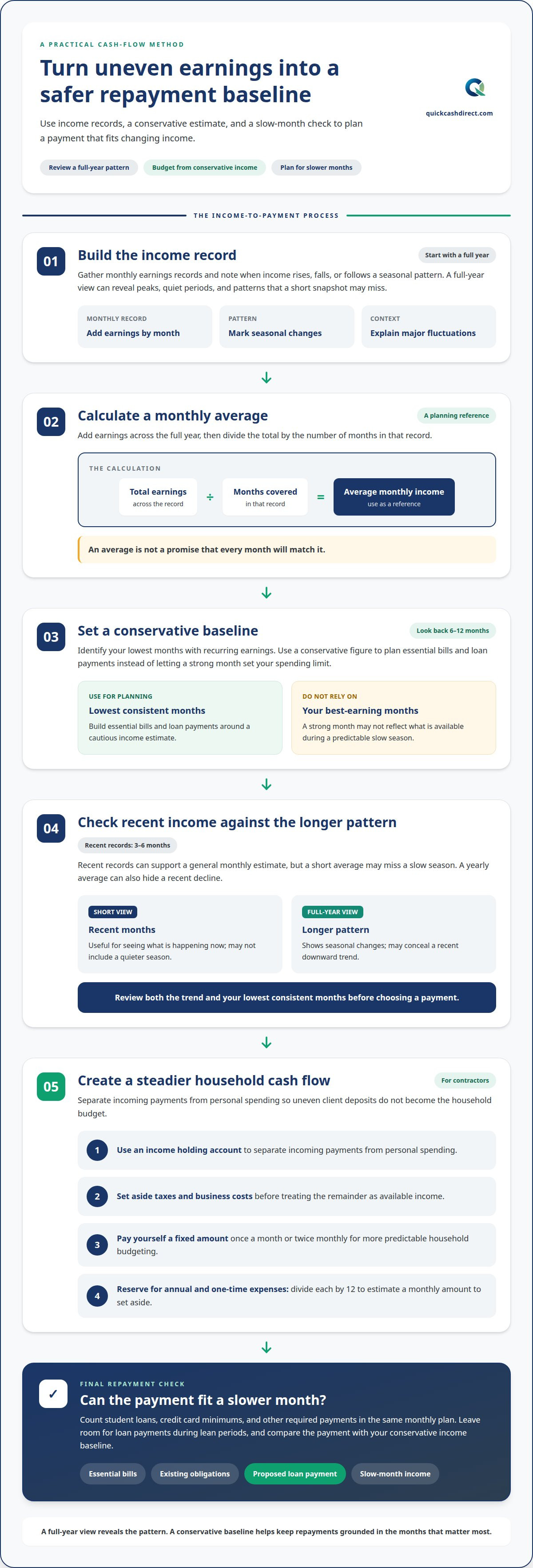
Start with a full year of income records. Add your earnings by month, then divide the total by the number of months to estimate average monthly income. A full-year view can reveal seasonal peaks, quiet periods, and pay patterns that a short snapshot might miss. Treat the average as a planning reference, not a promise that every month will match it.
Build a safer budget baseline from the previous 6-12 months. Identify the lowest months with recurring earnings, then use a conservative figure to plan essential bills and loan payments. For example, if work slows during a predictable season, account for that dip instead of letting a strong month set your spending limit. This baseline gives you a practical measure of repayment capacity.
A contractor can separate incoming payments from personal spending through an income holding account. After setting aside taxes and business costs, pay yourself a fixed amount once a month or twice monthly. This creates a more predictable paycheck for household budgeting, even when client payments arrive unevenly. Divide annual and one-time expenses by 12 to estimate the monthly amount to reserve.
When deciding how to get a loan with irregular income, compare recent earnings with the full-year pattern. Three to six months of records can support a general monthly income estimate, but a short average may miss a slow season. A yearly average can also hide a recent decline. Review both the trend and your lowest consistent months before choosing a payment that fits your budget.
A practical way to decide how to get a loan with irregular income is to include every required obligation in the same monthly plan. Count student loans, credit card minimums, and other payments before estimating what remains. Your credit score may affect borrowing terms, but it does not replace a cash-flow check. Revisit your estimate when earnings change, and adjust spending before a low-income month puts essential payments under pressure.
Repayment plans for borrowers with changing or irregular income
Build a repayment plan around your slow-month budget, not a peak-earnings month. Treat minimum loan payments as monthly essentials, alongside housing and utilities. Keep a separate payment buffer so a late client invoice or seasonal dip does not immediately disrupt your schedule. For student loans, a buffer covering one to three months of payments can help bridge slower periods.
Set rules for stronger earning months before the money arrives. One suggested allocation for extra income is 40% to savings, 30% to debt payoff, 20% to future taxes, and 10% to discretionary spending. Adjust those shares to your actual bills and obligations. The key is directing extra earnings deliberately instead of relying on them to cover routine payments.
Personal loans may be available to borrowers with irregular income. Lenders may consider documented earnings, existing debt, credit history, and repayment capacity. There is no single typical rate or fee: the lender, credit profile, loan terms, and other application details affect the total cost. Review the payment schedule and all charges in the loan agreement, then compare each due date with your conservative monthly income.
Federal student loans may offer income-driven repayment plans, which adjust payments based on income and family size. Borrowers enrolled in these plans must recertify income each year. For eligible borrowers, Income-Based Repayment payments are generally 10% or 15% of monthly discretionary income, depending on when they borrowed. That structure can respond to earnings changes, but annual recertification remains part of the plan.
Use a simple monthly check to keep your plan current. List required payments, compare them with conservative income, and direct any remaining amount toward a buffer or debt reduction. If income falls, prioritize essentials and minimum payments. If earnings rise, increase savings before committing to a larger recurring payment. This keeps borrowing decisions tied to cash flow rather than optimism.
QuickCashDirect
QuickCashDirect offers short-term financial options for people considering borrowing while managing changing income. If budgeting and savings don’t cover an urgent expense, explore available options such as a cash advance, payday loans, online payday loans, or loans for bad credit.
Before choosing a loan, compare its payment schedule with your conservative income estimate and essential monthly bills. Read the terms and borrow only if the payment fits your budget during a slower period. A loan may address an immediate gap, but it will not make fluctuating earnings predictable.
For a next step, contact QuickCashDirect to discuss your borrowing needs and available options.
Choose a Next Step That Fits Your Cash Flow
Before taking on a new payment, distinguish a one-time emergency from a recurring shortfall. If the same expense repeatedly exceeds your income, another loan may add pressure rather than solve the underlying gap. Consider whether changing a due date, delaying a nonessential purchase, or using available savings can address the immediate need without creating a new repayment obligation.
A useful answer to how to get a loan with irregular income protects your financial flexibility after the funds arrive. Base the decision on what you can repay during a slower period, not just what seems manageable today. If borrowing still fits your needs, review the terms carefully and make sure you understand your upcoming obligations.
Contact QuickCashDirect to discuss your options and decide on a practical next step. Contact QuickCashDirect to discuss options. Move forward with a plan that leaves room for changing earnings.
Frequently Asked Questions
Can You Qualify With Less Than Two Years of Income?
Yes, some borrowers may qualify with a shorter income history, depending on the loan and employment record. For a mortgage, someone unemployed for less than six months may qualify after working 30 days at a new job and providing pay stubs. After a longer employment gap, a lender may require six months in the new job. These examples concern mortgage applications.
How much are payments?
Your payment depends on the amount borrowed, interest rate, repayment term, and any charges in the loan agreement. Review the total repayment amount and due dates, not just the scheduled payment. Compare each payment with income you can reasonably expect during a slower period. If a payment depends on your strongest earning month, it may strain your budget when work slows.
What kind of documentation will I need to provide the lender?
Expect to provide documents that identify you, show income, and explain regular expenses and debts. The exact documents depend on your work arrangement and loan type. A salaried employee might use recent pay records, while someone paid by clients may need earnings records and account activity. Organize digital copies by type so you can respond clearly to lender requests.
What loan options are available for borrowers with irregular income in the US?
Options can include personal loans, mortgages, and bank statement loans, along with payday loans or cash advances for short-term needs. QuickCashDirect is a loan-introduction service that connects borrowers with lenders; it offers access to payday loans, cash advances, payday loans online, and loans for bad credit. Compare repayment obligations carefully, since short-term borrowing may not fit a recurring income shortfall.
How do lenders verify income for freelancers, gig workers, and seasonal workers?
Lenders may compare reported earnings with deposits and income records, then look for patterns that explain fluctuations. For seasonal workers, recurring busy and quiet periods can put current earnings in context. Freelancers and gig workers can clarify which deposits are earned income rather than transfers or reimbursements. Clear records connect income sources with the work that produced them.
What documents can prove irregular income when applying for a loan?
Useful records may include tax returns, 1099 forms, bank statements, invoices, and a current profit-and-loss statement. Seasonal employees can add pay records that show recurring work periods; commission workers can include employer documentation explaining how earnings are paid. Match each record to its income source, and flag unusual deposits so the lender can distinguish earned income from transfers or one-time funds.