
A loan that looks easy to get may not be the safest or most affordable option. Ads for high acceptance rate loans can sound reassuring, but an acceptance claim is not a promise that you’ll qualify, receive funding, or get manageable terms. Treat “guaranteed approval” as a warning sign.
Before applying, get clear answers about eligibility, credit checks, your personal information, rates, fees, repayment dates, and the total amount you’d repay. This guide explains what lenders may consider, what you can prepare, and how to compare offers without rushing into a loan that strains your budget.
Start with lender fit, not an approval promise. Check whether an eligibility check involves a soft or hard credit inquiry, confirm the repayment schedule works with your budget, and read the terms before sharing sensitive details. QuickCashDirect is an online referral service that connects applicants with a network of lenders. Each lender makes its own decisions about eligibility, credit checks, terms, and funding. Knowing who makes those decisions helps you compare potential options with care.
Key Takeaways
- “High acceptance” describes a lender or product claim, not a promise that your application will be approved.
- Check what information a lender may ask for, such as income, employment, banking details, and identity verification.
- Compare APR, fees, the amount you’ll receive, total repayment, due dates, and missed-payment consequences before choosing among high acceptance rate loans.
- Use a clear decision process: assess your need, check your budget, compare terms, verify the lender, then decide.
- QuickCashDirect connects applicants with potential lenders; participating lenders set eligibility, approval, terms, and funding.
What Do High Acceptance Rate Loans Really Mean?
“High acceptance rate” is a lender or product claim, not a promise that an individual applicant will be approved. Don’t assume any lender approves everyone. Treat the phrase as a reason to check the eligibility rules, not as evidence that a loan is certain or affordable.
Lenders set their own criteria and review the information applicants provide. Missing, inconsistent, or unverified details may affect a decision. An advertised acceptance claim may also apply to a particular group of applicants or product, rather than to your circumstances. Ask what the claim covers and which company makes the lending decision.
Does a high acceptance rate mean guaranteed approval?
No. A broad marketing statement cannot guarantee an individual result. A lender may need to verify details such as your identity, income, or other application information before deciding. Find out which company will assess your application, what criteria it uses, and whether any conditions remain. Be cautious of language that promises approval regardless of your situation, and review the terms for signs of predatory lending practices.
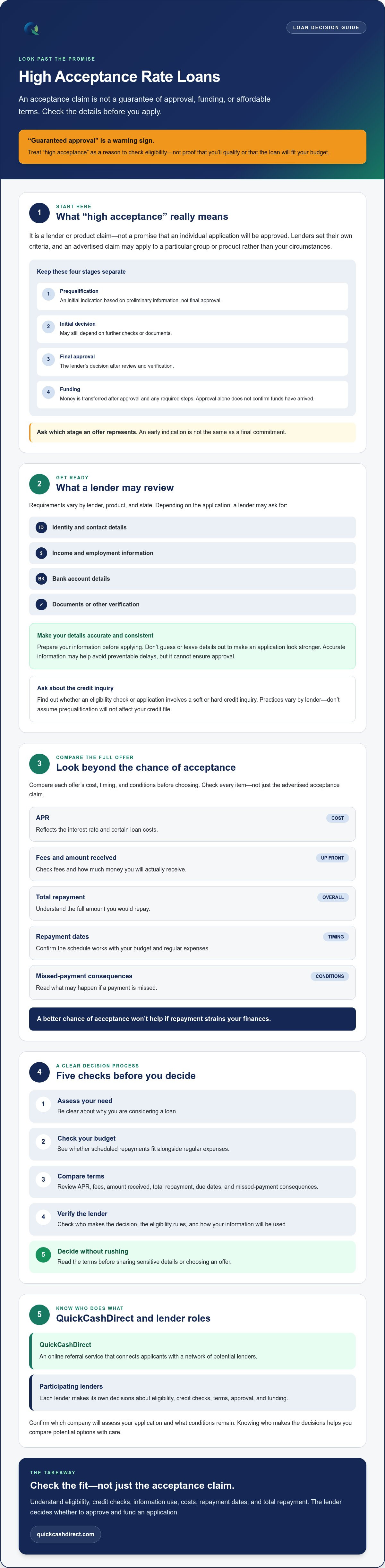
Keep these stages separate:
- Prequalification: An initial indication based on preliminary information.
- Initial decision: A response that may still depend on further checks or documents.
- Final approval: The lender’s decision after its review and verification.
- Funding: The transfer of money after approval and any required steps. Approval alone doesn’t confirm that funds have arrived.
Ask which stage a message or offer represents. An early indication is not the same as a final commitment.
What does loan prequalification tell you?
Prequalification can help you gauge whether you may fit a lender’s initial criteria. It isn’t final approval, and the terms shown may change after the lender reviews your full application. Before providing information, ask whether checking your eligibility involves a soft or hard credit inquiry. Practices vary by lender, so confirm the answer directly rather than assuming prequalification won’t affect your credit file.
Read the privacy information before submitting personal or banking details. Confirm who receives your information, how it may be used, and whether you’re authorizing a full application or only an initial eligibility check. This helps you distinguish a preliminary estimate from a decision you can rely on.
Which Factors Can Improve Your Chances of Loan Approval?
No single detail guarantees approval. Lenders use different criteria for different products, so one lender’s requirements may not match another’s. Focus on what you can prepare: complete, accurate application details and a realistic repayment plan. The lender still makes the decision.
You can prepare accurate information and check your budget, but you can’t control a lender’s criteria or guarantee its decision. Before applying, see whether scheduled payments fit alongside your regular expenses. A better chance of acceptance won’t help if repayment strains your finances.
What information might a lender review?
Depending on the lender and product, an application may ask for identity, contact details, income, employment, or bank account information. The lender may request documents or other verification to confirm what you submit. Eligibility rules and requirements can also vary by state. Check the lender’s official disclosures for the exact information required, how it will be used, and any conditions you must meet.
Prepare your details before you apply. Check that your name, contact details, income information, and banking details are accurate and consistent. Don’t guess or leave out information to make an application look stronger. If a detail has changed, follow the lender’s instructions for reporting it. Accurate information can help avoid preventable delays, but it can’t ensure approval.
Can bad credit affect approval?
It can matter, but lenders don’t all review credit information in the same way. Don’t assume a loan is available without a credit check. Ask the lender what review it conducts and whether checking eligibility or applying involves a soft or hard inquiry. For more context, read this guide to loans for bad credit.
Look beyond the likelihood of acceptance. Compare the full repayment obligation, including the APR, which reflects the interest rate and certain loan costs. The Consumer Financial Protection Bureau’s explanation of Annual Percentage Rate (APR) can help you understand this measure. Confirm the actual terms with the lender, since an advertised rate may not be the one offered to you.
Want to explore potential lender options? Review the QuickCashDirect referral process. QuickCashDirect connects applicants with a lender network, but participating lenders set their own criteria and decide whether to approve an application.
How to Compare High Acceptance Rate Loan Offers
A high acceptance claim or fast funding estimate doesn’t show whether a loan fits your budget. Compare the written offer, not just the headline. Check how much you’ll receive, how much you’ll repay, and when each payment is due. Terms vary by lender, so use the lender’s disclosures to confirm the details.
| What to compare | What to confirm |
|---|---|
| APR | Is the quoted APR personalized, and is it final? |
| Fees | Which fees apply, and are they included in the disclosed cost? |
| Amount received | How much will be deposited or otherwise provided after any deductions? |
| Total repayment | What is the total amount you must repay over the full term? |
| Due dates | When is each payment due, and how often will payments occur? |
| Missed-payment consequences | What fees or other consequences may apply if a payment is late or missed? |
Which loan terms should you check first?
Start with APR, fees, total repayment, and the payment schedule. Then check what the lender says may happen if you miss a payment. Confirm the lender’s legal name and contact details in the offer documents, and make sure they match the company you believe you’re dealing with. Don’t rely on a general advertisement for pricing or terms. The lender’s specific disclosures should show what applies to your offer.
Before accepting, compare the total amount due and every repayment date against your budget. If a payment is due before your income arrives, or would leave too little for essential expenses, pause and reassess. A quick decision or a high likelihood of acceptance doesn’t make repayment affordable.
How do payday, cash advance, and installment options differ?
Repayment structures can vary. A payday loan may require repayment in a lump sum, while an installment option may spread payments across scheduled dates. “Cash advance” can describe different arrangements, so don’t infer the payment schedule from the label alone. Review the offer for exact due dates, payment amounts, and total repayment. Explore payday loan options or learn more about cash advance options.
How to Apply Without Rushing Into an Unaffordable Loan
Use a short checklist before submitting personal or financial information. Even a quick process involves important decisions. Confirm the lender, review the disclosures, and decide whether repayment fits your budget. If you use a referral platform, submitting your details doesn’t guarantee a lender match, approval, or funding.
- Assess the need. Identify the expense the loan would cover and whether you need to borrow the full amount offered.
- Check your budget. Compare the expected payment dates with essential bills and expected income. Leave room for ordinary expenses.
- Compare the terms. Review total repayment, fees, due dates, and the consequences of a late or missed payment.
- Verify the lender. Confirm the lender’s legal name and contact details. Check state availability and applicable disclosures before submitting an application.
- Decide without pressure. Read the final agreement. Proceed only if the terms are clear and repayment appears manageable.
What should you prepare before submitting an application?
Gather accurate identity, income, contact, and banking details if the lender requests them. Requirements vary, so check the lender’s official disclosures rather than assuming every application follows the same process. Review consent and privacy notices before sharing information. Confirm who will receive your details and how they may be used. Check the credit inquiry disclosure to understand whether the lender may use a soft or hard inquiry.
Mark the proposed payment date on your calendar. Compare it with your next income date and essential bills, such as housing, utilities, or other required payments. If you want to know how a loan might be deposited, review these direct deposit loan details, then confirm the process and timing with the lender.
What should you verify before accepting an offer?
Read the lender’s final agreement, not just an earlier estimate. Confirm the lender’s identity, payment dates, fees, total repayment amount, and any missed-payment consequences. Check that the offer matches what you were shown during the application. If the terms changed, ask for clarification before accepting. Don’t proceed if the payment could interfere with essential expenses or if a key detail remains unclear.
Ready to review potential options? Explore potential lender options through QuickCashDirect. QuickCashDirect is a referral service, not a lender. Participating lenders make their own decisions about eligibility, terms, approval, and funding.
How QuickCashDirect Connects Applicants With Potential Lenders
QuickCashDirect is an online referral service, not a lender. It connects applicants with a network of lenders offering short-term financial options. QuickCashDirect doesn’t decide whether you qualify or set the loan terms. Each participating lender makes its own decisions about eligibility, approval, final terms, and funding.
Think of the process as four steps:
- Submit your information through the referral service.
- You may be connected with a potential lender. A connection or match isn’t guaranteed.
- Review any offer and the lender’s disclosures.
- Decide whether to accept. You’re not required to proceed with an offer you don’t understand or can’t afford.
This process doesn’t make high acceptance rate loans a certainty. A lender may ask for additional information, apply its own verification steps, or decide not to make an offer. Don’t treat a referral, preliminary response, or advertised acceptance claim as final approval. Check the lender’s identity and terms before agreeing to anything.
What happens after you submit your information?
The referral service may connect your application details with potential lenders in its network. What happens next depends on the lender. It may request more information, present an offer for you to review, or decide not to make an offer. Check the consent and privacy notices before sharing sensitive details. If a lender contacts you, read its disclosures and final agreement carefully before accepting.
When should you consider another option?
Pause if the payment schedule, total repayment, or other terms aren’t clear. Also pause if a payment could leave you short on essentials such as housing, utilities, or food. A loan isn’t the only possible response to an urgent expense. Consider contacting the bill provider to ask whether a payment arrangement or due-date change is available, and confirm any arrangement directly with the provider.
Continue only if you understand who the lender is, what you’ll repay, and when payments are due. If you’re comfortable exploring potential lender options, review possible loan options through QuickCashDirect. Submitting information doesn’t guarantee a lender match, approval, or funding; participating lenders make those decisions.
Choose Your Next Step With Confidence
“High acceptance rate” isn’t a guarantee. Lender criteria and credit check practices can vary, so confirm what applies before submitting an application. Compare the personalized offer, total repayment, and payment dates, then check that they fit your budget.
QuickCashDirect connects applicants with a network of lenders. It’s a referral platform, not a direct lender. Participating lenders make their own decisions about eligibility, approval, terms, and funding. A referral may help you explore potential options, but it doesn’t promise a match or approval.
Ready to review possible options? Review potential loan options through QuickCashDirect. Read each lender’s disclosures and accept only an offer you understand and can afford. Take the time to compare the terms before you decide.
Frequently Asked Questions
Are high acceptance rate loans guaranteed approval?
No. “High acceptance rate” is a broad lender or product claim, not a promise that you’ll qualify. Each lender sets its own criteria and may verify the information you provide. Treat prequalification or an initial response as preliminary unless the lender confirms final approval and terms. Read the agreement carefully before accepting, and be cautious of any claim that everyone will be approved regardless of their circumstances.
Can I get a loan with bad credit and a high chance of approval?
Possibly, but no general claim can guarantee you’ll receive an offer. Lenders may use different eligibility rules. Some may review credit information, while others may consider additional details. Confirm whether applying involves a credit inquiry, and compare the full repayment terms before proceeding. Rather than submitting repeated applications to try to improve your odds, first check whether the payment schedule and total amount due fit your budget.
Do high acceptance rate loans check your credit?
It depends on the lender and product. A lender may review credit reports or use other checks, and its process may differ from another lender’s. Ask whether an eligibility check or application may involve a soft or hard inquiry. Read the consent language before submitting your information. A “no credit check” advertisement doesn’t necessarily mean the lender won’t verify your identity, income, banking details, or ability to repay.
How can I improve my chances of loan approval?
Check the lender’s eligibility criteria and provide accurate, consistent information. Be ready to verify your identity, income, or banking details if requested. Before applying, choose an amount and payment schedule that appear manageable within your budget. Read the offer terms rather than relying on an advertised claim. These steps can help you make a better-informed application, but they can’t control the lender’s decision or guarantee approval.
How much do high acceptance rate loans cost?
There’s no single cost. Rates, fees, repayment periods, and other terms vary by lender and offer. Review the APR, total amount due, payment dates, and any consequences of a late or missed payment in the specific disclosures. Don’t compare offers based on speed or acceptance language alone. If you can’t identify the full repayment amount or aren’t sure you can afford it, pause and ask the lender for clarification.
How quickly can I receive loan funds after approval?
Timing depends on the lender, any required verification, its approval process, bank processing, and when you apply. A quick decision doesn’t mean funds will arrive immediately. Ask the lender directly when funds may be deposited, and confirm any remaining steps before accepting an offer. If an expense is due soon, make a backup plan rather than relying on funding before the lender confirms the timing.
Is QuickCashDirect a direct lender?
No. QuickCashDirect is an online referral service that connects applicants with a network of lenders. It doesn’t make the lender’s final approval decision or set offer terms. Participating lenders determine eligibility, terms, and funding, and a referral doesn’t guarantee a match, approval, or loan. Before sharing more information or accepting an offer, verify the lender’s identity and review its disclosures and agreement carefully.