
What if your loan payment is due before your next paycheck arrives? A fixed due date can strain a budget even when you expect to repay on time. Flexible repayment date loans may let some borrowers choose or request a change to payment timing, but “flexible” isn’t a formal loan category, and options vary by lender.
A payment date that lines up with payday can help with planning, but timing is only one part of the decision. Compare the full repayment schedule, total cost, and rules for changing a date later. Read the offer carefully so you understand what flexibility means before relying on it.
This guide explains how repayment-date options can work and what loan terms to compare in 2026. You’ll learn how to assess a schedule against your actual cash flow, without assuming a lender will change a due date or that every loan includes flexible timing. QuickCashDirect connects applicants with a network of lenders. Repayment dates, schedules, approval, and funding timing depend on the lender and offer.
Key Takeaways
- Flexible repayment date loans may let you choose an initial due date or request a change later, depending on the lender’s terms.
- Compare due-date choices, payment frequency, date-change rules, and the total repayment obligation before deciding.
- Map scheduled payments against reliable income, essential bills, existing debt, and irregular expenses to test whether the schedule fits.
- Use conservative income estimates and check how much cash remains after each proposed payment.
- QuickCashDirect connects applicants with a network of lenders. Review any available offer’s schedule and terms before deciding whether to accept.
What Are Flexible Repayment Date Loans, and What Does Flexibility Mean?
Flexible repayment date loans are loans with lender-dependent options to choose or request a change to scheduled payment dates so they better align with a borrower’s cash flow. The available choices depend on the lender and the agreement. “Flexible” doesn’t guarantee that you can move a date, change how often you pay, or reduce the amount owed.
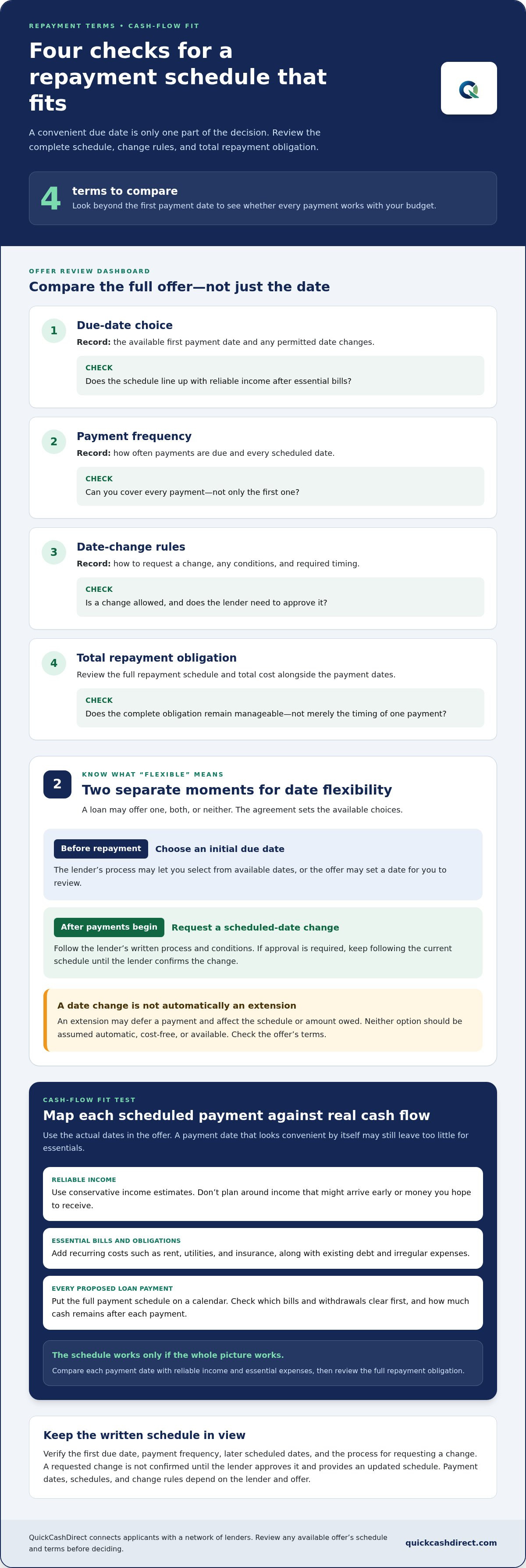
Date flexibility may apply at two different points. A lender may let you select an initial due date before repayment starts. After payments begin, the lender may allow you to request a change to a scheduled date. These are separate options, and a loan may provide one, both, or neither. The offer and agreement set the payment dates, frequency, and any permitted changes.
What can a flexible repayment date mean?
Depending on the agreement, flexibility might mean choosing from available first-payment dates or requesting a change to a later scheduled date. It doesn’t necessarily mean choosing any date you want or changing every future payment. Check the schedule and change terms in the offer before relying on a date. A general overview of how a repayment plan can be structured can help distinguish the overall schedule from the individual dates within it.
For example, imagine your paycheck usually arrives near the end of the month, while rent and other essential bills are due earlier. A payment date after payday might appear easier to manage. But the proposed date still needs to leave enough money for bills and other obligations. Use a calendar to plan, then compare it with the actual schedule in the offer.
How is a flexible date different from a payment extension?
Changing a scheduled payment date and postponing a payment aren’t necessarily the same. A date change may adjust when a payment is due under the agreement. An extension may defer a payment and affect the repayment schedule or amount owed. The consequences depend on the offer’s terms, so don’t assume either option is automatic, cost-free, or available after repayment begins.
Before accepting, identify the first due date, each later payment date, and the process and conditions for requesting a change. Then consider the full obligation, not just whether one date lines up with payday. Flexible repayment date loans are useful only when the schedule is clear and workable for your actual cash flow.
How Flexible Loan Repayment Dates Work in Practice
Start with the written offer, not an assumption about what “flexible” means. Find the first payment date, payment frequency, and full list of scheduled dates. Add them to a calendar alongside reliable income deposits and recurring essentials, such as rent, utilities, and insurance. This makes timing conflicts visible before you accept.
For example, if a payment is scheduled just before your regular payday, note which bills and withdrawals will clear first. Don’t plan around income that might arrive early or money you hope to receive. A date that looks convenient on its own may still leave too little cash for essential expenses.
When do borrowers select or receive a payment date?
The agreement or lender’s process sets how the initial due date is established. An offer may provide a date to review, or its process may let you select from available dates. Before accepting, verify the first payment date and how often payments follow, then record the schedule as shown in the offer.
Can a borrower change a loan payment date later?
That depends on the lender’s written process. Read the instructions for requesting a change, including any conditions and timing requirements. If lender permission is required, the date hasn’t changed until you receive approval and confirmation. Keep the confirmation and updated schedule with your loan records.
A date-change request isn’t the same as missing a payment, receiving an extension, or taking out new borrowing. Don’t skip or delay a scheduled payment while waiting for a request to be reviewed. Follow the current schedule unless the lender confirms a change, and check whether revised dates affect later payments or the total obligation.
Payment frequency and change procedures can differ across lenders and offers. Some schedules may use recurring monthly dates; others may follow a different frequency. Check the agreement for the actual terms rather than assuming a feature is standard. The SBA loan program information concerns small-business financing, a separate category from consumer loan payment-date rules.
Once you know the schedule you need, you can explore loan options through QuickCashDirect. QuickCashDirect connects applicants with a network of lenders. Available payment dates and change rules depend on the lender and offer.
How to Compare Flexible Repayment Date Loans and Their Terms
Compare the complete offer, not just the due date that seems most convenient. Flexible repayment date loans only help if the schedule fits your reliable income and essential bills while the full repayment obligation remains manageable. Use a simple table to assess each offer side by side:
| What to compare | What to record | What to check |
|---|---|---|
| Due-date choice | Available first payment date and any permitted date changes | Does the schedule line up with reliable income after essential bills? |
| Payment frequency | How often payments are due and each scheduled date | Can you cover every payment, not only the first one? |
| Change rules | How to request a change, any conditions, and required timing | Is a change allowed, and does the lender need to approve it? |
| Total obligation | Amount financed, payment amount, disclosed fees, APR, and repayment duration | What is the total amount due over the full schedule? |
Use dates you can count on. If income varies, don’t base your comparison on a hoped-for shift, bonus, or early deposit. Place proposed payments beside recurring essentials and existing obligations. A schedule that fits one pay period but leaves a shortfall in another may not be workable.
Which loan terms matter beyond the due date?
Review the amount financed, each payment, fees, APR where disclosed, and repayment duration together. Use the lender’s actual disclosures rather than generalized rates or estimates. Compare the full schedule and total amount due, not just the first payment. If terms are unclear or conflict across documents, pause before accepting and resolve what the agreement requires. The Consumer Financial Protection Bureau’s loan information can provide broader consumer context as you review disclosures.
How do payday and installment schedules differ?
A payday loan may be structured around a single repayment, while an installment loan may divide repayment into multiple scheduled payments. A single due date creates a different cash-flow demand from payments spread across a schedule, but the exact structure and terms depend on the lender and offer. For broader context, read this payday loans guide and compare related borrowing through the cash advance guide.
How to Check Whether a Flexible Repayment Schedule Fits Your Budget
A due date that matches payday can still leave your budget short. Test the whole schedule against money you can reasonably expect, bills you must pay, and other obligations. Use this four-step check before accepting an offer:
- List take-home income dates. Use confirmed paydays and conservative amounts. If income varies, plan around a cautious estimate rather than your best-case month.
- Add essential bills. Record housing, utilities, food, transportation, and existing debt payments when they’re due.
- Enter proposed loan payments. Use every payment date and amount from the offer, not just the first one.
- Check the remaining cash. After each payment, account for irregular expenses and see whether enough remains for essentials and a reasonable buffer.
Keep the calendar simple. A spreadsheet, paper planner, or budgeting app can show whether payments cluster before income arrives or overlap with major bills. Judge flexible repayment date loans against the full cash-flow picture, not a convenient date alone.
How can you map loan payments against income?
Put confirmed income dates, essential bills, and proposed loan payments on the same calendar. Calculate what remains after each expense and payment. Then test the schedule using a cautious scenario, such as a lower variable paycheck or a later-than-usual deposit. If the budget only works when every deposit arrives on time and at its highest expected amount, the plan may be too tight.
What warning signs suggest a schedule may not fit?
Pause if a payment leaves too little for housing, utilities, food, or existing obligations. The same applies if you’d need to borrow again to make the next scheduled payment or rely on uncertain income to cover it. A convenient due date can improve timing, but it can’t make an unaffordable loan affordable. If the full repayment plan doesn’t add up, reconsider before accepting.
Once you’ve worked out what payment timing your budget can support, you can explore loan options through QuickCashDirect. The platform connects applicants with a network of lenders. Payment dates, schedules, and terms depend on the lender and offer.
Explore Flexible Repayment Date Loan Options Through QuickCashDirect
Once you know what payment schedule your budget can support, use QuickCashDirect to explore options from a network of lenders. QuickCashDirect is not a direct lender. It connects applicants with participating lenders, so any offer, terms, and decision come from the lender.
The process is straightforward:
- Submit a request. Provide the information needed to explore potential lender options.
- Review any available offer. If a lender presents an offer, check its proposed payment dates and full terms.
- Compare the schedule. See whether the dates, amounts, and frequency fit your actual income and bills.
- Decide whether to accept. Move forward only if the full repayment obligation works for your budget.
Submitting a request doesn’t guarantee an offer or approval. Eligibility, lender decisions, available date flexibility, and funding timing depend on the lender, the offer, and individual circumstances. Review each offer on its own terms rather than assuming you can choose or change a due date.
What should borrowers review in a lender offer?
Check the complete schedule before deciding. Confirm the first due date, every later payment date, payment amounts, payment frequency, total repayment obligation, and any disclosed fees. Read the lender’s written rules for requesting a date change. Also look for instructions on what to do if you may have trouble making a payment. A flexible date is useful only if the overall obligation remains affordable.
Compare the offer against the budget calendar you prepared. Account for essential expenses, existing debt payments, and irregular costs. If the schedule leaves too little for necessities or depends on uncertain income, pause. The convenience of a payment date shouldn’t outweigh whether you can manage the full loan commitment.
What happens after submitting a request?
A lender reviews the request and may present an offer based on its process and your circumstances. Review the lender’s disclosures carefully because repayment dates, change rules, eligibility, and funding timing depend on the lender and offer. You can then compare the terms and decide whether to accept. A possible offer isn’t a commitment before you’ve read it.
Ready to explore potential options? Explore loan options with QuickCashDirect, then review any available offer against your budget before accepting. Flexible repayment date loans should fit your cash flow and the full repayment plan, not just one convenient due date.
Choose a Repayment Schedule You Can Manage
Flexible repayment date loans can help align scheduled payments with cash flow, but flexibility depends on the lender and offer. Before accepting, check whether you can choose or request a date change, then review the payment frequency, full repayment obligation, and any disclosed fees. A convenient due date matters only if every payment still fits after essential bills, existing debts, and irregular expenses.
Use confirmed income dates to test the complete schedule. If the numbers work only with hoped-for income or leave too little for necessities, pause and reconsider. Clear terms and a realistic budget are essential to making a sound borrowing decision.
QuickCashDirect connects applicants with a network of lenders and provides access to short-term and installment loan options. Any available offer, repayment dates, approval, and funding timing depend on the lender and offer. Review the disclosures and assess affordability before deciding. Explore loan options with QuickCashDirect and take the next step with a clear view of your budget.
Frequently Asked Questions
What are flexible repayment date loans?
Flexible repayment date loans are loans where a lender may offer options to select or request a change to scheduled payment dates. The exact flexibility depends on the lender and agreement. Choosing an initial due date is different from changing one after repayment begins. Review the written offer for payment dates, frequency, and change rules. Flexibility affects timing, but doesn’t automatically change the payment amount or total repayment obligation.
Can I choose my loan payment date to match payday?
Possibly, if the lender’s process and offer allow you to choose from available dates. A lender may set the first due date for you. Before accepting, compare the proposed date with confirmed income deposits and essential bills. Don’t rely on hoped-for income or assume a lender will move a date to match your payday.
Can I change a loan repayment date after I accept the loan?
That depends on the lender’s written terms and servicing process. Some agreements may allow a borrower to request a date change, while others may not. Follow the stated process and timing requirements, and get confirmation of any approved change. Until you receive confirmation and an updated schedule, plan to make payments according to the existing agreement. A request alone doesn’t change a due date.
Are flexible repayment dates the same as a loan extension?
No. A repayment-date change adjusts when a scheduled payment is due if the lender permits it. An extension may postpone a payment and could affect the repayment schedule or total amount owed, depending on the offer. Neither option is automatic. Read the lender’s terms before relying on either, and don’t treat a date-change request as permission to skip or delay a scheduled payment.
Do flexible repayment dates make a loan easier to afford?
Not by themselves. A date that follows payday may help with cash-flow planning, but it doesn’t lower the payment or erase other expenses. Map every scheduled payment against take-home income, essential bills, existing debt, and irregular costs. Check what remains after each payment. If the plan depends on uncertain income, leaves too little for necessities, or requires borrowing again, reconsider the offer.
Can QuickCashDirect guarantee a flexible payment date or loan approval?
No. QuickCashDirect connects applicants with a network of lenders and isn’t a direct lender. Lenders make their own decisions, and approval, eligibility, available payment-date options, repayment schedules, and funding timing depend on the lender and offer. Review any offer’s disclosures carefully so you understand the schedule before deciding whether to accept.
What should I compare when reviewing flexible repayment loan offers?
Compare the first due date, all later payment dates, payment frequency, and the lender’s rules for requesting a change. Review payment amounts, the total repayment obligation, disclosed fees, APR where provided, and repayment duration together. Then place the full schedule beside reliable income dates and essential bills. Pause if terms are unclear or if the payments leave too little for your regular obligations.