
The repayment schedule can matter as much as the amount borrowed. Fixed rate installment loans provide a set amount upfront and are typically repaid in scheduled payments. Payday loans, by contrast, are generally due in one large payment, often when the borrower receives their next paycheck.
Before choosing a loan, consider how the payment fits your budget and how applying may affect your credit. A lender may conduct a hard inquiry, which can temporarily lower your credit score. On-time payments could help build credit, depending on whether the lender reports them to credit bureaus.
Learn how installment loans work, what to expect when applying online, and how repayment may affect your credit. Compare installment, payday, title, and pawn loans by their repayment schedules, collateral requirements, and potential risks. Use those differences to decide which option fits your needs and repayment plan.
Key Takeaways
- Understand what information and repayment details to review before applying online.
- See how a fixed interest rate can make monthly payments more predictable.
- Learn how loan payments are divided between principal and interest, and what collateral can mean.
- Compare repayment structures and collateral across installment, payday, title, and pawn loans.
How do I Apply for an Installment Loan Online?
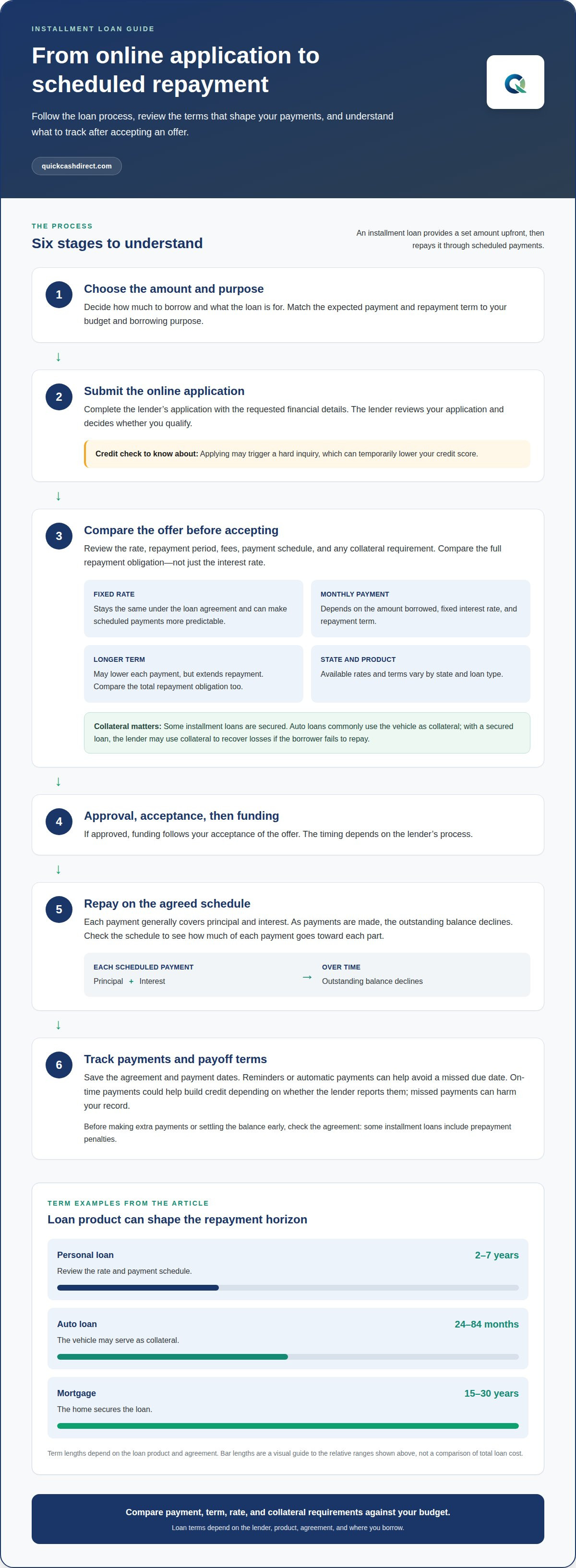
An installment loan provides a set amount upfront, which you repay through scheduled payments. Each payment usually covers principal and interest. With fixed rate installment loans, the interest rate stays the same under the loan agreement, making scheduled payments more predictable.
Common types in the United States include personal loans, auto loans, and mortgages. Personal loans typically run two to seven years, auto loans can span 24 to 84 months, and mortgages commonly run 15 to 30 years. Fixed-rate terms depend on the loan product and agreement.
To apply online, choose the amount and purpose, then complete the lender’s application with the requested financial details. Before accepting an offer, review its rate, repayment period, fees, payment schedule, and any collateral requirement. The lender assesses your application and decides whether you qualify. Funding follows approval and acceptance, and timing depends on the lender’s process.
State laws can affect the interest rates and loan terms available. Rules and limits vary by state and loan type, so the terms depend on where you borrow and which product you choose.
Monthly payments depend on the amount borrowed, fixed interest rate, and repayment term. The lender spreads principal and interest across the scheduled payments. A longer term may lower each payment but extends repayment, so compare the total repayment obligation as well as the monthly amount.
Paying off a loan early may shorten the time you carry debt, but some installment loans include prepayment penalties. Review the agreement’s payoff terms before making extra payments or settling the balance.
| Loan option | Typical repayment term | Key consideration |
|---|---|---|
| Personal loan | Two to seven years | Review the rate and payment schedule. |
| Auto loan | 24 to 84 months | The vehicle may serve as collateral. |
| Mortgage | 15 to 30 years | The home secures the loan. |
Choose an option whose payment, term, rate, and collateral requirements fit your budget and borrowing purpose.
What are installment loans?
Installment loans let borrowers repay a fixed balance through scheduled payments. The rate type affects how predictable those payments remain over the repayment term.
Fixed Rates and Monthly Payments
A fixed interest rate stays the same throughout the agreed loan term. This can keep monthly payments steady, making it easier to plan around regular expenses. Fixed rate installment loans differ from variable-rate borrowing, where the rate can change under the agreement and affect future payments. Mortgages and personal loans may have fixed rates, but compare the agreement’s terms rather than relying on the product label.
Personalized Rates and Fees
Lenders set rates based on the application and loan terms. The amount borrowed, repayment period, and credit details can affect the offer. Fees may also vary, so compare the full repayment obligation, not just the interest rate. Before accepting, review the payment schedule, fee disclosures, and whether the rate stays fixed for the entire term.
Annual percentage rate, or APR, helps compare borrowing costs by expressing the yearly rate and certain fees as a single figure. The interest rate reflects the cost of borrowing the principal; APR can give a broader view of the cost. For example, two personal loans with the same interest rate may have different APRs if their fees differ.
Reviewing APR and the payment schedule together gives a clearer comparison than looking at either figure alone. Confirm whether the offer has a fixed or variable rate, then consider how its terms affect monthly payments and total repayment.
If a fixed monthly commitment doesn’t fit an urgent cash need, compare it with online payday loan options, which use a different repayment structure.
How installment loans work
An installment loan moves from approval to scheduled repayment. The lender sets the loan amount, interest rate, payment schedule, and final due date. The borrower receives the funds and then makes payments at regular intervals. Each payment generally covers principal and interest, reducing the outstanding balance over time. The agreement specifies the payment amount and due dates.
Early payments cover interest and principal, and the balance declines as payments are made. Check the payment schedule to see how much goes toward principal and how much toward interest.
Approval depends on the lender’s review of your application and financial details. Applying may trigger a hard credit inquiry, which can temporarily lower your credit score. Before accepting, compare the loan amount, interest rate, repayment period, and scheduled payment with your budget. Save the agreement and payment dates so you can track what’s due.
Payment history matters once repayment begins. Making installment payments on time could help build credit, while missed payments can harm your record. A loan with regular payments over five to seven years can build credit history, but you’ll have to manage the commitment throughout that term. Set reminders or automatic payments to help avoid missing a due date.
Some installment loans are secured, while others are unsecured. With a secured loan, the lender may use the collateral to recover losses if the borrower fails to repay. Auto loans commonly use the vehicle as collateral. A credit card works differently: it provides revolving credit rather than a single loan amount repaid on a set schedule. Before signing, check the agreement for collateral terms, payment dates, and any early-payoff conditions.
Installment loans compared with payday, title, and pawn shop loans
Compare each option by its repayment structure, collateral, and fit with your income schedule. An installment loan spreads repayment across scheduled payments; alternatives may demand a lump sum or put property at risk.
| Loan type | Repayment structure | Collateral | Key decision |
|---|---|---|---|
| Installment loan | Scheduled payments over an agreed term | May be secured or unsecured | Can the payment fit your budget? |
| Payday loan | Usually one large payment; average term is 30 days | Often linked to a future payment | Can you repay the full balance on time? |
| Title loan | Terms depend on the agreement | Vehicle title | Could repayment put your vehicle at risk? |
| Pawn shop loan | Terms depend on the shop agreement | Personal item offered as collateral | Are you prepared to risk the pledged item? |
A payday loan is designed for quick repayment, often in one payment when the borrower receives their next paycheck. This can put pressure on the next income cycle. Installment payments are divided into multiple scheduled amounts, but a longer commitment still requires ongoing budgeting.
Title and pawn loans use property as security. A title loan puts a vehicle at stake, while a pawn loan uses an item the borrower pledges. If repayment fails, the borrower may lose the collateral. An auto loan also uses a vehicle as collateral, but finances its purchase and follows its own agreement.
Before applying, match the repayment period to your income schedule. Check the payment amount, total obligation, due dates, and collateral terms. Choose an installment loan when predictable scheduled payments suit your budget; avoid any structure whose required payment would compete with essential expenses.
If a payday loan better matches your immediate borrowing need, explore online payday loan options and review the repayment terms.
QuickCashDirect: Payday Loans
QuickCashDirect connects borrowers with lenders offering payday loans, cash advances, and loans for bad credit. The free loan-introduction service may help you compare short-term borrowing with installment payments. Payday loans are generally repaid in one large payment, often when the borrower receives their next paycheck. Consider that schedule alongside your upcoming income and essential expenses before choosing.
If you need a short-term option, review the loan details and repayment terms carefully. Compare payment timing with your budget, and borrow only what you can repay. A payday loan works differently from an installment loan, so focus on the full repayment obligation and due date.
Visit quickcashdirect.com to explore the available options.
Choose Your Next Step With Care
Before applying, identify the expense and decide what repayment amount your budget can handle. Consider how a new payment fits alongside housing, utilities, food, and existing debt. Setting a borrowing limit can help you avoid taking on more than you need.
Use the same criteria for every offer: payment schedule, total repayment obligation, fees, and collateral requirements. Fixed rate installment loans may suit borrowers who prefer set payments, while a short-term option may better match a different timing need. Focus on the agreement and your ability to repay, not just how quickly funds may arrive.
QuickCashDirect offers payday loans, cash advances, and online payday loans. Review these options against your budget and repayment plan before proceeding. If you’re ready to explore them, visit QuickCashDirect. Take the next step with a clear view of what you need and what you can manage.
Frequently Asked Questions
How does an installment loan affect your credit?
An installment loan can affect your credit through payment history, a credit inquiry, and credit mix. On-time payments build a record of repayment, while missed payments can harm your credit standing. Applying may trigger a hard inquiry that temporarily lowers your score. Adding an installment account can broaden your credit mix, which accounts for 10% of a FICO score. Keep track of due dates to protect your payment record.
How does an installment loan compare to other options?
Fixed rate installment loans have scheduled payments, while a credit card lets you borrow repeatedly within its credit limit. A title or pawn loan puts pledged property at risk if you don’t repay. Look beyond the initial payment: consider how long the debt lasts, whether collateral is at risk, and whether you can borrow again after repaying.
How is a personal installment loan different from a payday loan?
A personal installment loan is repaid through scheduled payments over an agreed term; payday loans are generally due in one large payment. The payday loan’s average term is 30 days. That difference affects how repayment fits your income: installments divide the obligation over time, while a payday loan can require a larger amount from one paycheck. Compare the due date with essential bills.
How much money can I qualify for with an installment loan?
The amount depends on the loan product and the lender’s assessment of your application, including your income and ability to repay. That range applies to the lender’s product, not every installment loan. To assess an offer, consider whether its payments fit your budget and other regular obligations throughout the repayment schedule.
What are the fees and APR?
APR expresses the yearly borrowing rate and may include certain fees, so compare it with the interest rate and repayment terms. QuickCashDirect’s loan-introduction service is free to use. Any lender fees depend on the lender, state, and loan amount, and are disclosed in the loan agreement. Before accepting an offer, review the agreement for the APR, charges, payment schedule, and total repayment.
How do fixed-rate installment loans work?
These loans keep the agreed interest rate unchanged during the loan term. With fixed rate installment loans, the lender sets a payment schedule, and each payment reduces the balance while covering interest. A fixed rate can make borrowing costs more predictable, but you still need to review fees and contract terms. Check the agreement for payment dates and early-payoff terms before accepting.