
49% of Americans struggle to cover an unexpected expense greater than $400. Financial relief for unexpected expenses may help when an urgent bill is due before your next income arrives and your available savings won’t cover it. Consider it after checking whether you can delay the expense, adjust the bill timing, or use savings without putting essential costs at risk.
It’s stressful to face a necessary repair, medical bill, or household expense when other bills are already due. Finding financial relief for unexpected expenses starts with identifying what must be paid, when it’s due, and when money will come in.
This guide covers common surprise costs, how income and due dates affect your options, and where emergency assistance may help. You’ll also learn when short-term borrowing might fit and what to weigh before choosing it. Use these steps to prioritize the most urgent bill and find a practical way forward.
Key Takeaways
- List the urgent expense, its due date, and your next income date to see where the cash-flow gap falls.
- Ask creditors whether changing a bill’s due date or arranging a payment plan could ease the immediate pressure.
- Call 211 to find local help, and contact your state or tribal LIHEAP office about energy-related assistance.
- Prepare to explain the emergency and your household’s needs when applying for relief; grant applications may receive human assistance and expert review.
- Before borrowing, consider how repayment will fit alongside upcoming bills and essential expenses.
1. Common unexpected expenses
A broken furnace, urgent dental visit, or car repair can disrupt a household budget without warning. These expenses often arrive alongside rent, utilities, and other bills. The pressure can be sharper when income arrives after a payment deadline. In the United States, 49% of Americans struggle to cover an unexpected expense greater than $400. That gap can make even a familiar repair or medical bill difficult to manage.
Housing costs can leave little room for a surprise. Many U.S. households spend more than half their earnings on housing, so a plumbing leak or appliance failure may compete with rent and utilities. List the immediate problem, amount due, and payment deadline. Then distinguish urgent needs, such as safe heat or working transportation, from repairs that can wait.
Medical bills can follow an illness, injury, prescription, or dental emergency. A change in employment can also affect access to health coverage. COBRA allows workers and their families to continue group health benefits for a limited time after certain qualifying life events, according to the U.S. Department of Labor. Review the coverage details and expected costs before deciding how to handle a medical bill.
Other common shocks include replacing a phone needed for work, paying for emergency travel, or covering a higher-than-expected utility bill. Keep a brief record of regular costs and past surprises. It can reveal expenses that may recur, such as seasonal heating needs or repeated vehicle repairs, and help you set a realistic savings goal.
An emergency fund is cash set aside for unplanned expenses or financial emergencies. The amount needed depends on your circumstances and the costs you have faced. A common savings goal is around three months’ worth of wages, but small, regular deposits can still build a useful buffer. Setting aside $20 a month can help prepare for unexpected costs. Keep emergency savings accessible and separate from everyday spending where possible.
Emergency loans can add repayment obligations and costs, making later bills harder to manage. Reduce the risk of scams by reviewing written terms, confirming who you’re dealing with, and refusing pressure to share banking credentials or pay through unusual methods. Before borrowing, compare the repayment date with your income and essential bills. If repayment would leave housing, utilities, or food uncovered, consider other options first.
2. Managing income and bill timing
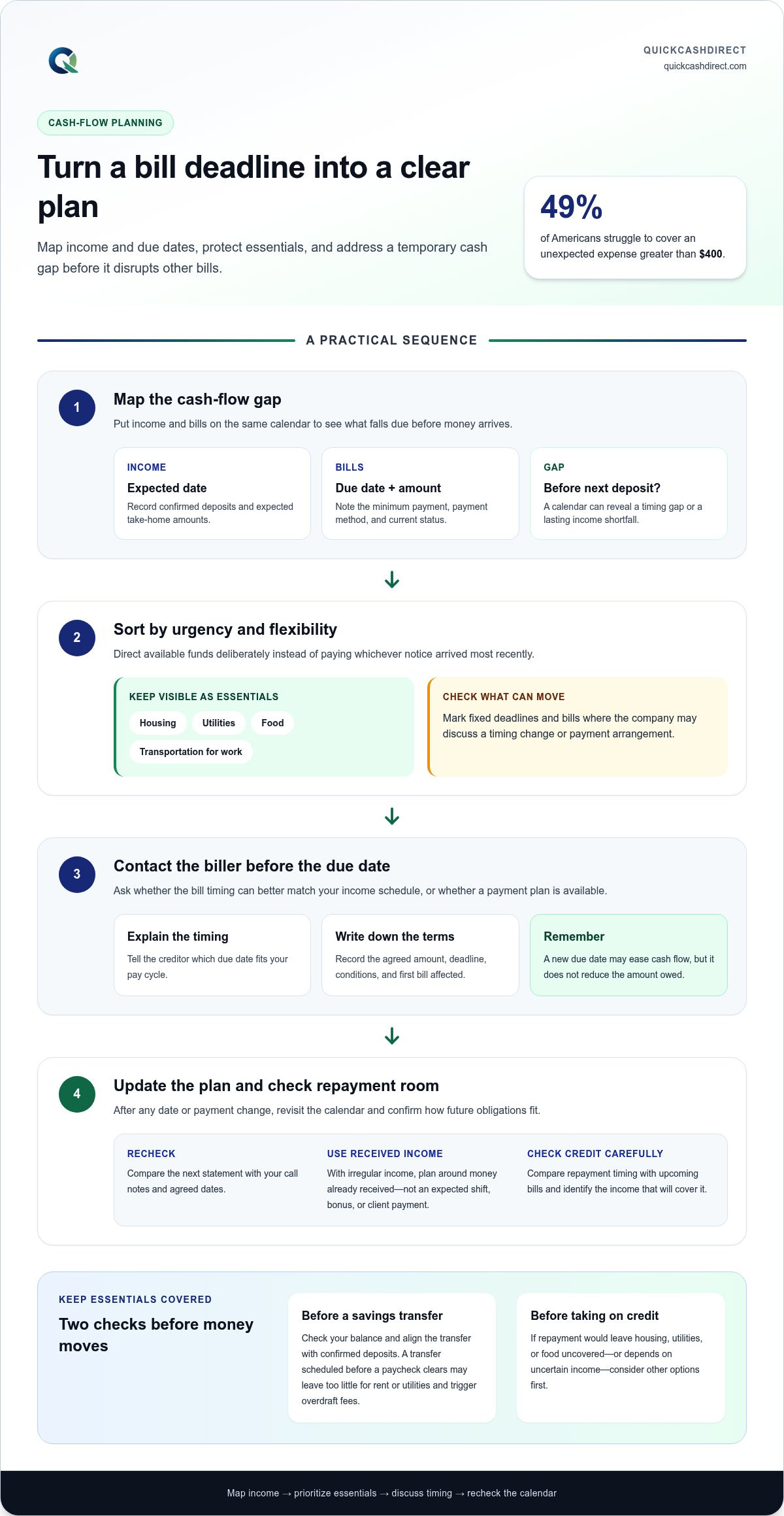
Map each paycheck against the bills due before your next deposit. Record the expected income date, bill amount, due date, and payment method. A simple calendar can show whether you face a lasting income shortfall or a temporary timing gap. If rent is due before payday, for example, focus first on the rent deadline and whether its timing can be adjusted.
Ask creditors whether they can adjust due dates to better match your income schedule. In the United States, landlords, utility companies, and credit card companies may let customers change bill due dates. Explain which date fits your pay cycle, then note any confirmation and the first bill affected. A new due date can ease cash flow, but it doesn’t reduce the amount owed.
Sort upcoming bills by consequence and flexibility. Keep housing, utilities, food, and transportation for work visible in your plan. Mark fixed deadlines and bills for which the company may discuss an arrangement. This helps you direct available funds deliberately instead of paying whichever notice arrived most recently.
- List confirmed income dates and expected take-home amounts.
- Record each bill’s due date, minimum payment, and payment status.
- Contact the creditor before the due date to discuss timing or assistance.
- Recheck the calendar after any date or payment arrangement changes.
Automatic savings transfers can build a reserve, but check your account balance before each transfer. A transfer scheduled before a paycheck clears may leave too little for rent or utilities and trigger overdraft fees. Align transfers with confirmed deposits, and adjust the amount when income changes. Consistency helps, but scheduled essentials come first.
With irregular income, plan around money already received rather than relying on an expected shift, bonus, or client payment. Separate essential bills from flexible spending, then update the plan whenever a deposit arrives. If bill and paycheck dates change, revise the calendar promptly. This can keep a temporary cash gap from causing missed payments across several accounts.
Credit can be an option in some situations, but compare repayment timing with the bills already on your calendar. A payment that fits today may compete with next month’s housing or utility costs. Before using credit, calculate what will be due and identify the income that will cover it. If the plan relies on uncertain income, rethink it before taking on another obligation.
Keep a written record of calls, agreed dates, and assistance requests. If a representative offers a payment arrangement, note the amount, deadline, and any conditions discussed. Compare the next statement with your notes. Clear records help you catch discrepancies and keep your income plan aligned with actual bill deadlines.
3. What emergency financial assistance programs help with unexpected expenses in the U.S?
Start with the expense that threatens your household first. In the United States, call 211 to find local resources for bills and other needs. Explain whether you need help with housing, utilities, food, or another urgent cost. Local referrals can help identify programs that match the problem, rather than sending you through unrelated applications. Keep the referral details and any instructions together as you follow up.
For heating and cooling expenses, look into the Low Income Home Energy Assistance Program, known as LIHEAP. Eligible low-income households can receive help with heating and cooling costs, energy bills, energy crises, weatherization, and energy-related home repairs, according to the U.S. Department of Health and Human Services. Contact your state or tribal LIHEAP office about eligibility. Ask which application steps apply to your household and whether the program covers your immediate energy need.
If an energy bill is already due, contact your utility company directly. Utility companies may offer payment plans or temporary bill discounts to customers who can pay only part of what they owe. Explain how much you can pay and when you expect your next income. Ask what arrangement is available, when it starts, and whether it changes the next bill. Record the representative’s instructions so you can track the agreement.
Some employers establish relief funds for workers facing defined emergencies. Companies set eligible events and expenses and decide which charitable class of people may apply for grants. If your employer has a fund, follow its application instructions and describe how the event caused the expense. Applicants complete an application and can receive human assistance. Experts objectively review applications before grants are awarded and processed.
Match the help to the bill. LIHEAP addresses household energy needs, while a utility payment plan deals with an amount owed to that company. A workplace relief fund has its own eligibility rules. For a medical bill, ask the billing office about its assistance process and application requirements. Keep the bill and written responses handy so you can clearly explain the amount and deadline.
Use a focused sequence to act quickly. Call 211 for local referrals, contact the relevant state or tribal LIHEAP office for energy support, and speak with your utility about payment options. For employer relief, ask where to find the fund’s application and how it defines eligible expenses. Track each call, application, and response. This record helps you follow up on the specific bill while keeping other due dates in view.
4. What documents do I need to apply for emergency financial assistance?
Before applying, prepare a clear picture of your household, income, and urgent expense. Programs use different forms, so follow the instructions for the specific assistance you’re seeking. Gather relevant records in one place, then check that names, dates, and amounts match. A complete, consistent application helps reviewers understand what happened and what support you’re requesting.
Start with identification and household details. Have a government-issued ID, current address information, and the names of household members ready. An application may ask who lives with you or shares the expense. Use consistent spelling and address details across documents. If you’re seeking help with a bill, make sure the account holder and service address are clear.
- Identification and proof of current address.
- Recent pay statements or records of other household income.
- The bill, invoice, or notice connected to the emergency.
- Receipts or repair estimates that explain the expense.
- Account details for the utility or service involved.
- Application forms and correspondence about the request.
Organize records that show household income. Pay statements can document employment income, while other income records can show additional resources. If your income changes, prepare a brief written summary of the change and when it occurred. Keep it factual: for example, note a reduced work schedule and the pay period it affected.
Next, document the emergency. A utility shutoff notice, medical bill, repair estimate, or landlord statement can show the expense and its deadline. Include receipts for payments already made. If the amount changed, keep the updated statement and identify the current figure. A short timeline can connect the event, the bill, and the assistance you’re requesting.
For a relief fund application, describe the event and eligible expense directly. Include supporting records that match your explanation, such as an invoice for a necessary repair. Applicants complete an application and can receive human assistance, followed by an objective expert review before grants are awarded and processed. Keep copies of submitted forms and attachments so you can refer to the same details later.
Before submitting, check each page for blank fields, inconsistent dates, and unreadable copies. Label digital files clearly, such as “utility notice” or “repair estimate,” and keep originals secure. Submit only documents requested by the application. Record the submission date and save any confirmation or follow-up instructions with your copy.
Once your application is complete, planning for future financial shocks may also help. In the United States, emergency savings can help people avoid using credit cards or loans to cover unexpected costs, which may lead to debt that is harder to repay. The amount to keep in an emergency fund depends on each person’s circumstances and past unexpected expenses. One recommended goal is to save around three months’ worth of wages.
Setting a specific savings goal and contributing regularly can help build an emergency fund. Recurring transfers from checking to savings are one way to keep contributions consistent. Saving all or part of a tax refund or cash gift can also grow the fund.
5. How do I apply for emergency assistance, and how long does approval take?
Start by identifying the program that matches the expense. For energy bills, contact your state or tribal LIHEAP office. For local bill support, call 211 and ask about resources for your specific need. A workplace relief fund follows the employer’s application process. The correct route helps you focus on the forms and documents that matter.
Before applying, briefly describe the emergency, the expense, and its deadline. Use the bill or notice to confirm amounts and dates. Gather relevant household and income records, then follow the program’s instructions for submitting them. Save a copy of the completed application and attachments. These steps make it easier to answer questions consistently.
Eligible relief fund applicants complete an application and can receive human assistance. Experts then objectively review applications before grants are awarded and processed. Describe the event clearly and connect it to the expense you want the fund to consider. If supporting records are requested, include documents directly related to your explanation. Keep notes about assistance received and any outstanding requests.
Application timelines vary by program. The process generally involves receiving the application, checking its details, reviewing eligibility, making a decision, and processing an award if approved. Missing information or documents that don’t match the application can lead to follow-up. Submit a complete, readable application and respond promptly to requests for clarification.
For utility assistance, ask the program office how it communicates decisions and what happens after approval. Separately, contact the utility company about payment arrangements while your application is under review. A program decision and a company’s billing schedule are separate matters. Keep the application reference, contact details, and written instructions together so you can track both processes.
If you haven’t received an update, use the application’s stated contact method to ask whether anything remains outstanding. Provide your name and application details, then record the response and next step. Don’t submit duplicate forms unless the program instructs you to. Duplicate applications can make it harder to identify which version contains the correct information.
When an urgent bill falls due before assistance is processed, compare available options against your income and upcoming essential payments. Borrowing creates a repayment obligation, so include its due date in your budget before deciding. To review an online application option, explore emergency funding options and consider how repayment fits your bill schedule.
Separately, aim to save around 3 months' worth of wages in an emergency fund, keeping it somewhere safe, accessible, and less tempting to use for non-emergencies. Cash can be stolen, lost, or destroyed. Set aside small amounts regularly, consider a dedicated emergency savings account, and work to build the fund back up after using it.
QuickCashDirect: Payday Loans
QuickCashDirect connects borrowers with lenders offering payday loans, cash advances, online payday loans, and loans for bad credit. These options may suit an urgent bill when other assistance won’t arrive in time. Before applying, compare the repayment terms with your upcoming income and essential bills. Understand what you’ll owe and when payment is due. If repayment would leave too little for housing, utilities, or other necessities, consider another way to manage the expense.
Review your budget first. Identify the bill you need to cover and the income you expect before repayment is due. Then decide whether borrowing fits your situation. For information about available options, visit QuickCashDirect.
Choose a next step you can sustain
Turn the urgent bill into a clear decision. Identify what needs attention now, what can wait, and how a choice today will affect your next budget. Aim to address the immediate pressure without making essential expenses harder to manage later.
Financial relief for unexpected expenses works best as part of a clear plan, not a rushed reaction. Compare the amount needed with the repayment you can manage. If short-term borrowing fits your situation, understand the terms before proceeding. If it doesn’t, focus on assistance or payment arrangements that fit the bill.
QuickCashDirect offers payday loans, cash advances, and payday loans online. Contact QuickCashDirect to discuss options and consider which next step fits your budget. A clear decision can help you move forward with greater control.
Frequently Asked Questions
When should I use it?
Consider financial relief for unexpected expenses when an urgent bill can’t wait for your next income and savings or a payment arrangement won’t cover it. Check that the expense is necessary, then compare the repayment impact with upcoming essential bills. For example, if a required payment is due before your deposit arrives, see whether adjusting its timing could close the gap. Borrowing may not suit you if repayment would leave too little for essentials.
What emergency loans are available, and what are their interest rates and fees?
Options include payday loans, cash advances, online payday loans, and installment loans. QuickCashDirect connects borrowers with lenders, and its stated APR range for qualified customers is 5.99% to 35.99%. Any lender fees and repayment terms appear in the lender’s loan agreement. Review the APR, payment schedule, and total repayment amount before accepting an offer. QuickCashDirect charges no upfront fee for using its introduction service.
Are payday loans or cash advances safe options for unexpected expenses?
Borrowing carries repayment risks, so assess the full agreement before accepting an offer. QuickCashDirect introduces borrowers to lenders; it isn’t a lender. Checking rates through the service does not affect your credit score. Read the lender’s terms, confirm the repayment dates fit your budget, and protect your account details. Most lenders allow early payoff without penalty, but review your specific agreement. Never pay an advance fee to release loan funds.