
What if the most reassuring thing you can bring to a loan conversation is a clear repayment plan? If you’re wondering how to explain a short-term loan to your spouse, start with the facts, not a sales pitch. Explain what expense the loan would cover, why you’re considering it, and what you still need to confirm.
It’s understandable to worry that a money conversation could turn into an argument. You may also be unsure which details matter most or whether repayments could squeeze shared bills and goals. Keep the conversation calm and direct. Use “I” statements, share what you know, and make room for questions. The goal isn’t to pressure your spouse into agreeing. It’s to make a decision together with the full picture in view.
This article explains how to discuss the loan amount, total repayment, fees, due dates, and possible effect on your household budget. You’ll also learn how to compare alternatives and agree on a responsible next step, including pausing if the terms or repayment plan don’t work for your household.
Key Takeaways
- Clarify the expense, its deadline, and why you’re considering borrowing before raising the topic with your spouse.
- Learn how to explain a short-term loan to your spouse by sharing the reason, known terms, repayment plan, and alternatives without blame or pressure.
- Compare the full repayment schedule with household income, shared bills, and upcoming expenses to assess whether the loan fits your budget.
- Choose a calm, private time to talk, and give both partners room to ask questions and review the details.
- Before taking the next step, check the written terms together and make sure you understand the repayment obligations.
Before You Explain a Short-Term Loan, Get Clear on Why You Need It
Money conversations can feel tense when a decision may affect both partners. Before you start, get clear on the need and the facts. Preparation helps you explain the situation without blame or pressure, and gives you both room to decide what makes sense for your household.
Write down what the expense is, when it must be paid, and what you know about the consequences of waiting. For example, if a repair is needed to keep a car usable for commuting, explain that plainly. Don’t describe the expense as unavoidable unless you’ve checked whether it can be delayed, reduced, or handled another way.
Identify the need without minimizing the decision
Separate the immediate problem from the proposed solution. An urgent bill may need attention, but borrowing is still a decision that creates future payments. Explain whether the expense is essential, time-sensitive, or potentially deferrable. Acknowledge that repayment could affect shared cash flow, bills, savings, or plans. Keep the focus on what you know, not on worst-case pressure.
Gather the loan details before starting the conversation
Before discussing a specific offer, make a simple list of the amount requested, APR, fees, payment dates, and total repayment. Mark anything you don’t know as “unconfirmed.” A loan involves borrowing under agreed repayment terms, and the details vary by loan type and offer. For background on loan types, see this overview of personal loans.
Don’t present estimates as final terms. The amount you might qualify to borrow, the cost, and the repayment schedule can depend on the offer and lender. Wait for official disclosures before describing those figures as confirmed. For general information about payday loans, review this 2026 payday loan guide.
Then check the household calendar. Compare known repayment dates with upcoming bills, income, and expenses. If you haven’t reviewed how repayment fits alongside those obligations, pause before applying or accepting an offer. You could say, “Here’s the expense and deadline. I’m still checking the full loan terms and whether repayment fits our budget.” That keeps the discussion honest while you gather the information you need.
Explain the Short-Term Loan Terms in Plain, Specific Language
A short-term loan is borrowing intended to be repaid over a relatively brief period. There isn’t one standard length, payment schedule, or cost. Terms depend on the specific product, lender, eligibility decision, and agreement. To explain a particular offer clearly, use its written disclosures rather than relying on a general description or an estimate.
Keep the main figures separate. The amount borrowed is the credit provided. The total amount owed is what the agreement requires you to repay, including applicable interest and fees. APR expresses borrowing costs as an annual rate, while fees list charges separately. Payment frequency and due dates show when payments will come out of the household budget.
Which loan details should you share with your spouse?
Review the offer together and note the amount, APR, each fee, payment frequency, due dates, and total repayment. Then compare the scheduled payments with expected income and household obligations. If a rate, payment, or condition is variable or unclear, say so directly. Don’t guess or present an estimate as a confirmed term. Check the lender’s disclosures and agreement for the exact details.
A simple summary can help: “This is the amount offered, these are the scheduled payments, and this is the total repayment shown in the agreement.” That keeps the discussion grounded in facts and gives both partners a chance to ask about unclear terms before making a decision.
Explain the household impact, not just the cash received
Map each payment against essential bills and known expenses due during the repayment period. A payment might fall near rent, utilities, insurance, or another planned expense. Look at the timing, not just whether the budget appears to have enough money overall. If you don’t understand what could happen after a missed or late payment, check the agreement before describing possible consequences.
If you’re comparing a cash advance with another borrowing option, use this cash advance guide as general product education. Terms still depend on the specific offer. For a productive discussion, Fidelity’s guidance on money conversations can also help couples approach shared financial decisions with openness.
Explaining a short-term loan means showing the full obligation, not only the cash you’d receive. QuickCashDirect connects consumers with a network of lenders through an online referral service. It isn’t a direct lender, and lender terms and decisions vary. You can review potential short-term loan options through QuickCashDirect.
Address the Main Concern: Can We Repay This Loan Without Straining Our Budget?
Make affordability the shared question. This isn’t about one partner winning the discussion. It’s about checking whether the scheduled payments fit your household’s actual cash flow without putting essential bills or near-term needs at risk. Review the numbers together, then decide whether borrowing still makes sense.
Build a repayment check together
Start with take-home income and the timing of each paycheck. List essential costs, existing debt payments, and known upcoming expenses. Then add the proposed loan payments using the schedule in the lender’s disclosures. Don’t fill gaps with a rough estimate. If the terms aren’t confirmed, mark them as unknown and wait before treating the budget as settled.
Use a simple table to spot tight weeks, not just the overall monthly total:
| Confirmed payment | Due date | Income timing | Essential bills | Remaining cushion |
|---|---|---|---|---|
| Enter disclosed amount | Enter scheduled date | Note expected pay timing | List bills due around that date | Calculate what remains |
Repeat the check for every scheduled payment. A payment may look manageable on paper but land just before rent, utilities, or another necessary expense. If the plan leaves no realistic buffer for routine costs or an unexpected bill, discuss whether you can reduce the amount, delay the expense, or avoid borrowing.
Compare borrowing with other ways to handle the expense
Before settling on a loan, check whether the provider will offer a payment arrangement or whether the expense can wait. You can also discuss whether using savings, asking a trusted person for help, or exploring options through a bank or credit union would be workable. Compare the practical terms and tradeoffs, not just how quickly each option might address the immediate need.
If a limited credit history or credit challenges are part of your situation, this guide to loan options for bad credit may provide general information to consider. It doesn’t replace reviewing a specific lender’s disclosures.
Don’t assume how a late or missed payment could affect credit reporting or lead to other consequences. Those details depend on the lender and agreement. Check the written terms and ask the lender to clarify anything you don’t understand before deciding. A clear affordability check helps you discuss the loan as a household choice, with risks and alternatives visible to both of you.
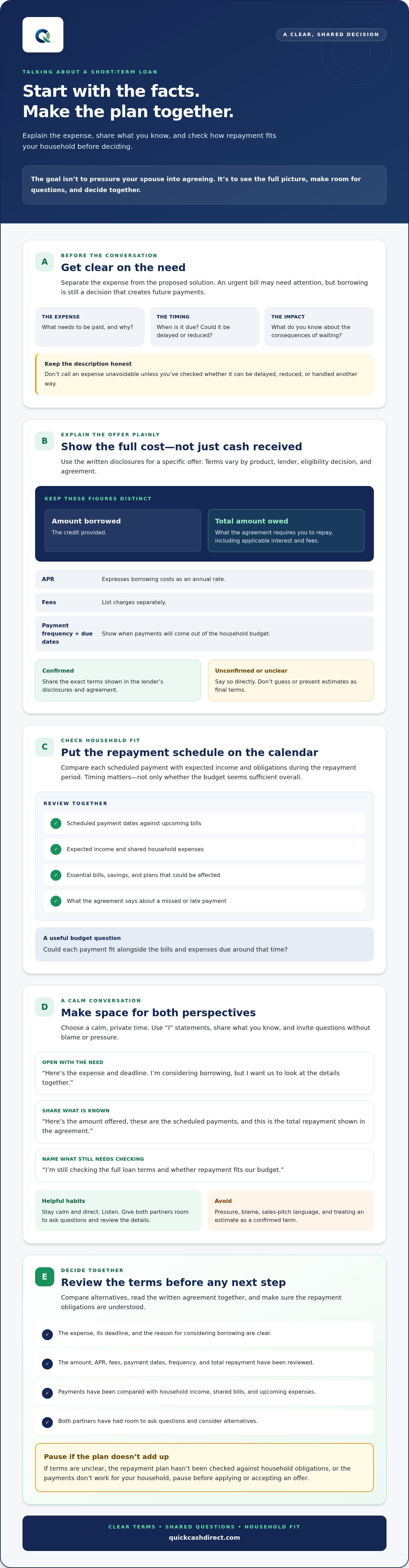
How to Explain a Short-Term Loan to Your Spouse: A Conversation Plan
Choose a private, calm time when neither of you is rushing, distracted, or already upset. Avoid raising the topic in the middle of an argument or just before a bill is due. A focused conversation gives both partners space to ask questions and consider the decision without pressure.
Use a clear, non-defensive opening
Start with a direct statement: “I’m considering a short-term loan for this expense, and I want us to review it together. I haven’t made a decision yet.” Then explain what prompted the idea and what you’ve confirmed so far. Be clear about what you still need to check. This puts the facts on the table without presenting borrowing as a settled choice.
Use “I” statements to explain your thinking, such as, “I’m concerned about the payment deadline.” Avoid blame or language that suggests your spouse must agree. Then ask, “What concerns you most about this?” Listen before responding. Your spouse may be focused on repayment, timing, or another issue you haven’t considered.
Follow a simple order
Keep the discussion organized. Move through the need, the loan terms you know, the repayment plan, and alternatives. This makes it easier to separate the immediate expense from the borrowing decision. If a term is unconfirmed, say so rather than filling in the gap with an estimate.
- Explain the need: What is the expense, and when does it need attention?
- Share known terms: What does the written offer confirm, and what remains unclear?
- Review the repayment plan: How would the payments fit alongside household obligations?
- Consider alternatives: Could you delay the expense, arrange another way to pay, or choose a different option?
Agree on a decision process, not an instant yes
Set aside time to review the written terms and household budget together. Agree on what information you both need before deciding. You might need to confirm a payment date, understand a contract condition, or compare another way to cover the expense. Don’t apply or accept an offer just to end an uncomfortable conversation.
If emotions rise, pause and choose a time to return to the discussion after reviewing the facts. The shared next step may be to proceed, consider another option, or not borrow. If you both want to explore short-term loan options, review potential options through QuickCashDirect. The service connects consumers with a network of lenders, rather than lending directly. Terms and lender decisions vary.
Decide Together: Review the Terms Before Taking the Next Step
A clear conversation doesn’t require an immediate yes or no. It should leave both partners with the same understanding of the offer, the household impact, and what remains uncertain. Before applying or accepting, review the lender’s written disclosures together. If you can’t explain a term in plain language, pause and get clarification first.
Questions to resolve before making a borrowing decision
Use this checklist to confirm you’ve covered the essentials:
- Written terms: Have you both reviewed the lender’s agreement and disclosures?
- Total repayment: Are the APR, fees, and full amount owed clear?
- Payment dates: Do you know when each payment is due?
- Budget fit: Can your household manage every scheduled payment alongside essential expenses and upcoming bills?
- Alternatives: Have you considered other ways to handle the expense and agreed how repayment would be managed if you borrow?
Discuss unanswered questions before moving forward. Don’t submit an application or accept an offer just because the expense feels urgent. The point of learning how to explain a short-term loan to your spouse is to make a shared decision with the full terms in view, not to secure agreement before either of you has had time to review them.
Explore possible options carefully
If you decide to explore borrowing, check the lender’s identity and review the disclosures before sharing sensitive information. Eligibility, loan terms, and funding decisions depend on the lender and the individual application. A referral or initial inquiry isn’t a promise of approval or funding, so read each step carefully and confirm who will receive your information.
QuickCashDirect connects consumers with a network of potential lenders. It isn’t a direct lender, and lenders make their own decisions about eligibility and terms. Keep your household checklist in front of you as you review any option. That way, the next step stays tied to your shared budget and understanding, rather than pressure to act quickly.
If you and your spouse are ready to compare possible options, explore potential loan options after reviewing the checklist together.
Make the Next Step a Shared Decision
A productive conversation doesn’t have to end with an immediate yes. It should leave you both informed, heard, and clear about what needs checking before you decide. Knowing how to explain a short-term loan to your spouse means being open about your reasons and honest about uncertainties, while making room for your partner’s concerns.
Keep the decision anchored in two things: the written terms and your household’s ability to manage repayment. If either of you still has questions, take time to get answers or compare another way to handle the expense. Choosing to wait or not borrow can be a responsible outcome, too.
If you’ve reviewed the offer and budget together and want to explore potential options, explore potential loan options. QuickCashDirect is a referral service that connects consumers with a network of lenders, not a direct lender. Eligibility, terms, and lender decisions vary, so review disclosures carefully before proceeding.
Move forward at a pace that gives both of you confidence. A clear, shared decision is a strong next step, whatever you decide.
Frequently Asked Questions
How do I tell my spouse I am considering a short-term loan?
Choose a calm, private time and explain the expense, why you’re considering borrowing, and what you know so far. Be clear about any terms you haven’t confirmed. Invite your spouse to review the repayment schedule and household budget with you. Frame the discussion as a shared decision, not a request for automatic approval. Listen to their questions before defending your idea or deciding what to do next.
Should I tell my spouse before applying for a short-term loan?
If a loan could affect shared finances, discuss it before applying when possible. Explain what you’re considering and review the potential repayment impact together. If you’ve already applied, be direct about that rather than withholding the information. In either case, check the lender’s written terms before describing costs, payment dates, or possible consequences as certain. Application steps and loan terms can vary, so confirm the details in the disclosures.
What should I explain about a short-term loan to my spouse?
Explain why you need the funds and cover the amount borrowed, APR, fees, payment schedule, due dates, and total repayment. Show how the payments could fit alongside household bills. Keep confirmed terms separate from estimates. If you don’t have a written offer yet, say so clearly. Learning how to explain a short-term loan to your spouse means sharing what’s known, identifying what’s uncertain, and agreeing to review the disclosures before deciding.
How can we tell if a short-term loan fits our budget?
Compare each disclosed payment with take-home income, essential bills, existing debt payments, and upcoming expenses. Use the lender’s actual schedule, not a rough estimate, and check whether the budget still leaves a realistic cushion. If repayment would require skipping essentials or taking another loan, pause before accepting. Revisit the expense and discuss alternatives together. A payment that fits one week may still create pressure when other bills come due.
What if my spouse disagrees with taking out a short-term loan?
Don’t rush into a decision to end the disagreement. Ask what concerns your spouse most, then review the expense, written loan disclosures, and repayment plan together. Consider whether the expense can be delayed, negotiated, or handled another way. If key terms are unclear or the budget doesn’t work, pausing is reasonable. You can agree to gather more information and return to the decision after you’ve both had time to review it.
Can I explain a loan before I know the final terms?
Yes. Explain that you’re exploring borrowing, not presenting a final decision, and say which details remain unknown. Those may include the APR, fees, payment dates, or total repayment. Don’t present estimates as guaranteed terms. Once you receive an offer, review the lender’s written disclosures together and confirm what the agreement requires. This lets you be transparent about why you’re considering a loan without implying you already know its full cost.
What are alternatives to a short-term loan for an urgent expense?
Depending on the expense and your circumstances, ask the service provider about a payment arrangement or whether you can postpone the cost. You could also review available savings, ask a trusted person for help, or inquire about options through a bank or credit union. Each alternative has its own conditions and may not be available. Compare timing, obligations, and practical consequences before choosing. Don’t assume an option is available or cost-free.