
The fastest-looking offer isn’t always the best fit. When income changes week to week, emergency loans for gig workers can be harder to compare, especially if a lender expects standard pay stubs. Tax returns, bank statements, 1099 forms, profit and loss statements, or platform payout histories may help show how you earn.
Look for funding options with repayments your income can support. This guide compares common choices, explains how lenders may assess gig income, and outlines what to gather before applying. It also covers what to review in an offer, including the full repayment cost, before you decide.
QuickCashDirect connects applicants with a network of lenders and short-term funding options, including payday loans, cash advances, and installment options. QuickCashDirect isn’t the lender. Each lender decides eligibility, terms, and funding, so approval and timing aren’t guaranteed. Compare carefully, prepare your income and identity information, and review the lender’s offer before accepting it.
Key Takeaways
- Start with the bill’s deadline and a repayment plan you can manage before comparing emergency loans for gig workers.
- Compare borrowing options with non-loan alternatives, considering repayment structure, timing, and possible charges.
- Prepare records that show your gig income, along with identification a lender may request.
- Review APR, fees, due dates, payment frequency, and late-payment consequences before accepting an offer.
- QuickCashDirect connects applicants with a lender network. Review any lender’s offer and terms carefully. An inquiry doesn’t guarantee a match or approval.
Emergency loans for gig workers: start with the need and repayment plan
Emergency loans for gig workers describes a range of borrowing options, not one standard product. Terms, costs, and repayment schedules vary. Gig workers often work as independent contractors rather than traditional employees, so income may fluctuate and arrive on different dates. Start with two questions: When is the expense due, and what income can realistically cover repayment?
Separate a firm deadline from a bill that might be postponed. A loan’s name matters less than whether its repayment schedule fits your cash flow. Borrowing creates an obligation to repay, and applying doesn’t assure approval, a particular amount, or funding by a specific time.
Which expenses may need immediate attention?
A vehicle repair may need quick attention if you rely on that vehicle to work. A medical bill or overdue utility payment may also have a deadline or consequences worth addressing promptly. Some purchases or bills, however, may be delayed, reduced, or discussed with the biller.
Before borrowing, ask the biller about a payment arrangement or a different due date. Focus on the actual deadline and consequences, not on how urgent a loan advertisement makes the expense sound. If the bill can be negotiated, compare that option with taking on a new repayment obligation.
How much repayment room is actually available?
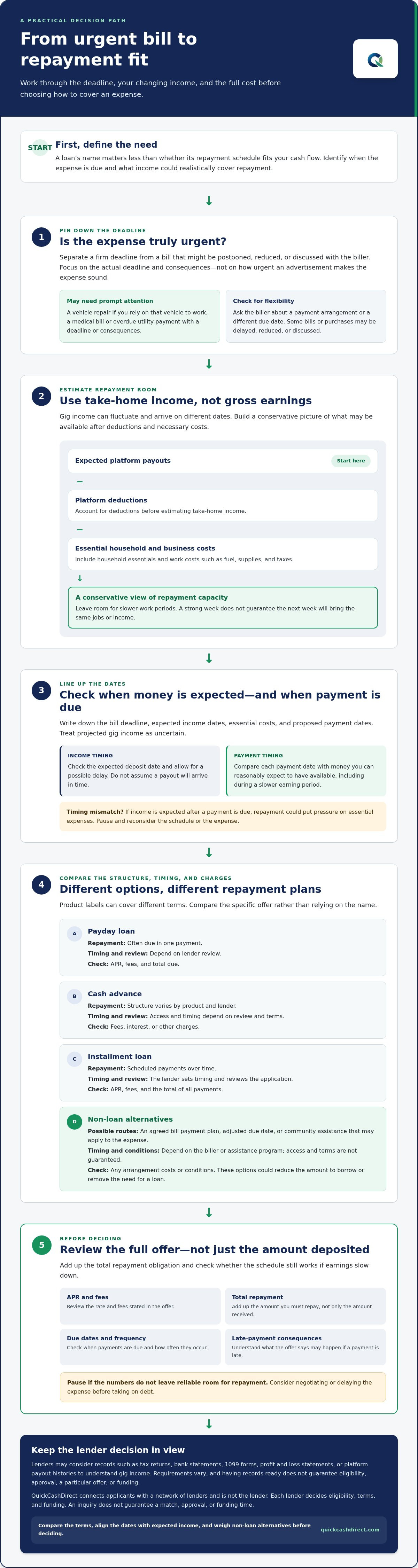
Estimate repayment capacity from take-home income, not gross platform earnings. Start with expected payouts after platform deductions, then subtract essential household costs and business expenses such as fuel, supplies, and taxes. Leave room for slower work periods. A strong week doesn’t guarantee the next one will bring the same number of jobs or the same income.
Use a conservative estimate. If a payment is due early next week but your usual platform payout arrives later, don’t assume the money will arrive in time. Check the expected deposit date, allow for a possible delay, and compare the loan’s payment date with money you can reasonably expect to have available. If the dates don’t line up, repayment could put pressure on essential expenses.
Before comparing offers, write down the bill deadline, expected income dates, essential costs, and proposed payment dates. Treat projected gig income as uncertain. If the numbers leave no reliable room for repayment, pause and consider negotiating or delaying the expense before taking on debt.
Compare emergency funding options for gig workers before applying
When comparing emergency loans for gig workers, weigh the complete cost and repayment plan against how soon funds may be available. The same product label can cover different terms, and lender review, eligibility, timing, and charges vary. Use this framework to compare options, then read the specific offer rather than relying on its name.
Option | Repayment structure | Timing and review | Potential charges
Payday loan | Often due in one payment | Timing and approval depend on lender review | Check the APR, fees, and total due
Cash advance | Structure varies by product and lender | Access and timing depend on review and terms | Check for fees, interest, or other charges
Installment loan | Repaid through scheduled payments over time | Lender sets timing and reviews the application | Compare APR, fees, and the total of all payments
Non-loan alternatives | May involve an agreed bill payment plan or adjusted due date, not loan repayment | Depends on the biller or assistance program | Confirm any arrangement costs or conditions
How do short-term loans and installment options differ?
A short-term payday loan may require repayment in one payment, while an installment option spreads repayment across scheduled payments. Cash advance terms depend on the product’s structure. Neither format is automatically right for every borrower. Compare the full amount you must repay, when each payment is due, and whether the schedule still works during a slower earning period. For more detail, read the payday loan and cash advance guides.
Don’t compare offers only by the amount deposited. Review the APR and fees, then add up the total repayment obligation. Check whether payment dates align with expected gig income, while allowing for fluctuations in payouts. Available options, lender requirements, terms, and funding timing depend on lender review and applicable requirements.
When might a non-loan alternative be worth comparing?
Before taking on debt, ask whether the biller can offer a payment plan or a different due date. You can also look into community assistance that may apply to the expense. Access and terms aren’t guaranteed, but these options could reduce the amount you need to borrow or remove the need for a loan. Treat borrowing as one option to assess, not an automatic solution.
QuickCashDirect connects applicants with a network of lenders; it isn’t a direct lender. Compare any lender terms carefully before deciding. An inquiry doesn’t guarantee a match, approval, or funding time.
Can gig workers qualify without traditional pay stubs?
Some lenders may consider alternative records when an applicant earns income through contract or platform work instead of receiving a regular paycheck. Gig income can be documented in different ways, but lender requirements vary. For emergency loans for gig workers, the lender decides what information to review and how it affects eligibility. Having documents ready can help present a clearer picture, but it doesn’t guarantee approval, eligibility, a specific offer, or funding.
What income records might a lender review?
Gather accurate records that show where your earnings come from and when you receive them. Depending on the lender’s process, useful documents may include:
- Bank statements showing deposits from platforms or clients.
- Platform earnings statements or payout histories summarizing completed work and payments.
- Invoices and payment records for contract work outside apps or platforms.
- Tax documents, such as tax returns or a Form 1099-NEC, if relevant to your work and requested by the lender.
- Identification and other information requested as part of an application.
Use current records and make sure figures are consistent across the information you provide. Don’t present projected bookings or expected payouts as income already received. Keep estimates clearly separate from money you’ve earned.
What if income changes from week to week?
Fluctuating earnings don’t tell the whole story. A lender may assess income consistency and ability to repay using its own criteria. Lenders may review different records or weigh income patterns differently, so documentation rules and decisions aren’t uniform.
Organize recent bank deposits by date and source. Match them with platform statements, invoices, or other payment records where possible. If you use the same account for household and work transactions, identify business deposits and expenses clearly so they aren’t mistaken for disposable income.
Keep business costs in view. Fuel, supplies, platform deductions, and taxes can reduce what remains from gross earnings. Avoid using a particularly strong week to estimate what you can afford every week. Prepare a realistic picture of take-home income and provide only information you can support. The lender determines which records it needs and whether they meet its requirements.
Use this checklist to review an emergency loan offer
Pause before accepting. An offer should make the amount you’ll receive, the repayment schedule, and the full cost clear. Use this four-step check for emergency loans for gig workers, especially if your income dates shift from week to week.
- 1. Verify the lender’s identity. Make sure the lender named in the offer matches the name on the disclosures and agreement. Know which company sets the terms and receives repayment.
- 2. Read the disclosures. Review the APR, fees, due dates, payment frequency, and what may happen if a payment is late. Check the applicable terms and requirements for your location, since they can vary.
- 3. Calculate the full repayment. Compare the amount deposited with the total you’ll repay. Add up scheduled payments and disclosed charges, then check whether the dates fit expected income and essential expenses.
- 4. Decide only after checking the fit. If a payment is due before you reasonably expect income, pause. Don’t accept until you understand the schedule and can assess whether repayment is manageable.
Which loan terms should you inspect first?
Start with the amount you’ll actually receive, the total repayment, each payment date, and every disclosed charge. APR, or annual percentage rate, expresses borrowing cost as an annualized rate. It helps with comparisons, but it isn’t the same as the dollar amount you’ll repay. Check both. A short repayment period doesn’t automatically make borrowing inexpensive, and a payment that looks small may still strain a tight week.
Review the lender’s disclosures for late-payment consequences. Don’t rely on a headline or summary if the agreement provides more detail. If you’re comparing options with credit concerns, a bad-credit loan guide can provide related context for reviewing offers.
How can you reduce application and repayment surprises?
Use a secure connection when submitting information. Enter accurate, consistent details, and don’t inflate income estimates. Before accepting, read the lender’s disclosures and save a copy of the final terms so you can refer to the payment dates and charges later. If any part of the offer is unclear, don’t rush your decision.
QuickCashDirect connects applicants with a network of lenders; it isn’t a direct lender. You can explore potential lender options, then review the lender’s offer and terms before deciding. An inquiry doesn’t guarantee a match, approval, or funding time.
Explore lender options through QuickCashDirect
QuickCashDirect is an online referral platform, not a direct lender. It connects applicants with a network of lenders and short-term funding options. An inquiry can help you explore potential options for emergency loans for gig workers, but it doesn’t promise a lender match, approval, a particular offer, or funding by a certain time.
That distinction matters. QuickCashDirect facilitates the connection; a lender reviews your information and sets its own eligibility criteria, application process, and terms. Submitting information isn’t the same as accepting a loan. Wait until you’ve seen and understood a specific lender’s offer before deciding whether to proceed.
What happens when you explore options online?
The online inquiry lets you explore potential lender options through the referral network. Each lender that reviews your information applies its own criteria and process, so available options can differ. An inquiry alone doesn’t approve or obligate you to accept a loan. If a lender presents an offer, review its identity, disclosures, and repayment terms before making a decision.
What should you do before accepting an offer?
Test the payment schedule against a realistic low-income week, not only your average or strongest week. Account for essential household bills and work costs. Confirm the total repayment, payment dates, frequency, and disclosed charges. Read the lender’s documents for consequences of a missed payment. If the schedule leaves too little room for necessities, don’t rush to accept.
Before you commit, confirm which lender is making the offer, how much you’ll receive, how much you must repay, and when payments are due. Keep a copy of the final terms for your records. Approval, eligibility, available loan types, and funding timing depend on lender review.
Explore available lender options through QuickCashDirect, then review any lender’s offer carefully before deciding.
Make your next funding decision with confidence
Choosing emergency loans for gig workers starts with a realistic repayment plan, not just the urgency of the bill. Compare repayment schedules and full costs, prepare accurate records of your gig income, and read every lender disclosure before accepting an offer. If a payment date conflicts with a slower income week, pause and reassess.
QuickCashDirect provides an online route to explore short-term funding options by connecting applicants with a network of lenders. It isn’t a direct lender. Each lender sets its own eligibility criteria and terms, so an inquiry doesn’t guarantee a match, approval, or funding time. Review the lender’s identity and offer, then decide only if repayment fits your budget.
Ready to compare your options? Explore available lender options through QuickCashDirect, and review the terms before you commit.
Frequently Asked Questions
Can gig workers get emergency loans without pay stubs?
Yes, some lenders may consider records other than traditional pay stubs. For emergency loans for gig workers, possible documentation includes bank statements, platform earnings histories, tax records, or invoices. Requirements vary by lender, and providing documents doesn’t guarantee eligibility or approval. Prepare accurate, current records, then review any offer carefully to see whether its repayment schedule fits your income.
What proof of income can an independent contractor use for a loan?
An independent contractor may be able to use bank statements showing deposits, platform earnings statements, invoices, payment records, and tax documents. A tax return or Form 1099-NEC may also help if relevant and requested. Lenders set their own documentation rules, so no single record is accepted everywhere. Keep information consistent, and distinguish income already received from estimates or projected earnings.
How quickly can gig workers receive emergency loan funds?
Funding timing depends on the lender’s review, process, and payment method. Submitting an inquiry or application doesn’t guarantee approval or a specific deposit time. If a bill is due soon, compare its deadline with the lender’s stated timing before relying on potential funds. Don’t commit to a payment or expense based on an assumed approval date or transfer speed.
How much can a gig worker borrow in an emergency?
There’s no single amount available to every gig worker. A lender may consider its own criteria, the applicant’s income information, and ability to repay when deciding whether to make an offer and on what terms. Focus first on the amount needed for the urgent expense and whether proposed payments fit a conservative income estimate. A requested amount isn’t a guaranteed offer.
Are payday loans a good option for gig workers with irregular income?
It depends on the repayment terms and whether the due date fits your cash flow. A payday loan may require repayment in one payment, which can be difficult if platform earnings fluctuate or arrive later than expected. Check the APR, fees, total repayment, due date, and consequences of late payment. Compare other borrowing options and possible bill arrangements before deciding.
Can I get an emergency loan with bad credit and gig income?
It may be possible, but bad credit and gig income don’t guarantee approval or a particular offer. Lenders use their own eligibility criteria and may review income records, credit information, and repayment ability differently. QuickCashDirect connects applicants with a network of lenders, but it isn’t a direct lender. Review the lender’s terms carefully, and don’t assume every option skips a credit check.
What should I check before accepting an emergency loan offer?
Verify the lender’s identity, then read the disclosures and agreement before accepting. Check the APR, fees, amount you’ll receive, total repayment, payment dates, and payment frequency. Review what the lender’s documents say about missed or late payments. Compare the schedule with a realistic low-income week and essential expenses. If the terms are unclear or the dates don’t fit, pause before committing.