
Ignoring a tribal loan won't stop the collection process; it only makes the financial recovery harder. The consequences of defaulting on a tribal loan are swift and structured, often starting with immediate attempts to withdraw funds from your bank account. With APRs in June 2026 typically ranging between 100% and 400%, unpaid balances escalate in a matter of days. You likely feel trapped by aggressive calls and the complexities of tribal sovereignty. You are not alone in this experience. The FTC receives over 1,800 consumer complaints regarding tribal lending every year.
This article provides the professional relief you need to resolve this crisis. You will understand the exact legal and credit-related impacts of missing your payments. We provide a clinical breakdown of the default timeline and your rights under the FDCPA. Learn how to manage your debt through settlement and structured resolution strategies. Follow this guide to transition from financial uncertainty to a state of total resolution. Get the facts you need to protect your future today.
Key Takeaways
- Distinguish between a simple late payment and a formal default to determine your immediate financial risk.
- Navigate the consequences of defaulting on a tribal loan by understanding the transition from internal collections to third-party debt buyers.
- Learn the truth about sovereign immunity and how it impacts a lender's ability to pursue wage garnishment or legal action.
- Stop the cycle of aggressive collections by revoking ACH access and demanding all communication in writing.
- Explore safer, regulated options for bad credit loans that provide the speed you need with lower legal complexity.
What Defines a Tribal Loan Default in 2026?
A default occurs the moment you breach the specific repayment terms outlined in your loan agreement. While many borrowers confuse a late payment with a default, the legal distinction is critical. A late payment usually falls within a brief grace period of one to fifteen days. During this window, you may face late fees, but your account remains in good standing. A formal default status happens when the lender determines the contract is no longer being honored. This transition triggers the most severe consequences of defaulting on a tribal loan, moving your file from a standard billing cycle to an aggressive collection phase.
The parameters for default are established by a Tribal Lending Enterprise (TLE). These entities operate under the authority of federally recognized tribes. Because they are sovereign nations, they define default according to tribal law rather than the state regulations that govern traditional banks or local payday lenders. This means your grace period might be shorter; the penalties for a breach can be significantly higher. Always review your specific contract to identify the exact hour a payment is considered missed.
The Contractual Trigger Points
Identify the exact moment your loan enters default by reviewing your paperwork. Most tribal lenders use specific triggers to escalate your account. The most common trigger is an Automated Clearing House (ACH) failure. If the lender attempts to pull a scheduled payment and your bank returns an "insufficient funds" or "account closed" notification, the default process begins immediately. Lenders aren't always required to provide a warning before marking your account as delinquent. Expect a phone blitz or a series of urgent emails once the system flags your breach. Act quickly to communicate with the lender before they sell the debt to a third party.
Tribal Jurisdiction vs. State Regulations
Understanding why tribal loans operate differently is vital for managing your debt. Most agreements contain a "Choice of Law" clause. This clause states that tribal law, not your home state's law, governs the transaction. This is why these loans often bypass state usury caps and interest rate limits. Your physical location matters less than the jurisdictional terms you signed. When you face the consequences of defaulting on a tribal loan, you are dealing with a sovereign entity. This legal framework provides the lender with unique leverage in how they pursue the balance, often bypassing the standard consumer protections found in your specific state.
The Chronological Consequences of Defaulting
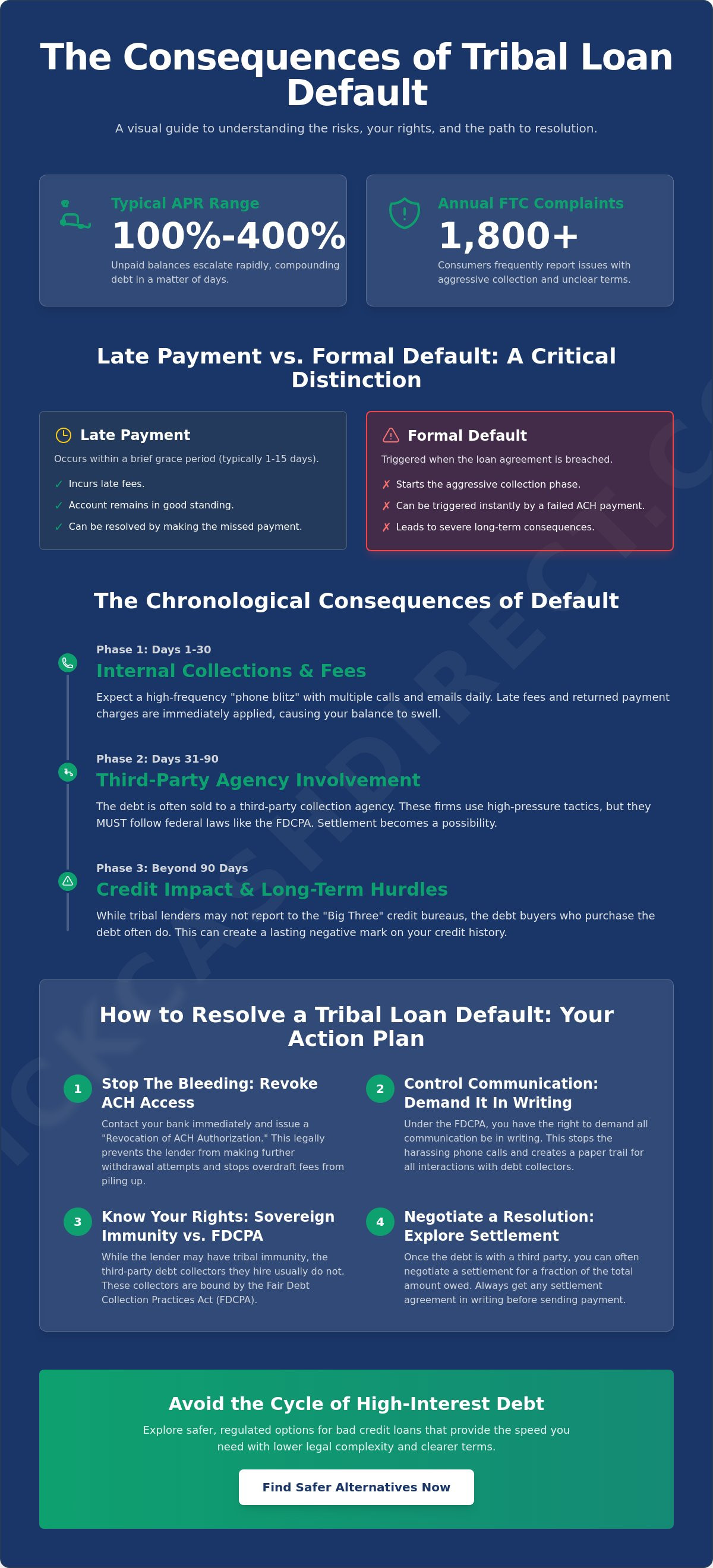
The timeline for a defaulted loan is predictable but intense. Unlike standard bank loans that might take months to escalate, tribal lenders move with high velocity. Understanding the consequences of defaulting on a tribal loan requires a phase-by-phase breakdown. This structure helps you anticipate their next move and take control of the situation before it spirals. Most lenders follow a four-stage process that shifts from internal pressure to external legal and credit impacts.
Day 1 to 30: Internal Collections and Fees
The first 30 days are defined by a high-frequency "phone blitz." Expect multiple calls, text alerts, and emails daily. Your lender will immediately apply late fees and returned item charges for any failed ACH attempts. These fees compound quickly. Take decisive action by issuing a Revocation of ACH Authorization to your bank. This stops the lender from repeatedly hitting your account and triggering additional overdraft fees. Professional relief starts by cutting off their direct access to your cash flow.
Day 31 to 90: Third-Party Agency Involvement
If the internal team fails to collect, they typically sell the debt to a third-party agency. These firms specialize in high-pressure tactics but must still follow federal guidelines. Even though the lender claims sovereign immunity, FTC enforcement actions have proven that federal consumer protection laws apply to these transactions. You have rights under the Fair Debt Collection Practices Act (FDCPA). During this phase, the conversation often shifts from full repayment to settlement offers. You might resolve the debt for a fraction of the total balance if you negotiate effectively.
Phase 3 and 4: Credit Impact and Long-Term Hurdles
Beyond 90 days, the debt often moves to specialized credit reporting agencies. While many tribal lenders don't report to the "Big Three" bureaus, debt buyers often do. This creates a lasting mark on your credit history. It makes securing a future emergency loan or traditional financing more difficult. The long-term consequences of defaulting on a tribal loan include a restricted ability to access credit markets for years. Act now to settle the balance and prevent these permanent markers from appearing on your record. Use this time to transition from a state of debt to a state of resolution.
Sovereign Immunity and the Reality of Legal Action
Sovereign immunity is a legal principle often misunderstood by borrowers. It is not a shield that protects you from the consequences of defaulting on a tribal loan. Instead, this principle primarily protects the tribal entity from being sued in state courts. It does not grant you immunity from your contractual obligations. While the legality of tribal loans can be complex when lenders aren't licensed in your state, the debt remains a valid civil obligation in the eyes of the lender. They will use every available tool within their jurisdiction to secure repayment.
Most tribal lenders operate with a clear cost-benefit mindset. Pursuing a lawsuit in state court for a $500 or $1,000 balance is rarely profitable due to high legal fees. However, don't mistake this for a lack of options. Lenders frequently use arbitration clauses to settle disputes. These clauses move the conflict out of the public court system and into a private, streamlined process. This allows the lender to obtain a resolution without the high costs of traditional litigation.
Can a Tribal Lender Garnish Your Wages?
Involuntary wage garnishment is a specific legal process. A tribal lender cannot simply contact your employer and seize your pay. They generally need a judgment from a court in your home state to force an involuntary garnishment. This requires them to sue you locally, which is a rare and expensive step. However, check your contract for a "voluntary wage assignment" clause. Some agreements include language where you pre-authorize the lender to contact your employer if you default. Review your paperwork immediately to see if you've already granted this permission. If you find such a clause, contact a professional to discuss revoking that specific authorization.
The Role of Tribal Courts in Collections
Tribal lenders prefer their own court systems or private arbitration over your local state courts. Enforcing a tribal court judgment in a different state is a difficult and slow legal maneuver. Because of this friction, most lenders rely on aggressive collections and credit reporting rather than formal litigation. While legal action is rare, it is not impossible if the debt is significant. Large balances may justify the expense of a local lawsuit. Always assume the lender will escalate the consequences of defaulting on a tribal loan if the balance is high enough to warrant the legal investment. Focus on settlement before the lender decides to involve their legal department.
Actionable Steps: How to Resolve a Tribal Loan Default
Stop the cycle of debt immediately. Resolving the consequences of defaulting on a tribal loan requires a clinical, step-by-step approach. Do not ignore the lender or hope the debt disappears. Silence leads to debt sales and persistent harassment. Instead, follow this structured framework to reach a state of resolution. Use these steps to transition from financial stress to a manageable outcome.
- Step 1: Revoke ACH Access. Contact your bank and the lender to stop all automatic withdrawals.
- Step 2: Demand Written Communication. Force the lender to use mail or email to create a permanent paper trail.
- Step 3: Audit the Debt. Compare the total amount demanded against the original principal you received.
- Step 4: Propose a Settlement. Offer a lump sum or a principal-only repayment plan.
- Step 5: Secure the Agreement. Obtain a signed settlement letter before you send a final payment.
Protecting Your Bank Account
An ACH revocation is a borrower's legal right to stop electronic transfers. This is your most powerful tool for immediate relief. A standard "Stop Payment" order is often temporary and only covers specific transactions. A full ACH revocation provides a permanent firewall between your income and the lender. If your bank fails to block these hits, contact their compliance department to report unauthorized access. This prevents the lender from triggering multiple overdraft fees that inflate your balance. If you need a fresh start while managing these payments, consider a secure instant cash loan today to regain control of your monthly budget.
Negotiating a Settlement
Lenders prioritize immediate cash flow over long-term collection efforts. They often accept 50% or less of the total fees to close a delinquent file. Use the high-interest nature of the loan as leverage during negotiations. Explain that the 400% APR makes the total balance mathematically impossible to pay. Propose a "Pay-for-Delete" strategy. This requires the lender to remove any negative marks from specialized credit reporting agencies in exchange for your payment. Always ensure the final agreement states the debt is "settled in full." This prevents the lender from selling a residual balance to another agency. Taking these steps mitigates the long-term consequences of defaulting on a tribal loan and protects your financial future.
Avoiding the Cycle: Safer Alternatives for 2026
Breaking the cycle of high-interest debt requires a shift in strategy. You've already seen the severe consequences of defaulting on a tribal loan. Don't repeat the mistake. Transition toward regulated financial products that offer transparency and legal protection. In 2026, several alternatives exist that provide the speed of tribal lending without the sovereign immunity risks. Finding a lender that operates within your state's legal framework ensures you have access to consumer protection agencies if a dispute arises.
Credit-builder products are a primary tool for long-term stability. These allow you to establish a positive payment history while accessing small-dollar amounts. If you face an immediate crisis, look for local emergency financial assistance programs. Many community organizations offer one-time grants for utilities or rent that don't involve debt. For those who still require fast funding, prioritize easy loans for bad credit that comply with state interest rate caps. These products offer a predictable path to repayment without the threat of sovereign legal loopholes.
Evaluating Your Next Loan
Scrutinize the Annual Percentage Rate (APR) on every offer. It's the most reliable way to compare the true cost of borrowing. Tribal loans often hide behind daily or weekly rates; regulated lenders must disclose the full yearly impact. This disclosure is non-negotiable for your financial safety. Seek out 'Direct Deposit' options that offer more transparent terms and faster access to your capital. This ensures the money reaches your account when you need it most. If you need a reliable path forward, explore our guide on loans for bad credit to find regulated alternatives today. Knowledge is your best defense against predatory lending cycles.
The QuickCashDirect Advantage
We act as an efficient facilitator between you and a network of dependable lenders. Our referral system connects you with various payday loans and installment options tailored to your specific requirements. Efficiency is our foundation. The 2026 application process is designed for maximum velocity. You can secure funds in minutes rather than days. This speed helps you address urgent needs before they become defaults. We prioritize transparency and speed to help you avoid the long-term consequences of defaulting on a tribal loan. Our network focuses on accessibility for a broad demographic. Take the first step toward a structured financial solution now. Move from a state of need to a state of resolution with a partner you can trust.
Take Control of Your Financial Recovery Now
Action is the only way to stop the cycle of debt. You now understand that the consequences of defaulting on a tribal loan include aggressive internal collections and potential credit reporting. Use the tools you've learned to protect your interests. Revoke your ACH authorization immediately and demand all communication in writing to create a verifiable paper trail. These steps move you from a state of stress to a state of structured resolution. Negotiating a settlement is often the fastest path to clearing your record and protecting your income.
Don't let a past default dictate your future. If you require immediate funding with more transparent terms, our referral system is ready to help. Secure a fast loan with transparent terms through QuickCashDirect today. Our instant cash referral network provides options for all credit types. Experience the speed of direct deposit in minutes. You have the power to navigate this process and find a safer financial path forward. Start your journey toward stability today.
Frequently Asked Questions
Can a tribal lender sue me in my home state?
Tribal lenders have the legal right to sue you in your home state, but they rarely do for small-dollar balances. Litigation is expensive and time-consuming for the lender. They must obtain a local court judgment to pursue involuntary collections like garnishment. Most lenders prefer to sell the debt to third-party collectors who handle the legal escalation process. Focus on settlement before the account reaches this stage to avoid court costs.
Will defaulting on a tribal loan ruin my credit score?
Defaulting won't always impact your credit score immediately because many tribal lenders don't report to the three major bureaus. However, the consequences of defaulting on a tribal loan become severe once the debt is sold. Third-party collection agencies frequently report delinquent accounts to TransUnion, Experian, and Equifax. This can lead to a significant drop in your score and limit your future borrowing options for years.
Can tribal lenders garnish my social security or disability payments?
No, tribal lenders cannot garnish your Social Security or disability payments. Federal law strictly protects these benefits from most private debt collectors. Even if a lender obtains a court judgment in your state, these specific funds remain exempt from seizure. Ensure your bank knows these deposits are protected. This prevents accidental freezes or unauthorized withdrawals during the collection process.
What is the 'sovereign immunity' clause in a tribal loan contract?
The sovereign immunity clause states the lender is a Tribal Lending Entity owned by a federally recognized tribe. This clause claims the lender follows tribal law instead of your state's interest rate caps. It primarily protects the tribe from being sued in state courts. It does not mean you are exempt from the contract or the financial consequences of defaulting on a tribal loan. The debt remains a valid civil obligation.
Is it possible to settle a tribal loan for just the principal amount?
Yes, you can often settle for the original principal amount. Lenders prefer receiving some cash over a total loss on a delinquent file. Propose a principal-only settlement in writing and explain that the high APR makes the full balance impossible to pay. Lenders frequently accept these offers to close the file and stop internal collection expenses. Always get the final agreement in writing before sending any money.
How do I stop a tribal lender from calling my employer?
Stop employer calls by sending a written demand to the lender. Explicitly state that your employer does not allow personal calls at work. Under federal guidelines, collectors must stop calling your workplace once they are informed it is prohibited. Keep a copy of this demand for your records. This creates a paper trail that you can use to file a complaint if the harassment continues.
Are tribal loans legal in all 50 states?
Tribal loans are available in most states, but their enforceability varies based on local usury laws. Some states have strict interest rate caps that tribal lenders attempt to bypass using sovereign immunity. While they can offer the loans online, they may lack the authority to use local courts for collection in certain jurisdictions. Check your specific state's consumer protection website for current lending regulations and your legal rights.
What happens if I close my bank account to avoid paying a tribal loan?
Closing your bank account stops immediate withdrawals but does not erase the debt. Lenders will view this as a breach of contract and quickly escalate the account to aggressive collections. They may also report the account status to specialized databases like ChexSystems. This makes it difficult for you to open new bank accounts at other institutions. Use a formal ACH revocation instead to maintain your banking relationship.