
An open collection can affect your loan options, but it does not automatically close every door. If you’re wondering whether you can get a loan with open collections, yes, it may be possible. Lenders consider more than an account’s status, including the type of debt. Medical collections may be viewed differently from unpaid credit-card debt or a previous auto repossession.
It’s understandable to worry that an unpaid collection or charge-off will lead to an automatic rejection. Lenders may also consider how recent the account is, how much you owe, whether you have other collections, and whether your income can support the payment.
This guide explains how collection type, charge-offs, multiple debts, a co-signer, and your application documents can shape your options. You’ll learn what lenders may review and how to approach an application with a clearer picture of your finances.
Key Takeaways
- Prepare clear records of your income, debts, and current payments so lenders can assess your ability to repay.
- Consider how the collection’s type and status may affect a lender’s view; a charge-off does not erase the debt.
- Review the age, amount, and nature of each account, since multiple collections may be assessed together rather than by count alone.
- There’s no single credit score that guarantees approval. A co-signer and the full application picture may also influence your options.
What documents may lenders ask you to provide before applying?
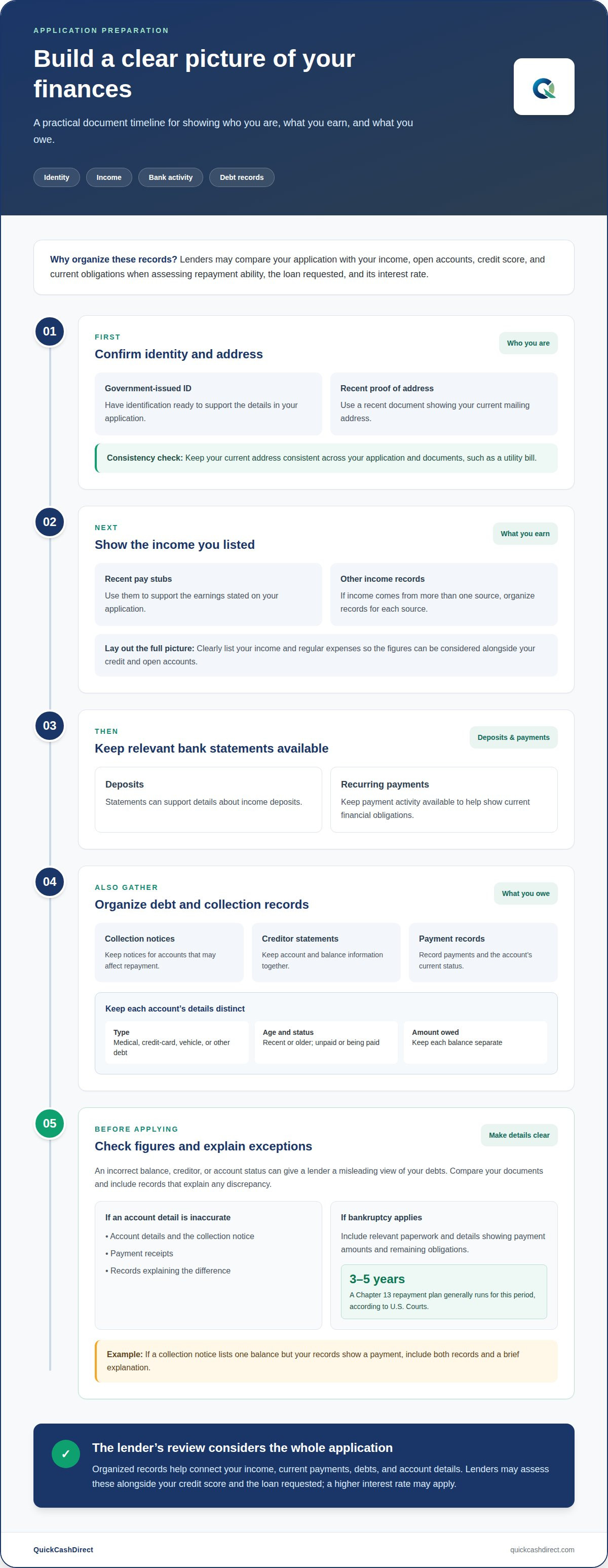
Gather documents that show who you are, what you earn, and what you owe. A lender may ask for government-issued identification, proof of address, recent pay stubs, or bank statements. These records help connect your application details with your ability to repay. Keep information consistent, such as using the same current address on your application and utility bill.
Lay out your income and regular expenses clearly. A recent pay stub can show earnings, while a bank statement can show deposits and recurring payments. If you receive income from more than one source, organize records for each. Lenders consider this information alongside your credit score and open accounts when assessing the loan you request and its interest rate.
- Identity and address: Have a government-issued ID and a recent document showing your current mailing address.
- Income: Gather recent pay stubs or other records that show the income listed on your application.
- Bank activity: Keep relevant statements available to support deposit and payment details.
- Debt records: Organize collection notices, creditor statements, and payment records for accounts that may affect repayment.
How can inaccurate collections affect a loan application, and what information should you provide? An incorrect balance, creditor, or account status can give a lender a misleading view of your debts. Provide the account details, collection notice, payment receipts, and records that explain the discrepancy.
Include bankruptcy paperwork if it applies to your situation. For example, a repayment plan can help explain current obligations and monthly payments. A Chapter 13 repayment plan generally runs for 3 to 5 years, according to U.S. Courts. Share the plan information that shows the payment amount and remaining obligations, so the lender can consider them alongside your income.
Before applying, compare the figures across your documents. If a collection notice lists one balance but your records show a payment, include both and add a brief explanation. Organized documents help lenders assess your credit, repayment capacity, and possible loan terms, including whether a higher interest rate may apply.
Charge-off and collection agency activity
A charge-off changes how a creditor records unpaid debt, but it doesn’t erase what you owe. Lenders may review the account, its status, and your payment history.
Collection Accounts in Lender Reviews
A collection account is an unpaid debt a collection agency is trying to recover. Lenders may review its type, balance, age, and status alongside your credit score. A medical collection may be viewed differently from unpaid credit-card debt or a past auto repossession, so the details matter.
Do lenders check collection accounts when reviewing a loan application? Yes. Lenders may review credit reports and other application information for collections, charge-offs, and recent payments. For a mortgage, they may also consider how existing debts affect your ability to repay, not just your credit score.
A charge-off means the creditor has recorded the debt as a loss; it doesn’t cancel your responsibility to repay. A collection agency may continue trying to collect, and a lender or agency may sue to recover charged-off auto debt. Keep account records together so you can accurately explain the creditor, balance, and payment status.
Collection Reporting and Loan Approval
A collection is a negative credit entry, and its reporting history can remain relevant after a charge-off. The Federal Trade Commission says a charge-off can remain on a U.S. credit report for up to seven years from the first missed payment. This history may affect how lenders assess your credit.
How long do collections stay on a credit report in the United States? For a charge-off, the Federal Trade Commission gives a period of up to seven years from the first missed payment. The account’s status and history still matter during a loan review.
Can paying or settling collections improve loan approval odds? Payment may update an account’s status and reduce its unpaid balance, but it doesn’t erase the prior history. Before paying, compare the collection amount with funds you need for application costs or a down payment. Lenders also consider income, other debts, and the loan requested, all of which may affect available interest rates.
Multiple collection accounts
Multiple collection accounts don’t automatically prevent you from qualifying for a loan. Lenders may review each account’s nature, age, and amount, then assess the overall picture. For example, several older medical bills may look different from recent unpaid credit-card debt and an auto loan balance. The number of accounts matters, but it isn’t the only factor.
Your combined debt can affect how lenders assess repayment capacity. A collection balance tied to a vehicle may raise different questions from an unpaid utility bill, especially if an auto loan is also part of your application. Lenders may consider whether those accounts remain unpaid and how your income and current obligations fit together.
- Account type: Separate medical, credit-card, vehicle, and other debts so their nature is clear.
- Age and status: Note whether each account is recent, older, unpaid, or being paid.
- Amount owed: Keep each balance distinct rather than treating several accounts as one total.
- Current obligations: Include existing loan payments that affect the amount you can repay.
For example, an applicant with a small, older collection and steady auto loan payments has a different debt profile from someone with several recent accounts and missed vehicle payments. Neither example determines approval on its own. Lenders assess the details and how all obligations affect repayment.
Paying one account may change its status or reduce its balance, but it doesn’t automatically erase its history or settle other collections. Consider how using available funds for one debt could affect what remains for a down payment or upcoming payments. An account-by-account summary helps lenders understand what you still owe and what you’re paying now.
Multiple collections can affect loan terms as well as approval. If lenders view your total debt as a greater repayment risk, they may offer less favorable terms, including higher interest rates. Focus on accurate balances, account types, and payment status. These details explain your situation more clearly than the account count alone.
What credit score do lenders require when you have collections?
There isn’t one credit score that determines every loan application. Lenders assess a score alongside the full credit file, including collection history, income, and current repayment obligations. Two applicants with similar scores, for example, may have different profiles if one has a recent collection and the other an older account.
The age of a collection matters. A recent collection may concern lenders more than one several years old. Account type and status also add context: an unpaid credit-card balance differs from a resolved account. Lenders use these details to understand whether your credit history suggests ongoing payment difficulties.
Credit scoring also weighs other parts of your file. Payment history accounts for 35% of a FICO score, while credit utilization often makes up 30%. Keeping utilization under 30% may partially offset negative collection marks. These factors don’t erase a collection, but they help show how other credit activity contributes to the overall picture.
Focus on the information lenders can assess, not a score target alone. Keep current payments on time, limit new balances, and make sure your application accurately reflects your income and existing debts. You can also consider applying with a co-signer, whose credit and repayment capacity will be part of the review.
A stronger overall file can support more loan options, while collections and other repayment concerns may affect terms and interest rates. Compare the proposed payment with your budget before accepting an offer. Borrowing that fits your current obligations is more manageable than making a decision based on your score alone.
Explore available loan options and review how your application details fit your current situation.
A car loan charge-off may cause a credit score drop of as much as 100 points, though refinancing may remain possible if you act quickly and show willingness to repay.
QuickCashDirect
QuickCashDirect offers short-term financial options for borrowers who need to review choices after a collection affects their credit. Its offerings include Payday Loans, Cash Advance, Payday Loans Online, and loans for bad credit. Consider these options when you need funds and want to assess a loan alongside your current debts and repayment capacity.
Before choosing, review the payment schedule and terms so they fit your budget. An open collection doesn’t make every loan option suitable; consider how a new payment fits with existing obligations. For information about available options, contact QuickCashDirect.
Choose a Loan That Fits Your Next Step
If you’re asking whether you can get a loan with open collections, focus on what you can manage, not just the chance of approval. Borrowing should address an immediate need without making existing payments harder to meet. Set a realistic repayment amount before considering an offer, and read the terms carefully so you understand the schedule and total obligation.
Your collection history is one part of your financial situation. Accurate details can help lenders review your application, while your budget helps you decide whether borrowing is right for you. Approval and terms depend on the application and lender’s review, so weigh each option carefully before proceeding.
For help exploring short-term options, contact QuickCashDirect to discuss your options. Take the next step with a clear view of what you need and what repayment you can handle.
Frequently Asked Questions
Does the Type of Collection Account Matter?
Yes. Lenders may consider the type of debt behind a collection and how it relates to the loan you’re requesting. For example, a collection tied to a previous vehicle loan may be particularly relevant to another auto loan application. The account type provides context, but lenders also consider your broader financial profile and ability to manage the new payment.
Can you qualify for a personal loan with open collections?
Yes, you may be able to get a loan with open collections. Lenders can weigh your income, existing payments, credit history, and whether the requested repayment fits your budget. A co-signer or secured-loan application may also be worth considering, depending on your circumstances. Neither removes the need to assess the payment and terms carefully before accepting an offer.
What loan options are available for borrowers with collections?
Options may include personal loans, payday loans, cash advances, or online payday loans, depending on the lender and your application. QuickCashDirect connects borrowers with lenders offering short-term options, including loans for bad credit; it isn’t a direct lender. Review the proposed repayment terms and ensure the payment works with your existing obligations before moving forward.