
The fastest loan offer may also cost you the most. If your credit score is under 600, it can feel as though every lender will say no. But the best loan options for credit score under 600 depend on more than approval. The APR, fees, repayment schedule, and fit with your budget matter just as much.
This guide compares options to investigate, including personal loans, credit union loans, and short-term borrowing. You’ll learn how to compare total repayment amounts, check whether a payment is manageable, and spot the risks of high-cost debt. A lower payment can come with a longer term and more interest overall, so look beyond the first number you see.
You’ll also learn what applying may involve and how a lender-matching service works. QuickCashDirect connects applicants with a network of lenders. It isn’t a direct lender, and a match doesn’t guarantee approval or funding. Review the terms before applying, then decide based on affordability, not pressure.
Key Takeaways
- The best loan options for credit score under 600 depend on lender criteria, your circumstances, and whether repayment fits your budget.
- Compare written offers side by side. Check APR, fees, payment frequency, loan term, funding timing, and what happens if you miss a payment.
- Consider how credit union, secured, co-signed, installment, and short-term options differ. Verify eligibility and risks before applying.
- Set a payment limit before reviewing offers, and ask creditors or service providers about payment plans as a possible alternative to borrowing.
- Understand the steps in a lender-matching process and review the full terms of any offer before deciding whether to proceed.
What loan options can borrowers with a credit score under 600 compare?
A score below 600 doesn’t determine eligibility on its own. Lenders set their own criteria, and the best loan options for credit score under 600 depend on more than a score. Compare repayment structures, any collateral or co-signer responsibilities, and the full terms before choosing.
A credit score under 600 is a number below that threshold in a credit-scoring model. It can signal credit challenges, but it doesn’t tell a lender everything about an applicant or guarantee a decision. A lender may also review income, current debts, payment history, and other application details. A score range isn’t the same as a lender’s specific approval criteria, so it can’t predict rejection, approval, or a particular borrowing cost. The term subprime lending broadly describes lending to borrowers considered higher risk, but lenders can define and assess risk differently.
How does a score under 600 affect loan applications?
A lower score may affect which offers a lender considers, but the full application matters. Lenders may weigh income and existing obligations differently. Check each lender’s current eligibility requirements and any prequalification terms. Don’t assume a score alone tells you whether an offer is available or affordable.
Which borrowing categories belong in the comparison?
Compare categories by how you qualify, repay, and manage potential downsides. Availability, eligibility, terms, and applicable state rules vary. Verify current details with the lender before applying.
- Credit union options: Ask whether membership is required, what eligibility rules apply, and which borrowing options are available to you.
- Secured loans: These may require collateral. Understand which asset secures the debt and what could happen if you can’t repay.
- Co-signed loans: A co-signer may share legal responsibility for repayment. Discuss that obligation and the potential effect of missed payments before applying together.
- Installment loans: These are generally repaid through scheduled payments over a set term. Confirm the payment amount, frequency, term, and total repayment obligation.
- Short-term products: Payday loans, cash advances, and tribal loans require especially careful review. Check the full repayment terms, fees, due dates, and which rules apply to the specific lender and product.
Use this comparison to narrow the best loan options for credit score under 600 for your situation, rather than focusing only on the chance of approval. If repayment would leave too little for essential expenses, keep comparing or consider alternatives before taking on new debt.
How to compare loan offers when your credit score is below 600
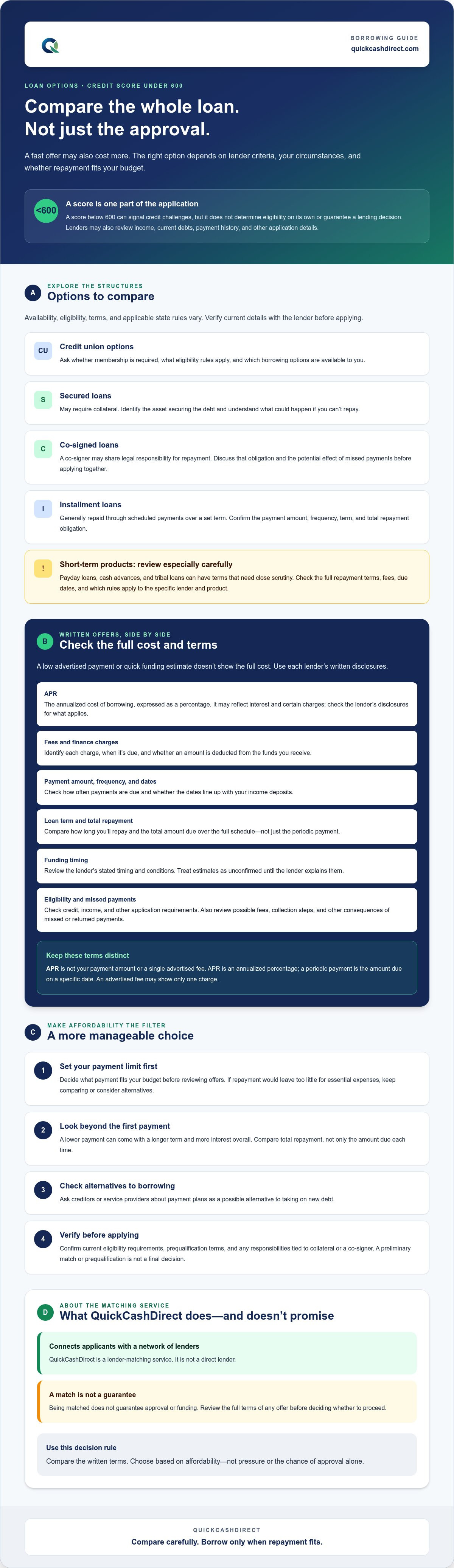
Put offers side by side before applying. A low advertised payment or quick funding estimate doesn’t show the full cost. Use each lender’s written disclosures to compare the details that affect what you’ll repay and when.
| What to compare | What to check |
|---|---|
| Eligibility | Requirements for credit, income, and other application details. A preliminary match or prequalification isn’t a final decision. |
| APR | The annualized cost of borrowing, expressed as a percentage. It may reflect interest and certain charges; check the lender’s disclosures for what applies. |
| Fees and finance charges | Each charge, when it’s due, and whether any amount is deducted from the funds you receive. |
| Payment frequency and dates | How often payments are due and whether the dates line up with your income deposits. |
| Term and total repayment | How long you’ll repay and the total amount due over the full schedule, not just the periodic payment. |
| Funding timing | The lender’s stated timing and any conditions. Treat estimates as unconfirmed until the lender explains them. |
| Missed or returned payments | Possible fees, collection steps, and other consequences described in the agreement. |
APR is not your payment amount or a single advertised fee. It’s an annualized percentage that helps compare borrowing costs, while your periodic payment is the amount due on a specific date. An advertised fee may show only one charge. For context, Experian explains what lenders may mean by a subprime loan, but your offer’s disclosures determine its actual terms.
Which loan terms should you check before applying?
Read the agreement for the APR, finance charges, payment dates, term, and total repayment. Check whether payments will be withdrawn automatically and what happens after a late or returned payment. Confirm the lender’s legal identity, contact details, privacy terms, and applicable disclosures. If anything is unclear, ask the lender before sharing information or agreeing to the terms.
How can you judge whether a payment fits your budget?
Compare each proposed payment with take-home income after essential monthly expenses and existing debt payments. Consider when money arrives, not only the monthly total. A manageable payment matters more than speed if fast funding leaves you short when the next bill is due.
Pause if repayment depends on borrowing again or delaying essential expenses. Compare the best loan options for credit score under 600 using the total repayment amount in each written offer. After checking your budget and alternatives, you can explore potential loan options through QuickCashDirect, a referral service, not a lender. A lender makes any decision and sets the terms of any offer.
How do common loan options compare for credit scores under 600?
Compare each route by more than whether you might qualify. Access, repayment structure, and what you risk all matter. Use the questions in the table when speaking with a lender. Actual availability and terms depend on the lender, product, and applicable rules.
| Option | Access route | Potential advantage | Risk to weigh | Questions to verify |
|---|---|---|---|---|
| Credit union | Ask a credit union about its membership and loan requirements. | It may offer an alternative to other borrowing routes. | Membership, eligibility, and available products vary. | Do I qualify? What are the APR, fees, term, and total repayment? |
| Secured loan | Apply with an asset pledged as collateral, if the lender offers this option. | Collateral may be considered as part of the application. | You could lose the pledged asset if you don’t meet the agreement. | Which asset secures the loan, and what happens after missed payments? |
| Co-signed loan | Apply with another person who agrees to share repayment responsibility. | A co-signer may strengthen an application, depending on lender criteria. | The co-signer may be responsible for the debt if you don’t repay. | What obligations will the co-signer take on, and how are missed payments handled? |
| Installment loan | Apply to a lender offering scheduled payments over a stated term. | Regular payments can make the repayment schedule easier to plan. | Longer terms or charges can increase the total amount repaid. | What is the payment schedule and total repayment amount? |
| Payday loan or cash advance | Apply through a provider offering the specific product. | May provide access to short-term borrowing, subject to lender review. | Short repayment windows can strain a tight budget; costs and terms vary. | When is repayment due? What fees, charges, and rules apply? |
| Tribal loan | Review the specific lender and its application terms. | It is another category borrowers may encounter. | Legal and jurisdictional questions can depend on the lender and loan. | Who is the lender, what rules apply, and where can I raise a concern? |
When might a credit union, secured loan, or co-signer be worth exploring?
Start with a credit union where you already have an account, or ask another credit union about membership and eligibility. Before pledging property or involving a co-signer, understand the consequences in writing. Then compare the complete terms with other available offers. The CFPB’s guide to checking credit reports can also help you review your credit information before applying.
What should you know about short-term and referral-based options?
Payday loans and cash advances may have short repayment windows, so confirm the due date and full cost before proceeding. Don’t assume tribal loans follow the same rules as other products. Verify the specific lender, terms, and applicable requirements. QuickCashDirect connects applicants with lenders. It isn’t a lender and doesn’t decide whether an application is approved. The best loan options for credit score under 600 are the ones whose written terms and repayment schedule fit your situation.
What steps can help you choose a more manageable loan?
Follow a clear process before taking on new debt. It can help keep urgency from pushing affordability checks aside.
- Define the need. Work out the amount required for the specific expense. Avoid borrowing more than you need.
- Check alternatives. Ask the creditor or service provider about an extension, payment plan, or hardship program before applying for a loan.
- Set a payment limit. Review take-home income, essential bills, existing debt payments, and deposit dates. Choose a payment that leaves room for necessary expenses.
- Compare written offers. Review APR, fees, repayment dates, term, total amount repayable, and missed-payment consequences.
- Decide without pressure. If the payment only works by borrowing again or missing a bill, pause and reconsider.
What alternatives should you consider before borrowing?
Contact the company or person you owe and ask what options they can offer. Depending on the expense, a payment plan, extension, or hardship arrangement may be available, but don’t assume it’s guaranteed or suitable for every situation. You can also check for trusted community assistance or employer resources where available. Confirm any terms directly before relying on them.
How can you prepare for a responsible application?
Gather accurate income, bank, identification, and expense information requested by the lender. Before submitting, read the consent, credit inquiry, privacy, and lender-contact disclosures. Apply selectively, and don’t share sensitive information through a website or with a caller until you’ve verified who they are and why they need it.
Review your credit reports through authorized channels before applying. If you spot an error, follow the reporting agency’s process to dispute it. The Consumer Financial Protection Bureau’s credit report guidance explains how to access and review credit information. Reviewing a report won’t guarantee a loan decision, but it can help you spot information that may need attention.
Keep your decision focused on your budget, not just how quickly funds might arrive. The best loan options for credit score under 600 are worth considering only if the full repayment schedule is manageable. Once you’ve checked alternatives and set a payment limit, you can explore potential loan options through QuickCashDirect, a referral service that connects applicants with lenders. A lender makes any approval decision and sets the terms of any offer.
How QuickCashDirect can help you explore options without promising approval
QuickCashDirect is an online loan referral platform, not a direct lender. It can connect applicants with lenders in its network, including lenders that may offer payday loans, cash advances, tribal loans, or installment options. The platform doesn’t decide whether you qualify, set a lender’s terms, or guarantee an offer or funding.
Think of the process in three steps: submit the requested information, allow a potential lender to review it, then assess any offer you receive. A submission may not result in a lender match or offer. Availability, eligibility requirements, review processes, and terms can vary, so check the current disclosures rather than assuming a particular result or timeline.
What happens after you use a loan referral platform?
If a lender is identified as a potential match, confirm its name and contact details before proceeding. The lender, not QuickCashDirect, evaluates your application and determines eligibility and any loan terms. Read the lender’s disclosures and agreement directly. Make sure you understand who would provide the loan, how payments would work, and where to direct questions about the offer.
What should you review before accepting an offer?
Take time to review the written offer before signing. Compare it with the disclosures you saw during the application. Check:
- APR and fees: Review the stated borrowing cost and every charge.
- Payment schedule: Confirm the amount and due dates for each payment.
- Total repayment: Check what you would repay across the full term, not only the next payment.
- Late-payment terms: Understand any stated fees or other consequences if you pay late.
- Lender identity: Confirm the agreement comes from the lender you were told to expect.
If a term is unclear, ask the lender to explain it before accepting. If the payment would put essential bills at risk, or the offer differs from what you understood, pause or decline. The best loan options for credit score under 600 aren’t simply the offers you can access. They’re the ones whose terms and repayment fit your budget.
Ready to review potential matches? Explore available loan options, then compare any lender offer carefully before deciding. Submitting information doesn’t guarantee approval, a specific offer, particular terms, or funding timing.
Choose your next step with confidence
A credit score below 600 can narrow your choices, but it doesn’t determine the outcome by itself. Lenders use their own criteria, and loan types carry different responsibilities and repayment terms. Compare written offers by APR, fees, payment schedule, and total repayment, not just the speed of a potential offer.
Before applying, check whether a payment plan or another alternative could address the expense. Set a payment limit that protects essential bills, then use it to judge the best loan options for credit score under 600 for your situation. If the terms are unclear or repayment looks unaffordable, pause.
QuickCashDirect connects applicants with a network of lenders. It’s a referral platform, not a direct lender, and lender decisions, terms, and funding aren’t guaranteed. Review any lender’s offer carefully before deciding. Explore potential loan options and review the terms carefully. An informed next step can help you avoid taking on a payment that doesn’t fit your budget.
Frequently Asked Questions
Can I get a loan with a credit score under 600?
Yes, some lenders may consider applicants with scores below 600, but eligibility depends on the lender and your complete application. A lender may review income, existing obligations, payment history, repayment ability, and other criteria. Before proceeding, compare written terms, including APR, fees, and payment dates. Verify the lender’s identity and privacy disclosures before sharing sensitive information. A low score alone can’t tell you whether an offer will be available or affordable.
What is the best loan option for a credit score under 600?
The best loan options for credit score under 600 vary by person. There isn’t one right choice for everyone. Compare credit union loans, secured or co-signed loans, installment loans, and short-term products based on eligibility, total repayment, payment schedule, and budget fit. A secured loan puts collateral at risk, while a co-signer may take on repayment responsibility. Ask about payment plans or other alternatives first, then compare written offers and choose only if the payments are manageable.
Can I get a personal loan with a credit score under 600?
Possibly. Some lenders may review applications from people with scores under 600, while others set different eligibility requirements. Any decision and terms depend on the lender’s assessment and your circumstances, including income and current obligations. Check the APR, fees, payment dates, term, and total repayment in writing. Applying doesn’t guarantee an offer. Verify who the lender is and read its disclosures before accepting or sharing further information.
Are payday loans a good option for a credit score under 600?
A credit score alone can’t determine whether a payday loan is suitable. These loans may have short repayment periods, so check the full repayment amount, fees, due date, and consequences of late or missed payments. Review applicable disclosures and verify current rules and lender terms for your circumstances. Before borrowing, ask the creditor or service provider about a payment plan, extension, or other alternative. Proceed only if repayment fits your budget.
Will applying for a loan hurt my credit score?
The effect depends on whether and how the lender checks your credit. A soft inquiry lets a lender review credit without the same impact as a hard inquiry. A hard inquiry can appear when you apply for credit and may affect your score; the exact impact varies. Read the application’s consent and inquiry disclosures first, and check the lender’s explanation of which type it may use. Don’t assume a credit check has no effect.
How can I compare loan offers if my credit score is below 600?
Compare each written offer by APR, fees, payment amount and frequency, loan term, total repayment, and consequences of missed payments. Then check whether the payment fits after essential expenses and existing obligations, including the timing of income deposits. Confirm the lender’s identity and read the agreement before accepting. Fast funding or a simple application doesn’t necessarily mean the loan is affordable. Choose based on repayment fit, not urgency alone.
Is QuickCashDirect a direct lender?
No. QuickCashDirect is a referral platform that connects applicants with a network of lenders, not a direct lender. A potential lender reviews the application, makes the eligibility decision, and sets any offer’s terms. Submitting information doesn’t guarantee a match, approval, a specific offer, or funding timing. If a lender responds, identify it and read its disclosures and loan agreement carefully before deciding whether to accept.